How to analyze your first investment property
A good property analysis answers a simple question: after buying, repairing, financing, holding, and exiting this property, is the likely reward worth the money and risk?

New investors often begin with the listing price and a hopeful resale number. That is not an analysis. It is the first line of an analysis. The complete job is to verify what the property is, estimate what it can become, price the work required to get there, model how the project will be funded, and decide how much uncertainty you can carry.
This guide gives you a repeatable process for a flip, BRRRR project, or rental renovation. It is educational, not an appraisal, inspection, lending decision, legal opinion, or tax recommendation. Use qualified local professionals to verify the parts that affect your purchase.
1. Analyze an investment property by choosing the goal first
The same house can be a good rental and a poor flip. It can be a good wholesale lead and a dangerous construction project. Before gathering numbers, decide what outcome you are testing.
- Flip: buy below the finished value, complete a defined renovation, and sell within a planned period.
- BRRRR: buy, renovate, rent, refinance based on stabilized value and income, then hold.
- Rental: acquire or improve a property that can produce durable income and acceptable long-term returns.
- Wholesale: secure a contract at a price that leaves room for the end buyer's repairs, costs, and required return.
- New construction: combine land, hard costs, soft costs, financing, schedule risk, and finished value.
Write one sentence that defines success. For example: “Buy and renovate a three-bedroom home, sell within eight months, and preserve at least $60,000 of projected profit after all modeled costs.” A rental goal might say: “Stabilize the property at market rent, maintain six months of reserves, and produce positive cash flow after realistic vacancy, management, repairs, capital expenditures, taxes, insurance, and debt service.”
This sentence prevents a common mistake: changing the goal to rescue weak numbers. If a flip fails, you may test a rental exit, but the rental must work on its own assumptions. It is not automatically a good backup because you can technically place a tenant.
2. Verify the property before analyzing the investment
A precise calculator cannot repair incorrect inputs. Start by confirming the subject property rather than trusting every listing field.
Build a subject-property fact sheet
- Full street address, city, state, ZIP code, and unit number
- Property type and legal use
- Bedrooms, bathrooms, above-grade living area, lot size, and year built
- Parking, basement, additions, accessory units, and major layout constraints
- Current taxes, assessment, utilities, insurance indications, HOA fees, and special assessments
- Ownership, occupancy, zoning, permit history, and known title or access concerns
- Flood, environmental, lead, septic, well, or other location-specific risks
Compare the listing with assessor records, permit information, prior listings, and what you observe. If the listing says 2,100 square feet but public records show 1,550, do not average the two. Find out whether an addition exists, whether it was permitted, and whether the market and lender will recognize it.
Check the official FEMA Flood Map Service Center for flood-hazard information, then discuss coverage and property-specific risk with an insurance professional. A map designation alone is not a complete insurance quote or site assessment.
Scenario: Maya finds an unverified addition
Maya is considering a 1,900-square-foot property in Columbus. The listing advertises four bedrooms, but the assessor shows 1,520 square feet and three bedrooms. During the walkthrough, she finds that a rear addition contains the fourth bedroom and laundry area. Instead of valuing the property as a clean 1,900-square-foot four-bedroom home, she asks for permits and has her agent confirm how local buyers and appraisers treat the space. Her first analysis uses the recorded area and treats recognition of the addition as upside, not a requirement.
3. Analyze an investment property with a defensible value
For a renovation, you may need two values: the current as-is value and the after-repair value, usually shortened to ARV. ARV is the likely market value after the defined renovation is complete. It is not the highest active listing, the largest automated estimate, or the price needed to make your spreadsheet profitable.
Start with sold comparable properties
Look for recent closed sales in the same market with similar property type, location, size, bedroom and bathroom utility, lot, parking, age, and finished condition. Proximity matters, but a nearby sale can still be a poor comparison if it belongs to a different neighborhood, school zone, property class, or price band.
Separate evidence from adjustments. First record what actually sold: address, date, price, size, configuration, distance, and condition. Then explain why the subject might be worth more or less. Avoid false precision. A range such as $420,000 to $440,000 can be more honest than a single $432,750 estimate when condition and finish quality remain uncertain.
Use active listings as competition, not proof of value
Active and pending listings show what buyers can choose, but they do not prove a closed price. If renovated homes are sitting while slightly cheaper ones sell, the market is warning you about price resistance. Record days on market, price reductions, concessions when known, and whether the finished product you plan actually matches buyer expectations.
Rehabfolio's AI property research can draft comparable-property research and source links, but you should verify the evidence. The goal is faster research with a visible trail, not automatic certainty.
4. Build a repair estimate from scope, not a round number
“Needs $50,000” is not a repair budget. A usable estimate describes what will be repaired or replaced, the quantity, the expected labor and material cost, and what remains unknown.
Walk the property in the same order every time
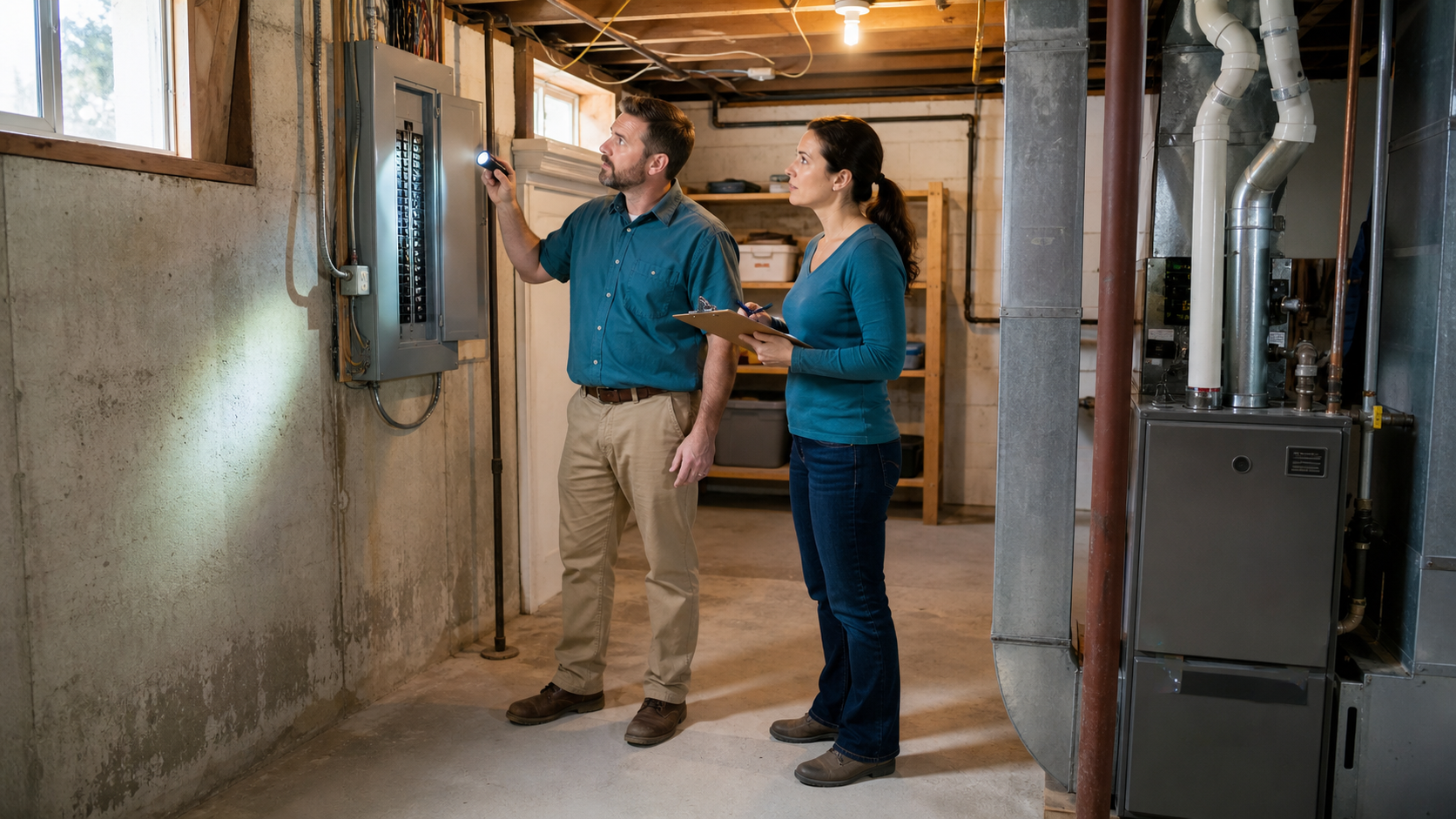
Begin outside with site drainage, roof, exterior surfaces, windows, doors, decks, utilities, and accessory structures. Inside, move room by room before reviewing the attic, basement, crawlspace, mechanical systems, electrical service, plumbing, HVAC, and life-safety items. Photograph model plates, visible defects, and areas that require a specialist.
For homes built before 1978, understand that renovation can disturb lead-based paint. The EPA Renovation, Repair and Painting program explains federal lead-safe requirements and consumer considerations. Local rules may add obligations. Do not treat an ordinary cosmetic allowance as sufficient when regulated hazard work may be involved.
Separate known scope, allowances, and contingency
- Known scope: visible and defined work with measurable quantities.
- Allowance: a placeholder for a selection or condition that is expected but not fully specified.
- Contingency: a visible reserve for uncertainty, not permission to omit obvious work.
Get specialist input for structural movement, water intrusion, sewer or septic concerns, environmental hazards, major electrical deficiencies, foundation work, and additions. A general contractor quote is useful, but compare every quote with the same scope. The lowest total may simply exclude demolition, permits, disposal, finish work, or materials included by another bidder.
Use the rehab estimating workflow to organize scope lines and bids, and read the repair budget guide before your walkthrough.
5. Count every cost in the property analysis
Purchase and repairs are only two parts of the investment. Build a cost stack that follows the property from contract to exit.
Buying costs
Include inspections, appraisal, lender fees, title and settlement charges, legal fees where applicable, recording, transfer costs, insurance paid at closing, prepaid taxes or interest, and required reserves. For applicable mortgage transactions, the CFPB Loan Estimate explainer shows how loan terms, closing costs, and cash to close are presented. Investor and commercial loans may use different documents, so request a written term sheet and fee breakdown from your lender.
Financing costs
Model interest, origination or points, extension fees, draw or inspection fees, appraisal, legal costs, minimum interest, unused-line fees when applicable, and the cash you must contribute. Confirm when interest begins, whether it applies to the full commitment or only drawn funds, and how renovation draws are released.
Holding costs
Include property taxes, insurance, utilities, lawn or snow care, security, HOA charges, loan payments or interest, permits, dumpster time, and routine site costs for the complete realistic schedule. Add time for closing, permits, contractor mobilization, inspections, punch work, marketing, buyer financing, and the possibility of a delayed closing.
Exit costs
A flip may include brokerage, seller closing costs, transfer charges, staging, photography, concessions, warranties, final cleaning, and loan payoff fees. A refinance may include appraisal, lender, title, escrow, legal, and recording costs. A rental needs leasing costs, vacancy, management, maintenance, capital expenditure reserves, utilities paid by the owner, taxes, insurance, and compliance costs.
The IRS distinguishes repairs, improvements, operating expenses, and depreciation in Publication 527. Tax treatment can change cash flow and basis, but it should be reviewed with a qualified tax professional rather than assumed inside an acquisition spreadsheet.
6. Work a complete first-property example
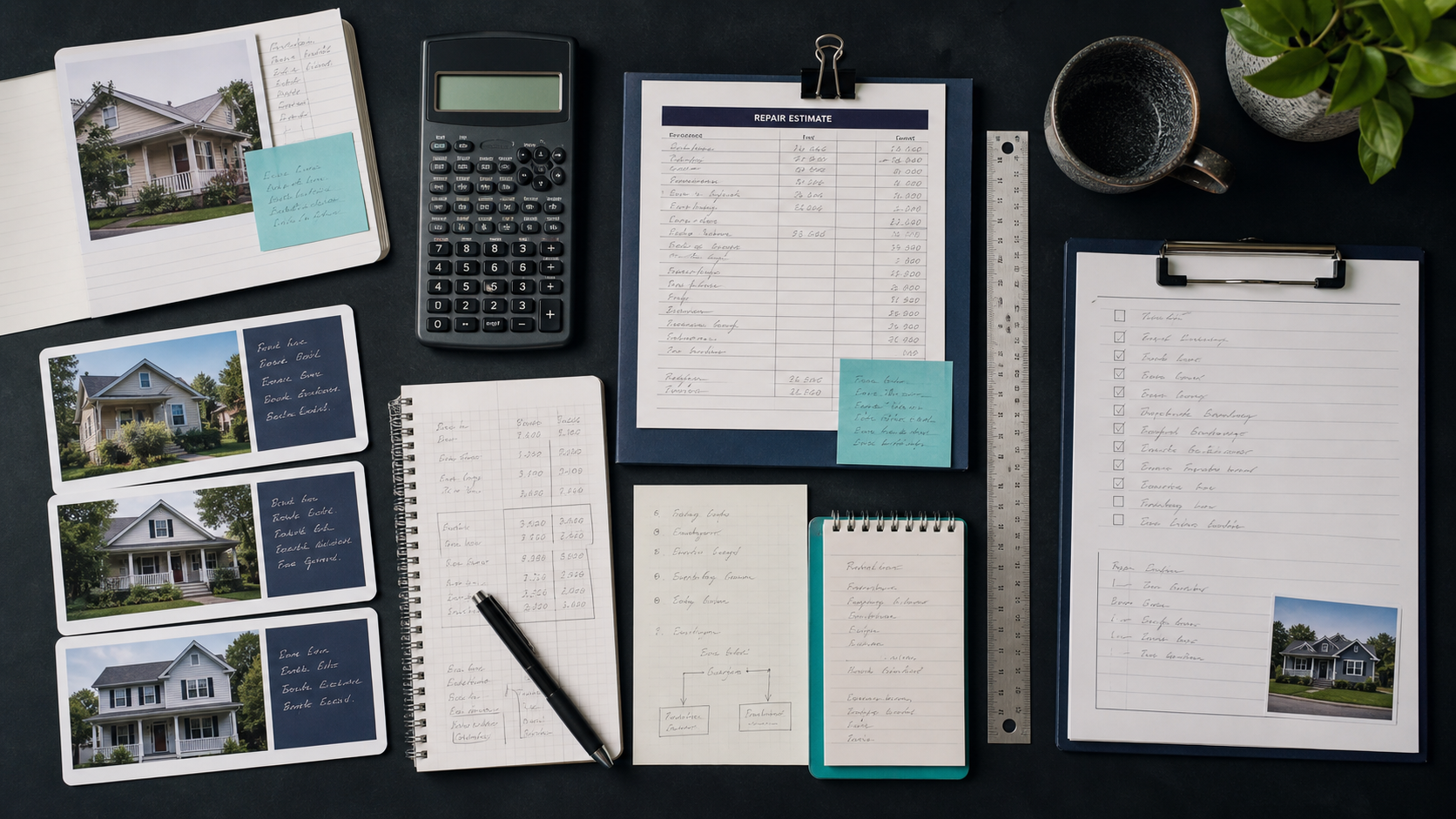
Jordan is evaluating a three-bedroom house listed at $285,000. Renovated comparable sales support an ARV range of $405,000 to $425,000. Jordan uses $415,000 as the likely case, $395,000 as the downside case, and refuses to use the $425,000 top of range as the only path to profit.
The deal fails Jordan's goal. The listing looked attractive because the $145,000 difference between target purchase and ARV seemed large. Once the complete cost stack is included, only about $10,000 remains in the likely case, before income taxes and before any cost above contingency.
Jordan does not solve the problem by raising ARV. Instead, Jordan works backward from a required $55,000 projected profit. With the other assumptions unchanged, the purchase price would need to fall by roughly $44,625, to about $225,375. That is a negotiation decision, not a spreadsheet trick.
Scenario: Luis tests a BRRRR exit
Luis likes the same property but considers holding it. Expected rent is $2,650 per month. After vacancy, maintenance, management, taxes, insurance, capital reserves, and the proposed refinance payment, the property produces negative monthly cash flow. A large appraisal would return more cash, but it would also produce a larger loan payment. Luis rejects the “refinance will fix it” story and moves on.
Scenario: Priya finds a smaller, safer scope
Priya analyzes a dated rental where comparable rentals do not reward a luxury renovation. Instead of replacing every finish, she preserves serviceable cabinets, focuses on safety and durability, replaces failing flooring, repairs the bath, and paints. Her verified scope is $34,000 rather than the $70,000 assumed by another buyer. The property works because her plan matches the rental market, not because she ignored required work.
7. Stress-test the investment property analysis
A likely case tells you what might happen. A downside case tells you whether you can survive being wrong.
Change one assumption at a time
- Reduce ARV or stabilized value by 5% and 10%.
- Increase repairs by a defined amount beyond contingency.
- Add two or three months to the schedule.
- Use a higher interest rate or lower refinance proceeds.
- Add a sales concession or higher vacancy.
- Delay rent-ready or resale timing.
Then combine several plausible problems. Real projects rarely miss in only one category. A hidden plumbing repair may add cost and delay drywall, which extends interest, utilities, insurance, and the listing date.
Measure cash exposure, not only profit
Calculate earnest money, down payment, closing cash, repair funds before reimbursement, reserves, debt service, and emergency liquidity. A project with acceptable projected profit can still fail if you cannot fund draws or carry a delay. Ask the lender exactly how draws work and how quickly reimbursements arrive.
Use Rehabfolio's deal analysis to keep likely and stressed assumptions visible, then connect the accepted scope to budget and expense tracking if the property is purchased.
8. Turn the property analysis into a decision

Before making an offer, write a short investment memo. It should fit on one page and state the strategy, verified property facts, value range, scope total, contingency, financing, timeline, total cost, likely outcome, downside outcome, cash required, unresolved risks, and walk-away price.
Use a go, revise, or no-go test
- Go: evidence supports the main assumptions, the downside is survivable, funding is available, and the expected return justifies the work and risk.
- Revise: the opportunity may work, but a price, scope, financing term, inspection result, or market fact must change before commitment.
- No-go: the property requires optimistic value, incomplete scope, unavailable cash, perfect timing, or a return below your standard.
A no-go is a successful analysis. You protected capital and preserved the ability to pursue a better property. Beginners often measure progress by accepted offers. A healthier measure is how consistently you make disciplined decisions.
Your final pre-offer checklist
- Subject property and legal use verified
- Comparable sales reviewed and value range documented
- Walkthrough completed with specialist follow-up identified
- Scope, allowances, and contingency separated
- Written lender terms and cash-to-close estimate reviewed
- Buying, financing, holding, and exit costs included
- Likely and downside scenarios calculated
- Cash exposure and reserves confirmed
- Backup exit tested independently
- Walk-away price written before negotiation
If you want one place to keep this work, start with the Rehabfolio feature library or run a property through the free browser analyzer. The software can organize the research and arithmetic. The decision remains yours.
Frequently asked questions about analyzing an investment property
What numbers do I need to analyze an investment property?
At minimum, collect the purchase price, realistic current or after-repair value, repair budget, financing terms, buying costs, holding period, holding expenses, exit costs, and your required profit or return. A rental analysis also needs market rent, vacancy, operating expenses, reserves, and the long-term loan payment.
Is the 70% rule enough for a first deal?
No. It is a quick screening rule, not a complete analysis. It does not know your financing, taxes, insurance, timeline, selling costs, local market, property condition, or required return. Use it as one reference, then calculate the full cost stack.
How do I estimate after-repair value?
Start with recent sold properties in the same market that are similar in location, size, type, layout, condition, and utility. Adjust cautiously for meaningful differences. Verify public web research against MLS information, local agents, appraisers, and your own market knowledge.
How much repair contingency should a beginner use?
There is no universal percentage. The right reserve depends on the property age, inspection access, scope certainty, permit risk, contractor detail, and your experience. Build the known scope first, then keep contingency visible as a separate line instead of quietly inflating every item.
Should I analyze a property as both a flip and a rental?
Yes, when both exits are realistic. A backup rental can reduce pressure if the resale market weakens, but only if the property produces acceptable cash flow after vacancy, maintenance, management, taxes, insurance, utilities, capital reserves, and financing.
When should I walk away from a property?
Walk away when the deal only works with an unsupported value, an incomplete repair scope, unrealistic financing, a perfect schedule, missing cash reserves, or a profit too small for the risks you are taking. Your walk-away price should be decided before negotiation pressure begins.
Sources and further reading
- Consumer Financial Protection Bureau: Loan Estimate explainer
- U.S. Environmental Protection Agency: Renovation, Repair and Painting program
- FEMA Flood Map Service Center
- Internal Revenue Service: Publication 527, Residential Rental Property
Last reviewed July 18, 2026. Verify current federal, state, and local requirements before acting.