House flipping insurance: vacant property, builders risk, and coverage gaps
House flipping insurance must follow changing risk from acquisition through renovation and sale. Plan around occupancy, condition, construction activity, contractors, hazards, limits, and handoff dates instead of assuming one familiar policy covers every phase.

Published and last reviewed July 27, 2026 · Written and reviewed by the Rehabfolio editorial team.
Who this guide is for. This guide is for new and growing residential investors who own, finance, renovate, hold, rent, or sell one-to-four-unit properties in the United States. It gives you a practical set of questions and records to take to a licensed insurance professional. It does not recommend a carrier, policy, limit, or deductible.
The Rehabfolio editorial team builds and reviews the product workflows that connect property analysis, repair scope, contractor bids, schedules, financing, lender draws, budgets, expenses, documents, and exit decisions. That product work gives the team first-hand experience tracing a project assumption from acquisition through renovation and sale. It does not make the team an insurance producer, adjuster, attorney, contractor, engineer, accountant, tax adviser, lender, appraiser, or code official.
This is educational information, not insurance, legal, tax, accounting, construction, lending, engineering, or investment advice. Policy language, endorsements, underwriting rules, admitted and surplus-lines markets, state law, contractor requirements, flood rules, lender conditions, and claim decisions vary. Ask a licensed insurance professional in the property's state to explain the actual forms and endorsements. Use qualified local counsel, tax professionals, contractors, engineers, environmental specialists, and code officials when their expertise is relevant.
1. Why a house flip is different from an ordinary home
An owner-occupied house usually has people, furniture, utilities, routine maintenance, and a stable use. A flip may be empty at closing, temporarily without heat or water, exposed during demolition, filled with materials, visited by several trades, and then complete but still unoccupied while listed for sale. Each change matters because insurance contracts describe covered property, covered causes of loss, exclusions, conditions, valuation, duties, and eligible use.
The National Association of Insurance Commissioners explains that even a typical homeowners policy has limits and exclusions, and that business use must be disclosed. It also notes that floods and earthquakes are not covered by a typical homeowners policy. Read the NAIC's homeowners insurance consumer guidance as background, not as proof that a homeowners form fits an investment renovation.
Observed fact: the property's use and physical condition change during a flip. Assumption to verify: an insurer will accept those changes under one form. Opinion: the safest beginner workflow treats every change in occupancy, construction, and exit plan as a reason to request written confirmation.
A premium quote is not a complete coverage comparison. Before you choose, obtain the quote, application, binder, declarations, forms, endorsements, exclusions, deductible schedule, inspection requirements, vacancy conditions, protective-device conditions, cancellation terms, and claim contact. Ask which documents control if they conflict.
2. Map the insurance timeline before you shop
Start with dates and property facts, not insurance labels. Your property analysis, repair scope and budget, and holding-cost timeline should already identify the facts an insurance professional needs.
- Before closing: record the legal owner, borrowing entity, lender, current occupancy, building condition, utilities, existing damage, intended work, contractors, estimated construction cost, target start date, and expected exit.
- Closing to construction: identify any period when the building is empty but work has not started. Do not hide this gap inside the renovation schedule.
- Active construction: record demolition, structural changes, roof work, system replacements, square-footage additions, material deliveries, and subcontractor activity.
- Substantial completion: define what event ends the renovation-period form. Final inspection, certificate of occupancy, first occupancy, cessation of work, or another policy condition may matter.
- Listing and sale: account for staging, open houses, buyer visits, punch-list work, and the period through title transfer.
- Rental or refinance: if the exit changes, replace the planned sale handoff with coverage designed for the actual rental or occupied use.
Jorge Kim closes on a duplex on August 4, but his permit and contractor start are scheduled for August 25. His first mistake would be describing the policy period only as “six months of renovation.” The three-week vacant gap is a separate fact. His second mistake would be treating the projected December completion as the policy end date without confirming what the contract calls completion.
Keep this timeline beside your financing comparison. Lender deadlines, draw inspections, policy expiration, and the planned sale can collide. A less expensive policy term may become costly if it expires before delayed work, final inspections, or sale closing.
3. Vacant and unoccupied do not mean the same thing everywhere
Investors often use “vacant” to mean nobody sleeps at the property. Policy and state definitions can be more specific. New York's Department of Financial Services, for example, has discussed “vacant” as generally lacking inhabitants and most personal property, while “unoccupied” may retain furnishings but not be lived in. That discussion is tied to New York law and forms, so use it to understand the distinction, not to define a property in another state. Read the New York vacancy and unoccupancy guidance.
Time thresholds also vary. The NAIC warns in guidance for temporarily absent homeowners that some policies may not pay certain claims after a house has been vacant for 60 days, and it tells consumers to ask the insurer how the policy defines vacancy. Texas's Department of Insurance lists a house being vacant for 60 days or more as one possible reason for nonrenewal under Texas rules. Neither source creates a national 60-day rule. They show why the actual form and state law matter. See the NAIC vacancy discussion and the Texas Department of Insurance guidance.
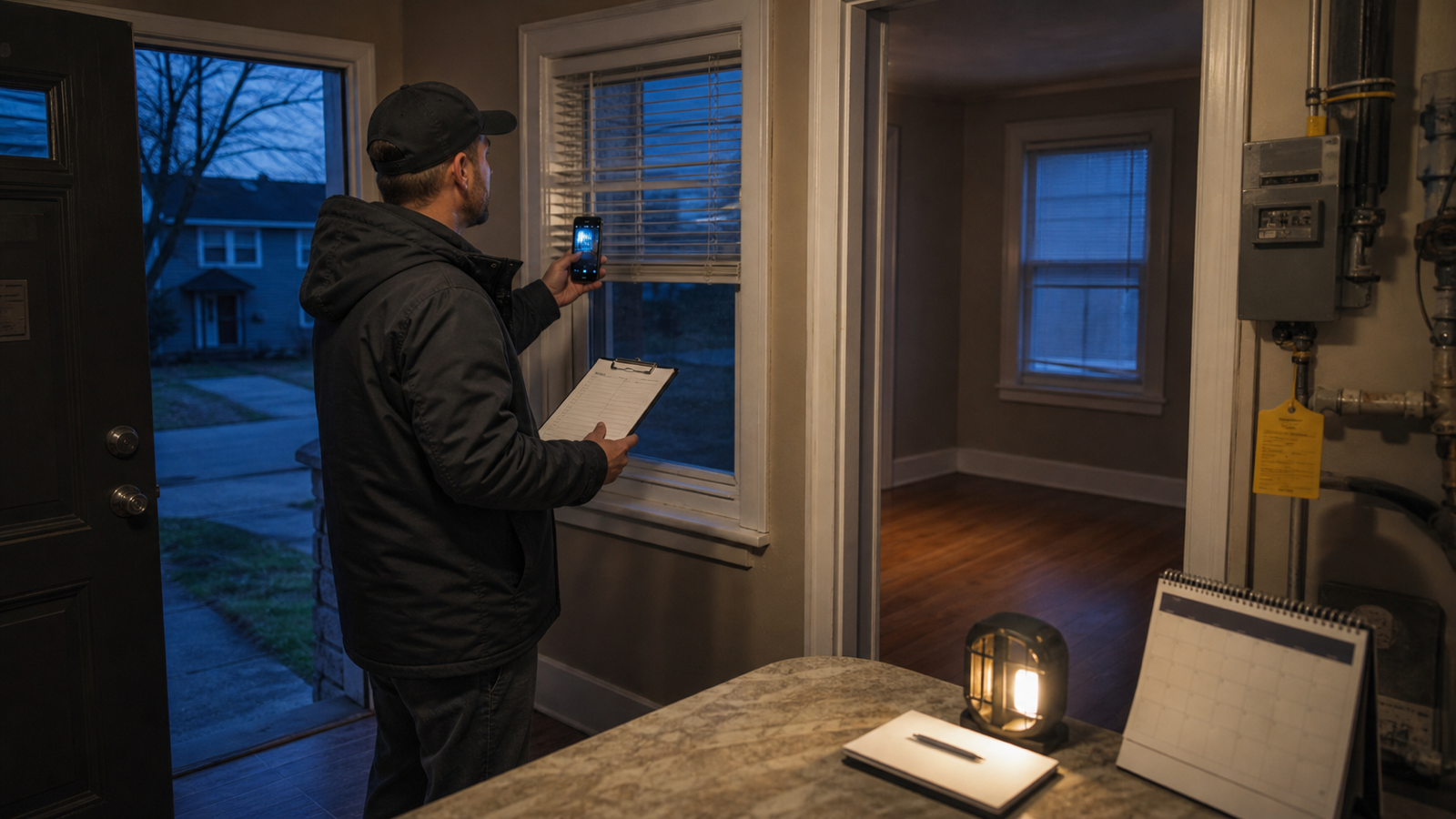
Questions to ask about vacancy
- How does this exact policy define vacant, unoccupied, under construction, renovation, and cessation of work?
- Does a vacancy condition remove coverage, reduce coverage, increase a deductible, or trigger cancellation or nonrenewal?
- Which causes of loss change during vacancy, such as theft, vandalism, glass breakage, water, or freezing?
- Are utilities required to remain on, heat maintained, water shut off, alarms active, windows boarded, or inspections documented?
- Does the building's current condition meet underwriting requirements today?
- Does coverage begin at title transfer, policy binding, or another stated time?
Lena Moreno is buying her first cosmetic flip. The seller moved out two weeks ago, the house is empty, and Lena plans to close Friday. She asks the producer to state in writing that the quoted form accepts an investment property that is empty at inception, that interior painting and cabinet replacement are disclosed, and that coverage begins no later than title transfer. She also records the utility plan and weekly property checks. The checklist does not create coverage, but it reduces ambiguity in her application and project record.
4. Builders risk is property coverage during construction, not a magic umbrella
Builders risk is also called course-of-construction coverage. The Illinois Department of Insurance defines builders risk as coverage for a home under construction and notes that it must transition to homeowners coverage when construction is complete. That state glossary is a useful plain-language starting point, but it does not describe every form or a flip investor's exact transition. See the department's commercial property insurance definitions.
A renovation form may address the existing building, work in progress, materials, temporary structures, debris removal, pollutant cleanup, ordinance or law costs, testing, transit, or off-site storage. Another form may omit or sublimit some of them. Covered causes of loss also differ. “Builders risk” on a certificate is a category, not an answer.
Define the property at risk
Marcus Reed buys a fire-damaged single-family house for $185,000 and plans a $140,000 reconstruction. The projected resale value is $430,000. None of those numbers automatically equals the correct policy limit. Marcus asks how the form values the remaining structure, new work, owner-purchased appliances, contractor-purchased materials, items stored off-site, demolition debris, professional fees, and the cost to redo completed work after a covered loss.
He also identifies prior fire damage in photos and the scope. Existing damage is not a new insured loss. Separating pre-closing condition from new work makes the application more accurate and creates a baseline for later documentation.
Define the construction period
Ask what starts and ends the policy's construction period. Material delivery, demolition, contract execution, final inspection, occupancy, or abandonment of work may have different effects. Ask how long work can stop before a cessation condition applies. If a permit delay, contractor dispute, weather event, or funding delay pauses the site, notify the appropriate insurance contact and obtain written guidance rather than assuming the calendar remains harmless.
Builders risk also should not be confused with a guarantee of contractor performance. A policy may respond to specified physical loss, but it does not automatically pay because work is defective, late, over budget, or abandoned. Review faulty-work exclusions and any resulting-loss language with qualified professionals.
5. Separate property coverage, liability, and contractor insurance
Property coverage asks what happens when covered property is physically damaged by a covered cause. Liability coverage asks what happens when the insured allegedly causes bodily injury or property damage to someone else. Workers' compensation addresses employee work injuries under applicable law. Professional, environmental, auto, equipment, cyber, and umbrella coverage address other categories. One certificate should not be treated as proof that every category exists or applies.

Massachusetts consumer guidance tells homeowners to ask contractors for proof of liability insurance and workers' compensation insurance when applicable. It also recommends checking registration and history. The state separately provides a tool to check workers' compensation coverage, while warning that a missing search result does not automatically prove no coverage exists. These are Massachusetts processes, but the verification habit travels well. Review the current Massachusetts contractor guidance and its workers' compensation verification process, then use the agencies and rules in the property's state.
Verify more than a certificate
- Match the contractor's legal name to the agreement, registration, license, certificate, and payment instructions.
- Record policy type, limits, effective dates, insurer, agent or broker, and certificate issue date.
- Verify current status through an authoritative source or the listed insurance contact using independently obtained contact information.
- Ask counsel and the insurance professional whether additional-insured, waiver, primary-and-noncontributory, or other contract requirements are appropriate and actually supported by endorsements.
- Repeat the process for subcontractors when the contract and local rules require it.
- Create an expiration reminder and stop-work escalation before a policy lapses.
A certificate is evidence, not the policy itself, and certificate wording does not rewrite exclusions. Do not infer that the contractor's policy insures the investor's building, materials, loan, profit, or schedule. Make ownership of builders risk, deductibles, loss proceeds, security, materials, and claim duties explicit in the construction contract.
6. Check flood, earthquake, wind, sewer, water, theft, and ordinance gaps
“All risk” or “special form” does not mean every event is covered. Insurance forms typically start broad and then apply exclusions, limitations, conditions, and endorsements. Ask about the actual causes of loss that matter for the property and work.
Flood needs its own decision
The National Flood Insurance Program says most homeowners insurance does not cover flood damage. It also explains that building and contents are separate coverage categories and that eligibility and coverage depend on property circumstances. Start with official NFIP flood guidance and the FEMA flood map tools. A map is a risk input, not a policy decision and not a promise that water damage is covered.
Priya Shah plans an $180,000 renovation of a low-lying house. Her base model calls the project “not in a high-risk zone,” but she still checks the effective map, local floodplain office, elevation information, lender conditions, and separate flood options. She also asks the local official whether the scope could be treated as a substantial improvement. FEMA explains that, for National Flood Insurance Program floodplain management, a structure can be substantially improved when improvement cost equals or exceeds 50 percent of pre-construction market value, with the community making and enforcing the determination. Read FEMA's substantial-improvement overview and ask the local authority how cumulative-improvement rules and project costs are handled.
Build a peril question list
- Water: distinguish flood, surface water, sewer or drain backup, groundwater, rain entry, frozen pipe, and sudden plumbing discharge.
- Wind and hail: check named-storm, wind, and hurricane deductibles, roof limitations, and temporary protection requirements.
- Theft and vandalism: ask whether installed and uninstalled materials, copper, HVAC equipment, tools, appliances, and glass are covered.
- Earth movement: ask separately about earthquake, sinkhole, landslide, settling, excavation, and neighboring-property effects.
- Ordinance or law: ask about demolition of undamaged portions, code upgrades, increased construction cost, and required compliance after a covered loss.
- Environmental conditions: do not assume mold, asbestos, lead, fuel oil, pollutants, or remediation are covered.
Use qualified specialists to identify hazards. An insurance policy is not a substitute for inspections, safe construction, moisture control, security, permits, or code compliance.
7. Compare limits, valuation, deductibles, and sublimits in dollars
A $500,000 limit does not promise a $500,000 payment. Coverage still depends on insured property, cause of loss, conditions, valuation, deductibles, sublimits, coinsurance or reporting provisions, and the measured loss. Compare the claim math, not just the top-line limit.
Replacement cost and actual cash value are different
The NAIC explains that replacement cost generally reflects the amount needed to repair or replace without deducting depreciation, while actual cash value generally reflects replacement cost less depreciation. Forms, timing, and conditions matter. Some policies initially pay an actual-cash-value amount and require completed repairs before additional replacement-cost amounts become available. Ask how the actual contract handles a partially renovated building.
Test a deductible with a realistic loss
Teaching assumptions: Sofia Bennett's policy has a $5,000 base deductible and a separate 2 percent named-storm deductible applied to a $360,000 stated building limit. If the percentage applies as assumed, the named-storm deductible is $7,200:
Observed document fact: the declarations show two deductible entries. Calculation: two percent of $360,000 is $7,200. Assumption requiring confirmation: the percentage uses the building limit and applies to the event Sofia is modeling. Opinion: Sofia should reserve at least the larger applicable deductible plus uncovered emergency costs, but a licensed professional must explain which deductible controls.
Repeat that exercise for theft, water, wind, flood, earthquake, and other separate deductibles. Then examine sublimits for materials in transit, off-site storage, temporary structures, debris removal, trees, scaffolding, plans, ordinance or law, pollutant cleanup, and service interruption. A useful budget carries the premium and a loss reserve as separate items.
8. Reconcile the lender, owner, contractor, and policy
A lender's checklist protects the lender's interest. It is not a complete risk analysis for the investor. Compare the lender condition, loan documents, construction contract, title owner, borrower entity, and insurance documents line by line.
- Is the property owner correctly named?
- Is the borrowing entity the same party, and if not, how is its interest handled?
- How is the lender shown, and what exact wording does the loan require?
- Who is responsible for buying and paying for builders risk?
- Who receives claim notices and loss proceeds?
- Who can authorize repairs, sign proofs of loss, or endorse payments?
- Does the lender require advance notice of cancellation or material change?
- What happens if the construction scope, budget, contractor, or completion date changes?
Do not casually substitute “additional insured,” “mortgagee,” and “loss payee.” They describe different interests and rights depending on the contract and endorsement. Ask the insurance professional and counsel to use the required language, then verify it on the issued documents.
Store the binder, declarations, forms, endorsements, invoices, lender approval, contractor evidence, inspections, and correspondence together. Rehabfolio's reports and document workflows are designed to keep decision evidence with the project, while the project management workflow connects dates and responsible parties. The product does not interpret coverage or replace the policy.
9. Work a complete house flip insurance plan
Malik Thompson is buying a vacant three-bedroom house for $240,000. His verified renovation budget is $95,000, with $18,000 of appliances and finish materials expected on site at the busiest point. He plans two weeks between closing and demolition, four months of work, one month for final approval and staging, and two months to sell. The numbers below are teaching assumptions, not quotes or market benchmarks.
Step 1: freeze the project facts
Malik gives the same facts, scope, photos, entity information, lender requirements, and contractor plan to each licensed producer. He does not ask, “What does flip insurance cost?” He asks for a written explanation of how each option handles every project phase.
Step 2: build a coverage matrix
Step 3: model project cash, not just premium
Option Cedar has an assumed $3,400 term premium, a $5,000 base deductible, and a quoted $450 extension if the project runs beyond nine months, subject to underwriting. Option Maple has an assumed $3,050 premium, a $10,000 base deductible, and an assumed $900 cancellation minimum if sold early. Malik also assigns $700 for separate contractor-verification and risk-control work, which is a project assumption rather than insurance premium.
The second pair is not expected cost. It is a simple liquidity test if one covered event applies and the stated base deductible controls. Maple's premium is $350 lower, but its modeled premium-plus-deductible exposure is $4,650 higher. Malik still cannot choose from those numbers. He must compare covered causes, valuation, limits, sublimits, exclusions, conditions, liability, insurer and intermediary details, cancellation, extension, and lender acceptance.
Step 4: run a schedule downside
Malik adds a 75-day delay caused by permit revisions and cabinet replacement. His expected sale moves beyond nine months. He asks Cedar whether the $450 extension is a right or a new underwriting decision, and he asks Maple whether coverage continues through listing if construction ended earlier. He adds extension premium, another property inspection cycle, extra security, and the related holding costs to the downside model.
Decision record: Malik's opinion is that the preferred option must accept vacancy at inception, cover the existing structure and disclosed renovation, include the material locations he actually uses, satisfy the lender, and provide a workable completion-to-sale transition. Price breaks the tie only after those conditions are verified in issued documents.
He records the selected premium in the budget and expense workflow, stores evidence and endorsements with the project, and creates reminders 45 and 15 days before expiration. Those are first-hand product workflow practices. They organize the decision but do not determine coverage.
10. Prepare the claim record before a loss happens
The best time to decide what evidence you need is before water, fire, wind, theft, or an injury changes the site. Build a dated baseline at acquisition and update it as work progresses.

- Photograph and video every room, exterior elevation, roof area visible from a safe location, utility, damaged area, and stored-material location.
- Keep the original inspection, seller disclosure, estimates, scope, permits, contracts, bids, change orders, invoices, receipts, payment evidence, draw inspections, and progress photos.
- Record serial numbers, model numbers, quantities, delivery dates, storage locations, and ownership of significant materials and equipment.
- Maintain emergency contacts for the insurer, producer, lender, contractor, utilities, water mitigation, board-up, local authority, and counsel.
- Write a safe incident protocol: protect people, call emergency services when needed, prevent additional damage when safe, notify required parties, preserve evidence, and obtain instructions before discarding material.
The NFIP tells policyholders to report flood losses immediately and to prepare photos and records. The exact duties for any claim come from the applicable contract and law. Do not delay required notice while trying to perfect the file, and do not make unsafe entry or destructive changes merely to collect evidence.
Devon Price discovers a small plumbing discharge after a cabinet installation. He shuts off water safely, photographs the source and affected area, notes the discovery time, contacts the policy claim number, informs the lender and contractor as required, and preserves mitigation invoices. He labels prior staining from the acquisition photos separately from the new wet area. The carrier and qualified professionals determine coverage and cause. Devon's record simply preserves the facts.
Tax handling also needs records. IRS Publication 551 says casualty insurance premiums are not part of real-property settlement-cost basis and discusses separate rules for business expenses, production, property held for resale, capitalization, casualty reimbursements, and basis adjustments. A flip's facts can change the result. Read current IRS Publication 551 and ask a qualified tax professional how to record premiums, deductibles, repairs, reimbursements, and improvements.
11. Use this repeatable insurance workflow for every flip
- Confirm the legal owner, borrower, lender, property address, occupancy, condition, utilities, scope, contractors, schedule, and exit.
- Create phase dates for pre-construction vacancy, active work, any expected pause, completion, listing, rental occupancy if applicable, and sale.
- Give each licensed professional the same written facts, photos, scope, budget, and lender requirements.
- Obtain and compare the application, quote, binder, declarations, forms, endorsements, exclusions, deductibles, valuation, cancellation, and claim contacts.
- Verify how the existing structure, new work, materials, transit, storage, theft, water, vandalism, liability, and location-specific hazards are handled.
- Confirm vacancy definitions, protective-device requirements, inspections, utilities, cessation of work, and notice duties.
- Verify contractor registration, licensing, liability, workers' compensation, and contract requirements using authoritative sources for the state.
- Reconcile the policy with the loan and construction contracts, including names, interests, notices, deductibles, and loss proceeds.
- Model premium, deductibles, extension cost, early cancellation, uncovered reserves, and a delayed schedule in the full project budget.
- Store condition photos, invoices, material records, certificates, endorsements, and written confirmations with the project.
- Create reminders before policy, contractor coverage, permits, and required inspections expire.
- Request written confirmation at every change in occupancy, scope, contractor, pause, completion, exit, or ownership.
- Bind replacement coverage before ending prior coverage, and retain the written handoff and cancellation confirmation.
Insurance belongs beside the maximum-offer cost stack, not in a note added after closing. If the cost, deductible, or excluded risk makes the deal too fragile, revise the scope, purchase price, financing, reserve, or exit before committing more capital.
Carry the selected premium, deductible exposure, renewal dates, and required inspections into the renovation budget and the contract-to-project handoff. That keeps insurance from becoming an unpriced condition after the offer is accepted.
Frequently asked questions
What insurance does a house flipper usually need?
There is no universal house-flip policy. The needed arrangement depends on ownership, occupancy, property condition, renovation scope, contractors, location, lender requirements, and exit plan. Investors commonly ask a licensed insurance professional about property coverage written for vacancy or renovation, builders risk or course-of-construction coverage, premises or commercial general liability, flood or other location-specific coverage, and the transition to landlord or completed-property coverage. Only the actual policy and endorsements determine coverage.
Is builders risk the same as vacant property insurance?
No. Builders risk generally addresses property during construction or renovation, while vacant-property coverage addresses a building's occupancy condition. A flip can involve both conditions, but policy forms combine or separate them differently. Ask in writing whether the building, existing structure, new work, stored materials, theft, vandalism, water damage, and liability are covered during each project phase.
Does a contractor's insurance cover the investor's house?
Do not assume it does. A contractor's liability or workers' compensation coverage serves a different purpose from property coverage on the investor's building and materials. Obtain current evidence, verify it with the listed source, review the construction contract, and ask licensed insurance and legal professionals how the owner's, contractor's, and subcontractors' policies coordinate.
How much should I insure a flip for?
Do not use purchase price or projected resale value as an automatic policy limit. Ask how the policy values the existing structure, renovation work, materials, debris removal, professional fees, and other covered property at risk. Confirm whether settlement is based on replacement cost, actual cash value, stated value, or another method, and test the deductible and any coinsurance or sublimits in dollars.
Does house flip insurance cover flood damage?
Most homeowners insurance does not cover flood damage, according to the National Flood Insurance Program. A builders risk or vacant-property form may also exclude or limit flood. Check the official FEMA flood information and local requirements, then ask about separate flood coverage, effective dates, limits, waiting periods, and whether the specific building and renovation qualify.
When should coverage change during a house flip?
Review coverage before closing, before demolition or material delivery, whenever occupancy or scope changes, at substantial completion, when the property is listed or staged, before a tenant moves in, and at sale closing. Do not cancel the renovation-period policy merely because work looks finished. Obtain written confirmation that replacement coverage is effective and that the prior carrier's termination requirements are satisfied.
Editorial methodology and source notes
The Rehabfolio editorial team selected this topic because insurance is a distinct property-risk decision that can be lost inside financing or holding-cost estimates. We reviewed current regulator and government material on homeowners exclusions, vacancy, builders risk terminology, contractor verification, workers' compensation, flood, floodplain substantial improvement, and tax records. We then tested the guidance against the product workflow that connects property facts, scope, schedule, budget, lender documents, contractor evidence, and exit. Named people and numbers are original teaching scenarios, not customers, testimonials, quotes, market averages, or promised results.
Source language is separated from our calculations and opinions. State examples are labeled as state-specific. Policy categories are described as questions because the issued forms control. This guide was last reviewed July 27, 2026. Readers should recheck source updates, policy forms, state rules, FEMA maps, local code decisions, and professional advice for their property.
- National Association of Insurance Commissioners: homeowners insurance guidance
- National Association of Insurance Commissioners: vacancy-clause example
- Illinois Department of Insurance: commercial property definitions
- New York Department of Financial Services: vacant and unoccupied residences
- Texas Department of Insurance: cancellation and nonrenewal guidance
- Massachusetts Office of Consumer Affairs: contractor verification
- Massachusetts Department of Industrial Accidents: workers' compensation verification
- National Flood Insurance Program: flood insurance basics
- Federal Emergency Management Agency: flood map products and tools
- Federal Emergency Management Agency: substantial improvement overview
- Internal Revenue Service: Publication 551, Basis of Assets
Keep the scope, schedule, budget, documents, and handoffs together.
Rehabfolio organizes the property workflow. Licensed local professionals interpret and place insurance.
Create free account