House flip project schedules: critical path, trade sequencing, and delay recovery
A useful renovation schedule is more than a list of hopeful dates. It shows the work, the order, the responsible people, the required decisions, and the handoffs that control completion. This guide explains how to build, update, and recover a schedule without hiding uncertainty.

Published and last reviewed August 7, 2026 · Written and reviewed by the Rehabfolio editorial team.
Who this guide is for. This guide is for new and growing residential investors in the United States who need to coordinate a fix and flip from preconstruction through final closeout. It is most useful when an owner, general contractor, specialty trades, suppliers, lenders, and inspectors depend on the same timeline.
The Rehabfolio editorial team builds and reviews product workflows that connect property scopes, estimates, tasks, calendars, contractor bids, material orders, permits, inspections, photos, expenses, change orders, risks, and project reports. That work gives the team first-hand experience tracing how a missed predecessor or an outdated task date affects the rest of a renovation record. It does not make the team a contractor, scheduler, architect, engineer, code official, safety professional, attorney, insurer, lender, accountant, or tax adviser.
Construction duties, contract rights, permit rules, safety programs, inspection availability, labor rules, and professional licensing vary. Consult appropriately licensed local contractors and design professionals, the authority having jurisdiction, construction counsel, your insurer and lender, and a qualified tax professional. This guide is educational information, not construction, safety, legal, insurance, lending, tax, or investment advice.
1. What a house flip project schedule must answer
A scope says what the property needs. A budget says what the investor expects to spend. A schedule explains how the work and decisions move through time. Start with the beginner repair-budget workflow, because a date attached to an incomplete scope is not a reliable plan.
A controlled schedule should let a beginner answer seven questions:
- What activities and approvals are required to reach the next milestone?
- Which activity must finish before another can start?
- Who owns each decision, handoff, and progress update?
- What labor, access, material, permit, inspection, or information constraint applies?
- Which connected path currently controls the completion date?
- How much real flexibility exists before a delay moves that date?
- What changed since the approved baseline, and what is the cost or risk effect?
The U.S. Government Accountability Office describes a reliable schedule as comprehensive, well-constructed, credible, and controlled. Its official Schedule Assessment Guide is written for larger programs, not small residential flips. We use its general logic as a methodology reference: capture all activities, sequence them, assign resources, establish durations, confirm traceability, identify the critical path, test float, assess risk, update actual progress, and maintain a baseline. Local residential contracts and professional practice still control the job.
Scenario: Maya Chen replaces a promise with a model. Maya hears that her two-bedroom renovation should take eight weeks. She does not enter “finish in eight weeks” as the plan. She lists permit review, owner selections, demolition, structural repair, rough trades, inspections, insulation, drywall, finishes, punch work, final approvals, and sale preparation. The calculated path finishes later, but it gives her a date she can explain and update.
Observed fact: the electrical permit is issued. Calculation: the current activity network forecasts rough inspections on September 18. Assumption: the inspector and all three rough trades are available within the planned windows. Opinion: Maya should protect two additional working days before drywall release. Keeping these labels separate stops a management preference from appearing to be a verified fact.
2. Build the complete activity list before choosing a finish date
Break the project into work that can be assigned, measured, and closed. “Renovate kitchen” is too broad because cabinets, countertops, electrical, plumbing, wall repair, flooring, paint, appliances, and inspection handoffs do not share one owner or dependency. “Install kitchen” is also too vague to prove progress.
Build the activity list from these records:
- Property facts and scope. Include investigation, design decisions, concealed-condition allowances, and each trade package.
- Contract requirements. Capture submittals, deposits, owner decisions, notice periods, progress evidence, and closeout documents.
- Permits and inspections. Add application, review, corrections, issuance, required inspection stages, reinspections, and formal closeout. The permit and inspection guide explains this workflow.
- Procurement. Add field measurements, selection approvals, order release, lead time, delivery inspection, replacement time, acclimation, and installer handoff. Use the material procurement guide for the detailed record.
- Funding and payment. Include lender approvals, draw requests, evidence review, payment processing, conditional releases where applicable, and final closeout. Pair dates with the contractor payment schedule guide.
- Protection and turnover. Include utility activation, weather protection, security, cleaning, testing, punch work, final documents, photography, listing preparation, and sale closing assumptions.
Use activities with a clear start condition and finish condition. “Drywall inspection complete” can close with the approved inspection record. “Drywall almost done” cannot. A milestone has zero duration and marks an event such as permit issuance, rough approvals complete, permanent power available, or property ready for listing. Do not turn every task into a milestone.
Scenario: Luis Martinez finds three missing activities. Luis scheduled window installation immediately after delivery. The supplier requires verified openings before release, the permit reviewer needs product information, and the installer needs a weather-tight staging area. Luis adds those activities and owners. The delivery date moves, but the schedule now shows the work that had always existed.
3. Connect real dependencies instead of stacking dates
A dependency explains why an activity cannot proceed. The most common relationship is finish-to-start: rough plumbing must finish before its inspection can be completed. Other relationships may be valid, but an unexplained overlap or fixed date can conceal the real handoff.
- Physical dependency: framing closes an opening before field measurement.
- Regulatory dependency: required rough approval occurs before concealment.
- Resource dependency: the same crew cannot complete two distant tasks at once.
- Information dependency: an owner selection or engineer response is needed before release.
- Commercial dependency: a deposit, draw, or signed change order is required before work proceeds.
- Safety or access dependency: protection, de-energization, ventilation, or controlled access must exist first.
Avoid replacing logic with a date constraint such as “must start Monday.” Ask what makes Monday possible. If the answer is cabinet delivery, inspection approval, and installer availability, link those conditions. The date should be a result of the network plus approved commitments, not a decoration.

A sound network can be traced forward and backward. A change to framing should flow forward to rough work, inspection, drywall, cabinets, counters, punch work, and listing readiness. The planned listing date should trace backward through all required predecessors. Open-ended activities and unexplained lags deserve review because they can create false float.
4. Find the critical path, then watch the paths close behind it
The critical path is the longest connected route to the completion milestone under the current logic, durations, constraints, and resources. Its activities usually have the least total float. Float is schedule flexibility, not spare labor, free money, or automatic permission for a contractor to finish late.
Suppose final cleaning cannot finish until cabinets, counters, plumbing trim, appliances, paint touch-up, and punch corrections finish. If the cabinet path controls the latest handoff, that path is critical. If electrical trim has two days of total float, it may move two days before it affects the completion milestone, assuming no other dependency or resource conflict changes.
Review near-critical paths too. The GAO guide warns that a path close behind the current critical path can overtake it. On a small flip, one failed rough inspection, a late panel, or a two-day crew conflict can change which sequence controls completion. A weekly report that names only yesterday's critical activity can miss tomorrow's risk.
Scenario: Aisha Robinson protects the near-critical path.Aisha's cabinet route is critical with zero calculated float. Her electrical route shows two working days. A delayed service release consumes those two days, making both paths critical. She coordinates the utility, electrician, inspector, and cabinet installer before adding overtime to unrelated painting. More people on a noncritical task would not fix the controlling handoff.
5. Estimate durations from quantities, capacity, uncertainty, and place
A duration is not the same as elapsed calendar time. A three-working-day activity may span five calendar days. Define workweek, holidays, expected inspection processing, delivery windows, cure times, and any approved work-hour limits. Then estimate each activity from scope quantity and realistic crew capacity where practical.
For uncertain work, record a most likely duration and a defensible slower case. Hidden damage, permit corrections, custom fabrication, weather exposure, scarce trades, and utility coordination deserve explicit risk treatment. Do not simply inflate every task. That makes the schedule long without showing where the risk lives.
Weather planning must be local. NOAA explains that its climate normals are 30-year averages used to put conditions in historical context and support construction planning. Review the official climate normals explanation and relevant local data for seasonal planning. A normal is not a forecast for a specific workday. Near-term site decisions still depend on current forecasts, actual conditions, manufacturer limits, safety judgment, and contract terms.
Resource-load the activities that can conflict. If the same project manager must attend a rough inspection and a lender draw walkthrough at the same time, the spreadsheet's overlap is not executable. If one crew is promised to three houses, obtain a project-specific commitment rather than assuming continuous capacity.
6. Worked example: turn a 12-week target into a testable plan
Jordan Patel is renovating a 1,420-square-foot three-bedroom house. The scope includes a kitchen reconfiguration, one bath, service work, plumbing repairs, windows, flooring, paint, and exterior touch-up. The following summary is a teaching calculation, not a universal production rate or promise.
| Workstream | Working days | Key predecessor | Primary risk |
|---|---|---|---|
| Final scope, selections, permit package | 8 | Property investigation | Owner decision or review correction |
| Permit review and procurement releases | 15 assumed | Complete submission and verified dimensions | Agency response or supplier change |
| Protection, demolition, framing | 9 | Permit and lead-safe plan where applicable | Concealed condition |
| Rough plumbing, electrical, HVAC | 8 | Framing and equipment decisions | Trade conflict or missing material |
| Rough inspections and corrections | 4 assumed | Rough work complete | Failed inspection or appointment timing |
| Insulation, drywall, prime | 10 | Required approvals | Cure conditions or correction |
| Cabinets, trim, flooring, finish trades | 13 | Dry interior and delivered materials | Damage, congestion, or rework |
| Finals, punch, cleaning, listing prep | 8 | Systems and finishes complete | Closeout correction |
Adding every row produces 75 working days, or about 15 five-day weeks, but that is not the project duration because some procurement and finish activities can overlap safely. After Jordan links only defensible overlaps, the calculated path is 52 working days. He adds six visible working days of time reserve tied to permit, concealed-condition, inspection, and delivery uncertainty. The planning range becomes 52 to 58 working days, roughly 10.4 to 11.6 five-day weeks.
Observed facts: the measured scope, current trade commitments, issued supplier quotes, and permit status as of the update date. Calculations: 52 network working days plus six days of visible reserve equals 58 working days. Assumptions: the review interval, inspection response, crew capacities, and no additional concealed damage. Opinion: Jordan should communicate a 12-week renovation planning window rather than promise the optimistic network date.
Jordan then connects the six-day slower case to the house flipping holding-cost model. If his documented ownership and financing cost averages $238 per calendar day, a nine-calendar-day delay estimate adds $2,142 before any recovery cost. That is a calculation from his assumptions, not a claim that every delay costs the same.
7. Sequence trades, inspections, and safety controls as real hold points
A fast schedule never overrides safe work, approved documents, manufacturer instructions, or required inspection. OSHA's construction rule states that employers must initiate and maintain necessary safety programs and provide for frequent and regular inspections of jobsites, materials, and equipment by designated competent persons. Read 29 CFR 1926.20, then have the responsible employers and qualified local professionals establish the actual site plan. An investor's calendar is not a safety program.
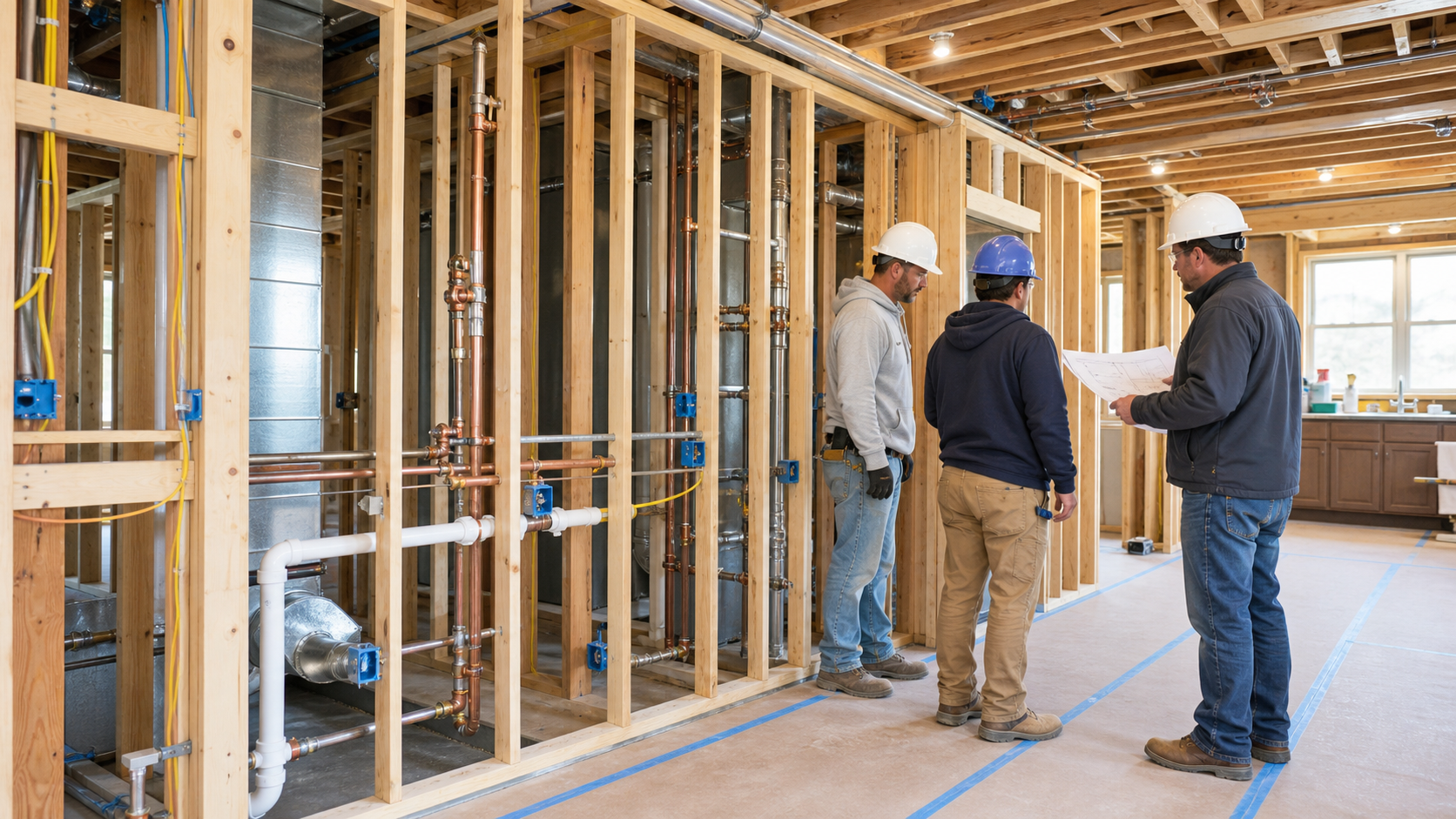
Inspection stages are jurisdiction-specific. Seattle's official inspection service, for example, says permits require inspections to confirm steps in construction and installation. That page is an example, not a national schedule. Obtain the actual inspection list, sequence, request method, readiness criteria, and closeout rules for the property's authority.
For pre-1978 housing, schedule lead-safe responsibilities before covered paint disturbance. EPA's current Renovation, Repair and Painting program guidance explicitly says the rule can apply when someone buys, renovates, and sells homes for profit. It includes certification, training, and work-practice requirements. Confirm federal and any EPA-authorized state or tribal program before work. Do not place demolition on Monday and investigate compliance on Tuesday.
Trade overlap should pass five checks: separate or coordinated work zones, sufficient access, compatible utility states, approved protection and safety controls, and no quality or inspection conflict. Drywall cannot responsibly “catch up” by concealing unapproved rough work. Flooring speed does not justify installing over a substrate that has not met required conditions.
8. Approve a baseline, then update actual progress every week
The baseline is the approved reference for measuring change. Save the activity logic, planned dates, assumptions, data date, responsible parties, milestones, and authorized scope version. A live forecast may change each week; the original baseline should not silently move with it.
At each update, record:
- actual starts and actual finishes supported by field evidence;
- remaining duration for in-progress activities, not just a guessed percentage;
- new or removed dependencies and the reason;
- current critical and near-critical paths;
- consumed float, projected milestones, and variance from baseline;
- permit, inspection, material, safety, weather, funding, and decision constraints;
- the named owner and due date for each recovery or risk action.
Status only work completed by the data date. Future work is forecast. A task that started late but still shows the old finish date needs a documented capacity or recovery explanation. “Ninety percent complete” for three weeks is not a useful update. Ask what physical quantity remains, who will finish it, and what successor is waiting.
Scenario: Noah Williams refuses the disappearing delay. Noah's rough plumbing finishes four working days late. The contractor shifts the entire bar left in a new screenshot, making the schedule look on time. Noah preserves the baseline, enters the actual finish, updates successor logic, and records the two-day recovery from an approved crew plan. Two days of variance remain visible, which is more honest and useful than rewriting history.
9. Recover from delay by fixing the controlling cause
Begin with evidence, not blame. Update actual progress, identify the current controlling and near-critical paths, protect the property, and calculate the milestone and cost effect. Then compare options against safety, quality, permits, contract authority, labor availability, insurance, lender rules, and total cost.
- Verify the cause. Separate weather, concealed condition, correction, material, labor, decision, funding, and access causes.
- Contain the effect. Protect open work, materials, utilities, records, and required notices.
- Recalculate the network. Find the actual path controlling completion after the event.
- Generate lawful options. Consider resequencing, alternate approved materials, added qualified resources, changed work areas, or an authorized scope decision.
- Price the options. Include direct premium, likely rework, added supervision, holding costs, risk, and downstream disruption.
- Approve and communicate. Record who authorized the option, the evidence, revised forecast, and affected parties.
- Verify the result. Measure actual production and stop an ineffective recovery plan before it creates more damage.
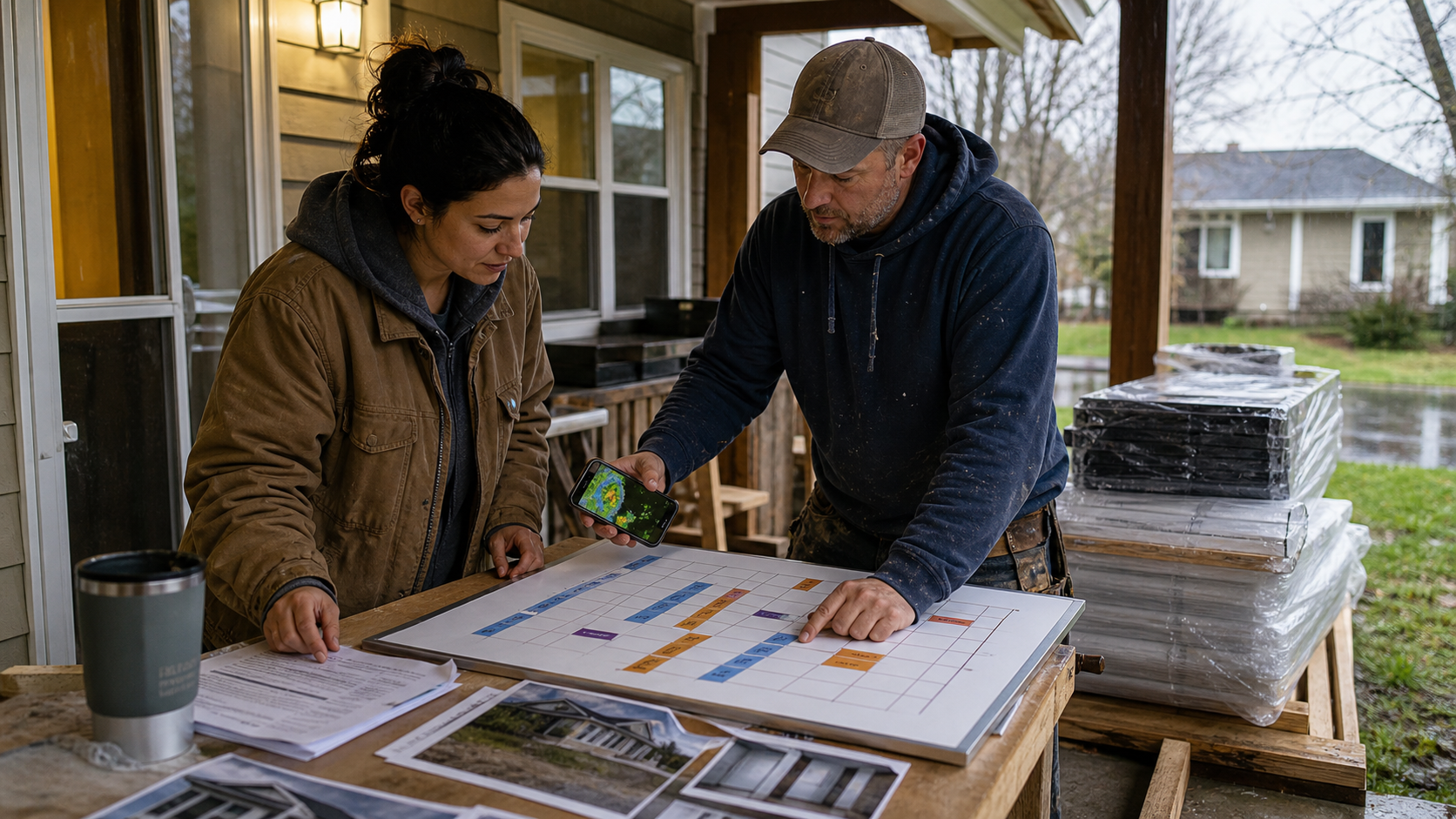
Crashing adds resources to shorten selected activities. Fast-tracking overlaps work that was previously sequential. Neither is automatically appropriate. Adding a second crew may increase coordination or fail because the work area is too small. Starting finishes before rough corrections close can create rework. Use the smallest approved intervention that actually shortens the controlling path.
10. Connect schedule movement to cash, coverage, and decisions
A schedule variance can affect financing interest, property taxes, utilities, insurance, security, dumpsters, portable facilities, temporary protection, supervision, storage, loan maturity, and the target selling window. It can also change when a contractor draw is supportable. Keep schedule progress aligned with the payment verification workflow, not with a date alone.
Coverage also follows the project lifecycle. Vacancy, active construction, stored materials, theft controls, water systems, and completion status can matter under specific terms. Review the house flip insurance guide and notify the insurer and lender as required. A schedule should remind the team about a coverage handoff, but only the actual policy and authorized professionals can determine coverage.
For each material change, state four things: the observed event, the calculated schedule and cost effect, the remaining assumptions, and the management opinion. Example: the window shipment is confirmed seven days late; the current network moves exterior close-in three working days; dry weather and installer availability are still assumptions; the team recommends paying a verified transfer fee only if it preserves the critical handoff. This format makes decisions reviewable later.
11. A practical weekly house flip scheduling workflow
- Walk the site with the responsible contractor. Compare physical progress with the latest approved scope and schedule.
- Update actuals and remaining work. Attach photos, inspection records, delivery evidence, decisions, and change documents.
- Recalculate the forecast. Review critical and near-critical paths, float, resource conflicts, and milestone variance.
- Run a three-week look-ahead. Confirm labor, materials, decisions, inspections, access, protection, and predecessor readiness.
- Price time-sensitive risk. Connect likely delay days to the property's holding-cost and funding assumptions.
- Assign one owner per action. Give every blocker a named person, due date, evidence requirement, and escalation point.
- Publish the controlled update. Keep the baseline and change log, then distribute the same dated forecast to affected parties.
Rehabfolio's project workflows can keep scope items, estimates, tasks, calendar dates, files, contractor information, expenses, photos, and reporting in one property record. The useful first-hand product lesson is simple: a date is stronger when it links to the scope, evidence, responsible person, and decision that make it possible. Software does not verify field conditions or replace the qualified people responsible for the work.
12. Frequently asked questions
How long should a house flip renovation take?
There is no reliable universal duration. The answer depends on the verified scope, design and permit work, inspection sequence, property condition, trade availability, material commitments, weather exposure, correction risk, and local closeout process. Build the schedule from property-specific activities and dependencies, then show a date range or documented buffer instead of copying a generic number of weeks.
What is the critical path in a house flip schedule?
The critical path is the connected sequence of activities that currently controls the planned completion date. If a critical activity finishes late and no usable float or recovery action exists, the project finish moves. The path can change after progress, corrections, scope changes, or resource decisions, so review it whenever the schedule is updated.
Should every contractor use the same project schedule?
Everyone should work from one controlled baseline and the latest approved update, but each trade may also maintain a more detailed look-ahead plan. The dates, predecessors, access rules, inspection hold points, material needs, and handoffs in those detailed plans must agree with the project schedule. Record the version and update date so an old screenshot does not become an accidental promise.
How much schedule buffer should a house flipper include?
Do not add one unexplained percentage to every job. Identify uncertainty by activity, including permit review, field discoveries, weather-sensitive work, custom materials, inspection corrections, and scarce trade capacity. Estimate the most likely duration and a defensible slower case, then place visible time reserve where it protects a real risk. A buffer is a planning assumption, not permission to hide a delay.
Can two renovation trades work in the house at the same time?
Sometimes, but only when the work areas, access, utilities, safety controls, inspections, supervision, and quality requirements are compatible. Overlapping tasks to shorten a schedule can create congestion, rework, damage, or unsafe conditions. The responsible contractors and qualified local professionals should approve the actual work plan rather than letting a calendar force unsafe concurrency.
What should an investor do when a house flip falls behind schedule?
First update actual progress and identify the current controlling path. Protect the property and people, verify the cause, calculate the finish-date and cost effect, and compare recovery options. Resequencing, added resources, alternate materials, overtime, or scope decisions can help only when they are lawful, safe, technically sound, contractually authorized, and worth the added cost or risk. Record the decision and rebaseline only when the approved plan truly changes.
13. Editorial methodology, limitations, and primary sources
Methodology. The Rehabfolio editorial team reviewed the existing guide library to avoid overlapping its repair-budget, permit, procurement, contractor-payment, insurance, and holding-cost intents. We researched official sources first, translated general schedule-control concepts into a small residential workflow, and tested the worked arithmetic. We separate observed facts, calculations, assumptions, and opinions because they carry different levels of certainty.
The GAO scheduling guide is a general capital-program methodology source, not a residential construction standard. OSHA, EPA, NOAA, and Seattle sources each have their own scope and jurisdiction. They do not create a complete schedule for a particular property. The examples and durations in this guide are illustrative, not bids, production promises, legal interpretations, or performance statistics.
- U.S. Government Accountability Office, Schedule Assessment Guide
- Occupational Safety and Health Administration, 29 CFR 1926.20
- National Weather Service, climate normals questions and uses
- Seattle Department of Construction and Inspections, inspection service
- U.S. Environmental Protection Agency, Renovation, Repair and Painting program
Last source review: August 7, 2026. Recheck the current documents and local requirements before acting because agency guidance, inspection procedures, and project facts can change.
Keep the scope, tasks, dates, evidence, and costs together.
Create a free Rehabfolio workspace for your next property, then verify every field decision with the qualified people responsible for the work.
Create free account