House flip punch lists and project closeout
Finishing construction is not the same as closing the project. A controlled punch list proves what still needs correction. A closeout package proves what was completed, approved, paid, tested, and handed over. This guide shows a beginner how to manage both without confusing appearance with evidence.

Published and last reviewed August 10, 2026 · Written and reviewed by the Rehabfolio editorial team.
Who this guide is for. This guide is for new and growing residential investors in the United States who are preparing a renovated property for sale, rental turnover, refinance, or owner handoff. It is most useful during the last several weeks of a project, when small defects, missing approvals, final bills, and deadline pressure can collide.
The Rehabfolio editorial team builds and reviews product workflows that connect scopes, estimates, tasks, dependencies, photos, contractor bids, materials, permits, inspections, payments, files, warranties, expenses, risks, and project reports. That gives the team first-hand experience tracing a correction from a room photo to an assigned task, cost record, inspection result, and final report. It does not make the team a contractor, inspector, architect, engineer, code official, safety professional, environmental consultant, attorney, insurer, lender, accountant, tax adviser, broker, or appraiser.
Contracts, payment rights, lien rules, permit closeout, safety duties, warranty transfer, required disclosures, environmental obligations, and record-retention periods vary by project and jurisdiction. Consult the responsible licensed local contractors and design professionals, the authority having jurisdiction, construction and real-estate counsel, your insurer and lender, a qualified tax professional, and the broker or property manager responsible for turnover. This guide is educational information, not construction, safety, environmental, legal, insurance, lending, tax, or investment advice.
1. A punch list and project closeout solve different problems
A punch list is a controlled register of incomplete, incorrect, damaged, or unverified work near completion. Project closeout is the wider process of resolving those items, completing required inspections, collecting records, reconciling money, transferring information, and formally ending the work. One list cannot replace the whole closeout file.
Oregon Housing and Community Services publishes a current construction closeout workflow for its disaster-recovery housing program. It is not a private flip contract or a national legal standard, but its sequence is useful methodology evidence: a final inspection and walkthrough, resolution of remaining issues, municipal completion evidence, a program inspection, and a warranty binder. Your contract and local requirements determine the actual list.
The distinction matters because a house can photograph well while an open permit, failed test, missing warranty, unpaid invoice, or unresolved water entry remains. It can also have a complete permit record while paint, hardware, flooring, and appliance corrections remain. Closeout asks whether both the physical property and its evidence are ready.
Observed fact: the final electrical inspection record is approved. Calculation: six open correction items have a documented estimated total of 11 labor hours. Assumption:the replacement range arrives Friday. Opinion: the investor should delay photography until the backsplash correction is verified. Use these labels in meeting notes so a preference or promise never appears to be completed work.
Scenario: Dana Brooks separates two finish lines. Dana's contractor says the project is done because the crews are off site. Dana records 18 punch items, two pending inspection signoffs, one missing window warranty, and an unreconciled change order. The construction effort may be near substantial completion, but Dana does not mark administrative closeout complete until each required path has evidence.
2. Prepare the closeout walkthrough before entering the house
Do not begin with a blank notepad and memory. Assemble the latest approved scope, plans, selections, change orders, finish schedule, permit record, inspection status, contractor responsibilities, manufacturer instructions, and previous quality observations. The repair-budget guide explains how the scope and budget should originate. The project-schedule guide shows how correction, reinspection, cleaning, and listing readiness belong in the activity network.
Set the walkthrough conditions before inviting the team:
- Confirm the property is safely accessible and active work areas are controlled.
- Require enough cleaning and lighting to see surfaces, joints, hardware, and damage.
- Confirm permanent or approved temporary utilities are available for authorized tests.
- Bring the approved scope, room list, plans, selections, prior photos, and open issues.
- Identify who may operate, test, open, or adjust each system and who may not.
- Reserve enough time to inspect methodically without trades covering evidence behind you.
- Schedule a separate verification visit rather than assuming corrections will be self-certified.
Keep housekeeping active before and during this phase. OSHA's constructionhousekeeping standard at 29 CFR 1926.25 requires debris to be cleared from work areas, passageways, and stairs during construction, alteration, or repair, and requires regular removal of combustible scrap. That rule addresses worker safety, not staging quality. A visually tidy property is not proof that all safety duties are complete.
Scenario: Miguel Alvarez refuses a rushed Friday walk. The flooring crew is still cutting transitions, the electrician is testing, and boxes block two closets. Miguel records those conditions as facts and moves the formal walkthrough to Monday. He uses Friday to confirm scope versions, finish selections, and inspection status. The delay costs time, but walking a concealed or changing condition would create false completion records.
3. Inspect room by room, exterior zone by exterior zone, and system by system
Use a consistent route. Start outside, move through each level in the same direction, inspect attic and utility areas only when safely accessible, and finish with documents and keys. A room checklist reduces the chance that a conversation in the kitchen makes everyone forget the rear grading or attic access.
Review each area through several lenses:
- Scope completion. Is every approved component present in the right location and quantity?
- Visible quality. Are finishes uniform, joints complete, hardware aligned, surfaces undamaged, and transitions intentional?
- Authorized operation. Do doors, windows, cabinets, fixtures, appliances, controls, drains, alarms, and other items operate as the responsible professional expects?
- Protection and restoration. Are adjacent finishes, landscaping, drives, and common paths restored after the work?
- Cleaning and environmental closeout. Has required cleaning, verification, testing, disposal, or documentation been completed by the appropriate party?
- Evidence. Is the photo, inspection result, test record, label, manual, or warranty available and connected to the item?
Do not ask an investor to perform technical tests outside their competence. Electrical, gas, combustion, structural, roofing, waterproofing, life-safety, environmental, and other specialized work should be tested or inspected by the responsible qualified professionals and public authorities where required. A light switching on is an observed function, not proof that the entire circuit or installation complies.
For pre-1978 housing, lead-safe closeout may be material. EPA states that its Renovation, Repair and Painting requirements apply to house flippers when covered painted surfaces are disturbed. Its current work-practice guidance includes thorough cleanup followed by a verification procedure. Use the responsible certified firm and applicable state, tribal, or federal program. Do not turn an ordinary visual punch walk into an unauthorized environmental clearance.
4. Write correction items that another person can verify
“Fix paint” is not a controlled item. “Second-floor hall, north wall beside linen door: repair the 1-inch surface chip visible in photo P-042 and match approved warm-white wall finish” is specific enough to find, assign, and recheck. The goal is not wordiness. The goal is one interpretation.
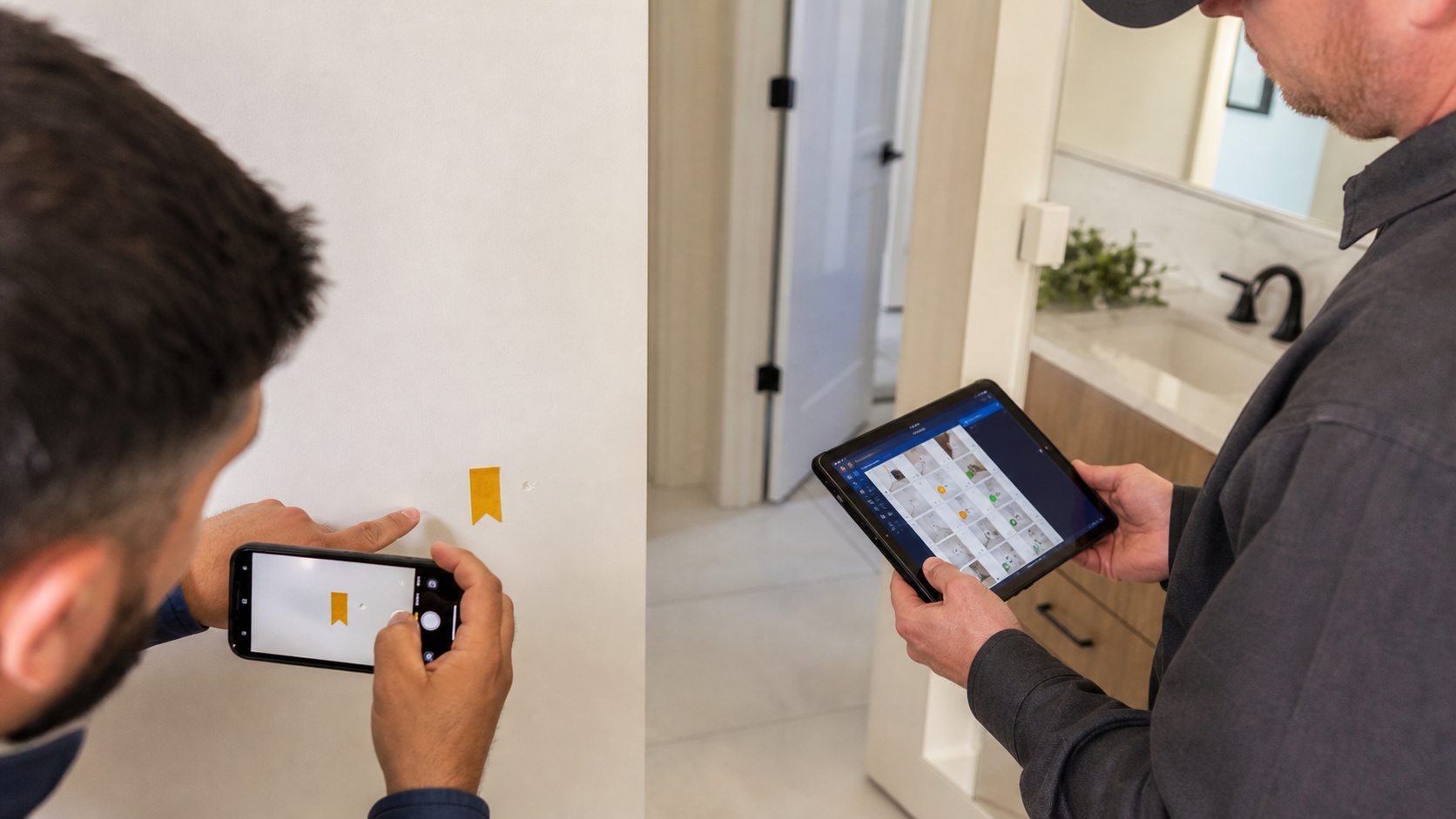
Each punch item should carry these fields:
- A stable item number and exact room, elevation, or equipment location.
- A plain description of the observed condition, without guessing at the cause.
- The applicable scope line, drawing, selection, instruction, code decision, or approved change.
- Wide context, medium location, and close detail photos taken before correction.
- The responsible company or person, not merely “contractor.”
- Priority, access constraint, promised correction date, and dependencies.
- The acceptance or verification method and who is qualified to perform it.
- Status values such as open, assigned, ready for verification, accepted, rejected, or deferred by written decision.
Use removable markers carefully. A marker helps connect the physical location to the record, but it is not the record. Remove it after acceptance and check that the marker itself did not damage a delicate finish. Never place markers where they create trip, access, equipment, or contamination hazards.
Scenario: Priya Shah eliminates duplicate corrections. Priya receives a contractor spreadsheet, 23 text messages, and her own 31-item list. Three descriptions refer to the same sticking pantry door, while a missing bath exhaust termination appears only in a photo. She creates one controlled register, links each source, assigns the door once, and escalates the ventilation item for qualified review. The result has fewer rows and more complete evidence.
5. Prioritize corrections without letting cosmetics hide risk
A beginner may naturally notice paint and caulk first because they are easy to see. Use a priority system that prevents visible finish defects from crowding out water, safety, system, permit, and documentation problems.
| Priority | Typical meaning | Closeout response |
|---|---|---|
| Stop or escalate | Potential life safety, active leak, unsafe access, gas or electrical concern, structural concern, environmental issue, or prohibited occupancy | Control access, protect people and property, notify the responsible qualified party, insurer, or authority as applicable, and do not treat it as a cosmetic punch item. |
| Closeout blocker | Required scope incomplete, failed inspection, open permit, missing approval, system not ready, or material document absent | Assign an owner and dependency, update the schedule, and prevent the affected closeout milestone from being marked complete. |
| Functional correction | Door, cabinet, fixture, appliance, control, drain, hardware, or other component does not operate as required | Record the exact condition and require authorized retest after correction. |
| Finish correction | Paint, caulk, flooring, trim, tile, surface, or alignment defect within the contracted quality standard | Photograph, reference the approved finish, correct, clean, and verify under suitable light. |
| Document or turnover item | Warranty, manual, key, label photo, invoice, release, selection, or maintenance instruction missing | Keep the document register open until the responsible source supplies and the owner accepts it. |
Priority expresses risk and dependency, not blame. An open permit can be a closeout blocker even when the physical work looks good. A visible touch-up can be urgent for photography but lower risk than an unverified roof repair. Record both the business deadline and the technical priority.
6. Worked example: calculate the real cost of “just a few punch items”
Jordan Lee is closing out a three-bedroom flip. These are teaching inputs, not market averages or promises. Jordan's current register has 24 items: 3 closeout blockers, 7 functional corrections, 10 finish corrections, and 4 missing documents. The contractor expects two working days of corrections, followed by one verification morning.
Observed facts: 24 items are open, the plumbing reinspection has not occurred, the appliance model photos are missing, and the property remains insured and financed. Assumptions: the reinspection is available in three business days, the replacement part arrives on time, and no correction exposes new damage.
Illustrative daily carrying cost
Loan interest $92 + taxes $18 + insurance $14 + utilities $11 + property care $9 + other fixed holding cost $16 = $160 per calendar day
Illustrative closeout exposure
5 calendar days × $160 = $800 of additional carrying cost
Replacement part and return trip = $275
Teaching total = $800 + $275 = $1,075
The calculation does not prove that rushing is cheaper. If Jordan skips verification and a leak damages the new vanity, the downside can exceed the planned closeout cost. He uses the holding-cost framework to make the time effect visible and the house-flip insurance guide to review coverage handoff questions with his insurer. His business decision is to move photography by two days while preserving the reinspection and test. That is an opinion informed by stated facts and assumptions.
Jordan also calculates closure rate: 24 items at the start, 9 accepted after the first correction day, so 15 remain. That is a 37.5 percent accepted rate, calculated as 9 divided by 24. It is not 62.5 percent “complete” if the three blockers remain. Track counts by priority as well as the total.
7. Verify corrections, test handoffs, and check installed products
“Done” should mean ready for verification, not automatically accepted. Compare the corrected condition with the approved requirement and the before photo. Add an after photo from the same viewpoint where practical. Record who checked it, when, how, and whether the item was accepted or returned.
Batch verification by room or trade only when individual evidence remains traceable. If one painter closes 14 rows with a single message, the investor still needs to know which locations were inspected. If a technical test is required, store the responsible professional's result rather than replacing it with an owner's visual opinion.

Record installed product manufacturer, model, serial or date code where useful, the installer, installation date, warranty source, and manual. Check applicable appliances and consumer products against the official U.S. Consumer Product Safety Commission data resources. CPSC explains that its recall data includes decades of recall information and provides public search tools. A recall check is a point-in-time fact, not a permanent guarantee. Preserve the date, search terms, exact model evidence, and any required remedy.
Keep permit closeout separate from the contractor's punch list. New York City explains in its official Letter of Completion guidance that physical work ending does not itself end the project, and required signoffs must be obtained. NYC is an example, not a nationwide rule. Ask the actual authority having jurisdiction what final inspection, certificate, letter, permit closure, or other record applies to this property. The permit and inspection guide provides the full planning workflow.
8. Build a closeout package that survives the next question
The next question may come from a buyer, tenant, property manager, lender, insurer, tax professional, contractor, warranty administrator, broker, or public authority. Organize the file so a person can find the source record without reading every message from the renovation.
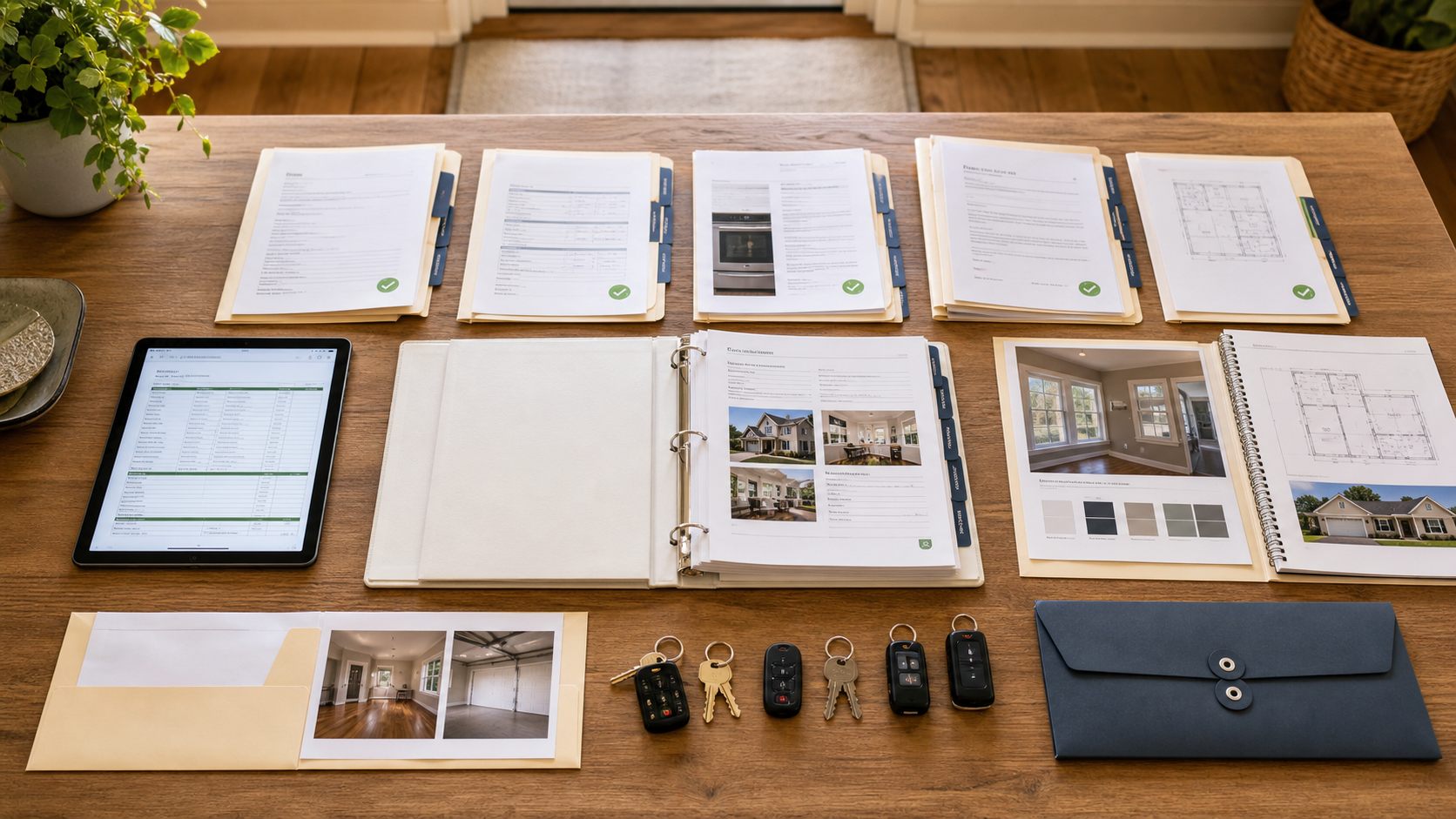
Create a closeout index with, where applicable:
- Final approved scope, drawings, specifications, selections, and change-order log.
- Punch register with before, correction, and accepted-condition photos.
- Permit applications, issued permits, inspection results, correction notices, final signoffs, and applicable certificates or letters.
- Contracts, final invoices, paid records, allowances, credits, final change reconciliation, and legally appropriate release documents.
- Manufacturer manuals, warranties, installer warranties, model and serial evidence, start dates, transfer steps, and service contacts.
- Environmental, lead-safe, disposal, testing, cleaning verification, or clearance records when applicable.
- Keys, remotes, codes, access inventory, utility status, shutoff locations, filter sizes, finish schedule, paint identifiers, and maintenance notes.
- Completion photographs, listing handoff, buyer or property-manager package, and a final project report.
EPA's current RRP recordkeeping guidance says covered firms must retain specified records for three years after renovation completion. That is one specialized federal requirement, not a complete retention schedule. Preserve records longer when contracts, warranties, permits, tax rules, state law, insurers, lenders, or counsel require it.
Do not store access codes, identity documents, bank details, or other sensitive information in a broadly shared marketing package. Use role-appropriate files, revoke temporary access, and preserve a secure internal record. A buyer packet and an investor's accounting archive serve different audiences.
9. Reconcile final money and time before calling the investment complete
The final budget should not remain the last forecast. Reconcile committed and paid costs, approved changes, allowances, credits, returns, deposits, lender draws, remaining invoices, and disputed amounts. Link every final number to evidence and keep tax treatment separate from construction categorization.
IRS Publication 551, Basis of Assets explains that accurate records of items affecting basis are necessary and that certain improvements increase basis. It also discusses costs such as installation and testing. A house flipper's inventory, capitalization, income, and expense treatment can involve rules beyond that publication. Give the final cost file to a qualified tax professional rather than deciding treatment from a punch list category.
Final contractor payment, retainage, and releases must follow the written contract, applicable law, lender conditions, and verified completion. Thecontractor payment guide explains milestone evidence, change control, lien questions, and final closeout in detail. Do not create a new payment penalty because the deadline is near, and do not release required controls merely to make the dashboard look complete.
Scenario: Elena Park finds a false $4,600 savings. Her forecast showed $92,000 of renovation cost, while paid records total $87,400. Before celebrating, Elena finds a $2,900 unpaid electrical invoice, $1,250 of approved cabinet work awaiting a final bill, and a $450 material return credit not yet received. The calculated expected final cost is $87,400 + $2,900 + $1,250 - $450 = $91,100. Her current $900 variance is an assumption until the invoice and credit become observed transactions.
10. Release the property only when the next-use checklist is satisfied
“Ready” depends on the next use. A sale listing needs truthful property facts, required disclosures, safe access, resolved staging conflicts, and documents coordinated with the broker and counsel. A rental turnover needs lawful occupancy, habitability and safety work, property-manager records, access, utility and maintenance instructions, and jurisdiction-specific rental steps. A refinance may require the lender's appraisal, inspection, title, insurance, permit, or completion evidence.
Update the exit analysis with actual project cost, current holding time, and unresolved risk. The sell, rent, or refinance guide shows how to compare paths using the same verified facts. Do not let sunk cost make the decision automatically. New market evidence, rental readiness, financing terms, reserves, and management capacity can change the preferred exit.
Before releasing the property, confirm in writing:
- All closeout blockers are accepted or explicitly controlled by qualified responsible parties.
- Required public approvals and professional records are received, not merely requested.
- Open punch items, if any, have a lawful written disposition and do not contradict marketing or turnover claims.
- Final cleaning and any specialized verification are complete.
- Keys, access, utilities, manuals, warranties, and maintenance information are transferred to the correct person.
- The final cost, schedule, and risk record is preserved for reporting and future lessons.
11. A repeatable Rehabfolio closeout workflow
Rehabfolio does not replace the responsible professionals or public records. It provides one workspace for the evidence and decisions around them. A practical workflow is:
- Freeze the reference set. Attach the latest scope, approved changes, selections, plans, contracts, and inspection status to the project.
- Create room and system tasks. Give each correction a location, owner, due date, priority, and dependency.
- Add first-hand evidence. Upload context and detail photos, then preserve the original observation without rewriting it after correction.
- Update the schedule. Add correction, replacement, reinspection, cleaning, verification, documentation, and turnover activities.
- Connect costs. Record approved change cost, invoice, return, credit, holding-time effect, and final payment status without double-counting.
- Verify separately. Move work to ready for verification, then record acceptance, rejection, or qualified test evidence.
- Index closeout files. Store permits, signoffs, warranties, manuals, releases, environmental records, and final reports with clear categories.
- Publish a truthful final report. Distinguish completed facts, unresolved items, calculations, assumptions, and management opinions.
This workflow is first-hand product evidence about how Rehabfolio organizes records. It is not evidence that a property complies, a contractor performed correctly, a lien has been released, a warranty will transfer, or an investment will be profitable. Those conclusions require the underlying source and appropriate professional judgment.
Frequently asked questions
What should be on a house flip punch list?
A useful punch list identifies the exact room or exterior area, the specific condition, the governing scope or approved change, a photo, the responsible party, the date found, the promised correction date, the verification method, and the final status. It should cover incomplete work, damaged work, incorrect installation, finish defects, testing failures, missing labels or documents, cleaning, and restoration. Safety, code, water-intrusion, and system issues need separate escalation rather than being buried among cosmetic touch-ups.
Who should create the punch list for a house flip?
The owner or owner's representative should coordinate one controlled list, but qualified contractors, design professionals, inspectors, and other responsible specialists should identify and verify items within their expertise. The person who performed the work should not be the only person deciding that it is acceptable. Contract terms and local rules determine formal roles, so clarify responsibility before the walkthrough.
When should the final walkthrough happen?
Begin quality checks throughout construction, then schedule the formal punch walkthrough when the contracted scope is substantially complete, spaces are safely accessible, systems are ready for authorized testing, and enough cleaning has occurred to see the work. Leave time for correction, reinspection, replacement materials, documentation, and a second verification visit before the listing or turnover date.
Should final contractor payment wait until the punch list is complete?
Final payment should follow the written contract, applicable law, lender requirements, and documented completion conditions. Investors commonly connect final payment or retainage release to verified work, approved change reconciliation, required inspections, closeout documents, and legally appropriate lien controls. Do not invent a holdback after the fact or withhold money contrary to the contract or local law. Ask construction counsel about project-specific rights and notices.
What documents belong in a house flip closeout package?
The package usually includes the final scope and approved changes, completion and correction photos, permits and final inspection records, applicable certificates or letters, contracts, invoices, payment records, legally appropriate releases, warranties, manuals, model and serial information, finish selections, keys and access records, safety or environmental records, and a final cost reconciliation. The exact file depends on the project, contract, location, lender, insurer, and exit plan.
How long should a house flipper keep closeout records?
There is no single retention period for every record. Contract, permit, warranty, tax, environmental, lender, insurance, and litigation rules can differ. For example, EPA says covered Renovation, Repair and Painting records must be retained for three years after completion, while IRS basis records support later tax calculations. Build a retention schedule with qualified legal and tax advisers instead of deleting the project folder after sale.
Editorial methodology, sources, and limitations
Editorial methodology. The Rehabfolio editorial team first reviewed every existing learning-center article to isolate a non-cannibalizing intent. This guide focuses on physical correction control, evidence-based acceptance, document assembly, cost reconciliation, and turnover. The permit guide remains focused on public approval workflows, the payment guide on commercial controls, and the schedule guide on dependency logic and delay.
The team then reviewed current primary and authoritative sources from Oregon Housing and Community Services, EPA, OSHA, the New York City Department of Buildings, CPSC, and IRS. A state housing program and one city's closeout rules are used as methodology or examples, not as universal private-project requirements. Sources were last reviewed August 10, 2026.
Worked dollar amounts, durations, item counts, names, and property scenarios are original teaching assumptions. They are not testimonials, survey results, performance statistics, bids, market averages, or promises. Product workflow observations describe how Rehabfolio can organize records. They do not prove the truth or legal effect of a user's uploaded evidence.
The guide cannot account for every contract, property type, construction method, hazardous material, licensing rule, disclosure duty, lien procedure, permit authority, warranty term, tax position, lender condition, insurance requirement, or local market practice. Stop and consult licensed local professionals whenever a condition involves safety, structural performance, water, gas, electrical work, combustion, environmental hazards, code, occupancy, legal rights, or a material investment decision.