House flip utility transfers: power, water, and the final read
A beginner flip needs the lights and the water in the owner's name from the day you take the house until the day you hand it to a buyer. This guide shows how to open electric, gas, water, sewer, trash, and internet at acquisition, keep service on for crews and inspections, handle a vacant house in winter, read the meters at each closing, and put the bills into holding costs without rebuilding that whole model.
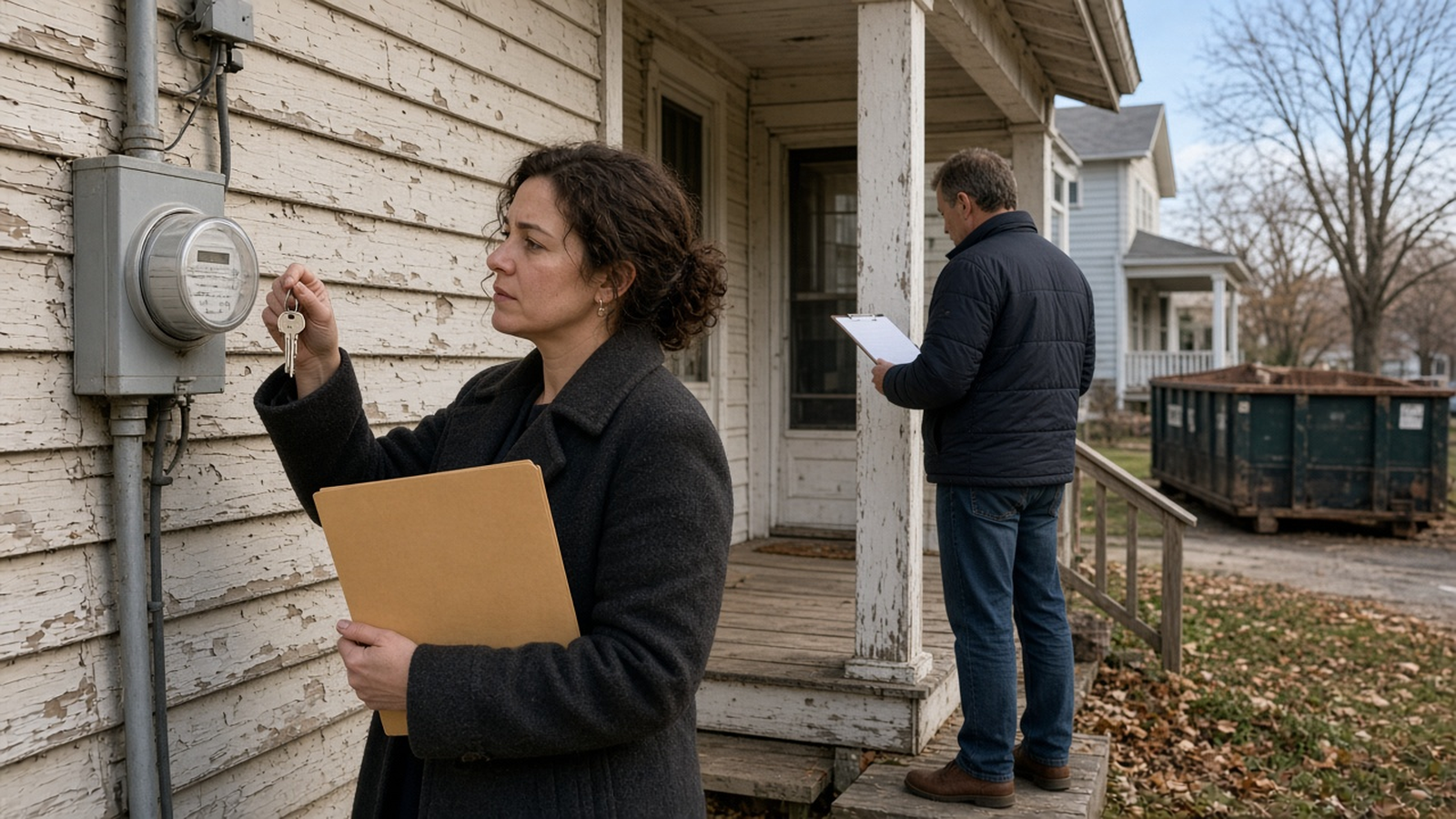
Written and reviewed by the Rehabfolio editorial team. Published and last reviewed October 12, 2026.
Who this guide is for. This guide is for United States residential investors buying a one-to-four-unit property they intend to renovate, then sell or hold. You might close in your own name or in an LLC. The guide starts when the contract says you will get possession, and it ends when each account has a confirmed stop or a confirmed handoff at the sale. If you are still inside the inspection window, use the due diligence checklist to learn whether the systems even run. The day you take the deed is the buyer closing checklist. The day you sell is the seller closing checklist. Those pages name utilities. This page is the file those checklists point at.
The Rehabfolio editorial team builds and reviews product workflows that connect a property record to bills, dates, photos, and the holding-cost line. That is first-hand product experience with how a deal file is organized. It does not make the team a utility, a plumber, an electrician, an insurer, a lawyer, a tax adviser, or a closing agent. We do not invent licenses, credentials, or customer results.
Account rules, deposits, prorations, winter shutoffs, and who may request service differ by utility, city, contract, and insurance policy. A private well or a septic system is not a meter you transfer. Treat that as a condition question in due diligence and in the repair scope. This page is educational. It is not legal, tax, insurance, construction, or utility advice. Use the signed contract and the local utility for the house in front of you.
Tip: Read this beside the holding-cost guide, the holding-cost calculator, the insurance guide, the permits and inspections guide, and the pre-listing checklist. The holding-cost guide is the home for interest, taxes, insurance, and the full delay math. This page only builds the utility subtotal that those tools already have a place for.
1. Define what a utility transfer has to prove
Beginners treat utilities as a phone call you make when the lights are already out. The call matters. The proof is a shorter list. Each service the house needs has a customer of record. The start date matches possession, or the contract explains the gap. The stop date at the end matches the buyer's start, or you have a written reason to keep a tail day. A meter photo exists for the day responsibility shifts. Deposits are labeled as cash you may get back. The monthly bills have one home in the budget.
A transfer is not the same thing as a proration. A proration is a line on a settlement statement that splits a bill between buyer and seller for a stated number of days. A transfer is the utility's record of who will be billed next. You can have a proration and still be the wrong customer. You can be the right customer and still have no proration, because that utility final-bills the account and never talks to the closing office.
Keep four kinds of information separate while you build the file. Observed facts are the contract's possession date, the utility's written start date, the meter photo, the deposit receipt, and the bill. Calculations turn those bills into a monthly subtotal and a partial month. Assumptions are sentences like "the city will leave trash on through closing" when you have not called. Opinions are sentences like "utilities are cheap on a flip." Order from facts. Label assumptions. Do not let an opinion replace a start date.
2. Name every account and the customer of record
Make one list before you call anyone. Electric. Gas, if the house has gas. Water. Sewer, if it is billed apart from water. Municipal trash and recycling. Internet or alarm monitoring, if you will use cameras or a monitored system while the house is empty. Heating oil or propane, if a tank is the fuel. Stormwater, if the city bills it as its own account. Skip any line the property does not have, and write "none" so a later reader knows you looked.
The customer of record is the name the utility will bill and pursue. The Maryland Public Service Commission's consumer sheet on starting, stopping, or transferring service says a utility may ask for the customer's name, addresses, phone numbers, employer, the service address, the start date, a mailing address if that person does not live at the property, a prior service address, and identifying information such as a date of birth or driver's license number. A flip LLC is often exactly the case where the customer does not live at the house. Have the mailing address ready.
The same sheet says a utility may refuse service for fraud, including an application in a fictitious name, in the name of someone who is not an occupant, or in a third party's name without disclosure and that person's approval. Use the owner on the deed when the utility will accept that owner. If the deed is Northline Holdings LLC, the account should say Northline Holdings LLC unless the utility's rule requires a person. If a person must be the customer, write that person's name in the project file and record the reimbursement into the LLC. Mixing the rehab electric bill into a household account makes the holding-cost line harder to defend later.
Ask four money questions on the same call. Is there a deposit, and is it refundable? Does the deposit earn interest, and when is it returned? Is there a one-time start charge? What notice do you need to start and to stop? The Maryland sheet says most utilities want at least 72 hours' notice, that a start charge may be billed once to recover the utility's initial costs, and that a cash deposit may earn interest and come back after a good payment history or when you stop service. Those are Maryland consumer descriptions, not your tariff. Write down the answers your utility gives you. A deposit is cash held. It becomes an expense only if the utility keeps it. A start charge is a cost when it is billed.
Trash and internet deserve their own lines even when a closing statement ignores them. Trash is often a city account tied to the address. It can stop when the seller stops, or a balance can follow the address. Ask the city and the closing office whether unpaid water, sewer, or trash can delay closing or remain as a charge. Internet is rarely prorated. It is still a holding cost if you keep it so cameras or an alarm have a signal. A construction dumpster is a different contract. If the scope prices the dumpster as a job cost, leave it there. Do not also drop the same invoice into monthly trash.
3. Time the purchase transfer to possession
Call before closing day. The notice window is the reason. If your utility wants three days and the closing moves, you still want slack. Schedule the start for the possession date in the contract. On many flips that date is the closing date. If you have early access for a walkthrough or for contractor measurements, the contract should say who pays for power and water during that access. Early access on the seller's meter is the seller's usage until the account changes.
Ask for an actual meter read on the start date, not only an estimate. Photograph the electric meter, the gas meter if there is one, and the water meter the morning responsibility shifts. Read the numbers into the project file next to the photo. If the dial is inside a pit, photograph the cover and the read the utility or the closing office records. Those frames are the baseline if a later bill covers days you did not own.
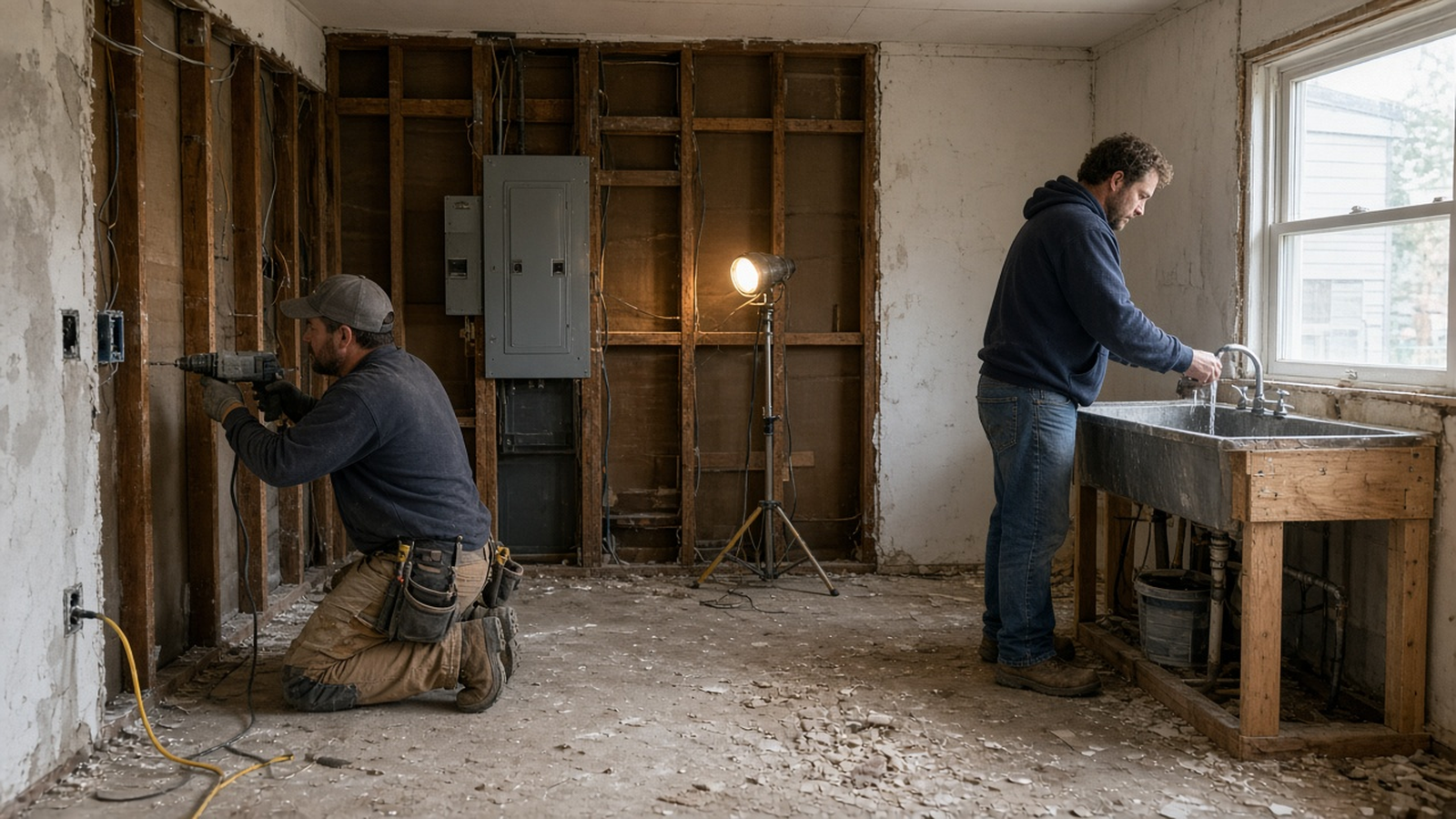
Confirm the seller has placed a stop for the same day, or that the utility's process moves the account without a gap and without a double bill. The Maryland sheet says the utility can keep billing the old customer until that customer gives notice or a new customer applies. A friendly seller who "leaves the lights on for a week" is still the customer. Your crew's usage lands on their bill, and you then have a reimbursement dispute on top of a holding cost you did not forecast.
During due diligence, write down whether each service was on, whose name was on the account, and whether the inspector could test the system. A furnace you never saw run is an assumption. The due diligence checklist is the home for that inspection window. If utilities were off, the purchase file includes a turn-on, and the offer model should not treat an untested HVAC system as a finished fact.
4. Keep power and water on for crews and inspections
Rehab work consumes utilities on purpose. Lights and corded tools need power. Mud, paint cleanup, and plumbing tests need water. A gas furnace or a gas range that is part of the scope needs the meter unlocked before anyone can light it safely. Plan the start dates so the first work day is not the day you discover a lock.
Inspections are the second reason the meters stay on. The permits and inspections guide is the home for plan review, rough inspections, corrections, and final signoff. This page adds one scheduling fact: a rough electrical, plumbing, or gas inspection can fail or be skipped if the relevant service is off. Ask the inspector's office which systems must be operable, then confirm the utility has not locked the meter. Put the inspection on the calendar after the start date, with the utility's notice window in between.
A portable generator is a poor substitute for a meter. The U.S. Consumer Product Safety Commission's January 3, 2025 release says an average of about 100 consumers die in the United States each year from carbon monoxide poisoning associated with portable generators. The same release says never to operate a portable generator inside a home, garage, basement, crawlspace, shed, or other enclosed space, even with doors or windows open, and to run it outside only, at least 20 feet from the house, with the exhaust pointed away. Opening a garage door is not the fix the release describes. If the utility cannot connect yet, wait, or use a temporary service your electrician and the inspector both accept.
Two more CPSC rules belong in the site rules you give a crew. If you smell or hear gas leaking, leave immediately and contact the gas utility from outside. Do not operate lights or a phone before you leave. If appliances are wet and still plugged in, do not touch them. Have the utility or a qualified person evaluate equipment that has been under water before anyone uses it. Those steps are safety directions from the Commission, not a rehab method.
5. Choose a vacant and winter service plan
A flip is often vacant while it is full of fuel: lumber, cardboard, a dumpster, open walls. The National Fire Protection Association's article on vacant buildings says vacant is not the same as empty, and it cites a 2018 NFPA report finding that from 2011 through 2015, fires in vacant buildings accounted for 6 percent of structure fires and 13 percent of firefighter injuries. The article summarizes NFPA 1 Section 10.12 as requiring vacant buildings to be clear of combustible storage, waste, refuse, and vegetation; to be locked or otherwise secured; and to keep fire protection systems in service unless the authority having jurisdiction approves otherwise. It also says that authority may require an inspection and test of a fire protection or fire alarm system that has been out of service for 30 days before the system is restored.
Read that as a coordination problem, not as a license to disable an alarm to save a bill. Secure the house. Ask the fire official what must stay in service while the building is empty. Keep the monitoring path, which may be power plus internet or a cellular alarm, until that official and your insurer say otherwise. The insurance guide is the home for vacancy warranties, builders risk, and liability. This page covers the utility half of the same promise: heat, water, and the signal the alarm needs.
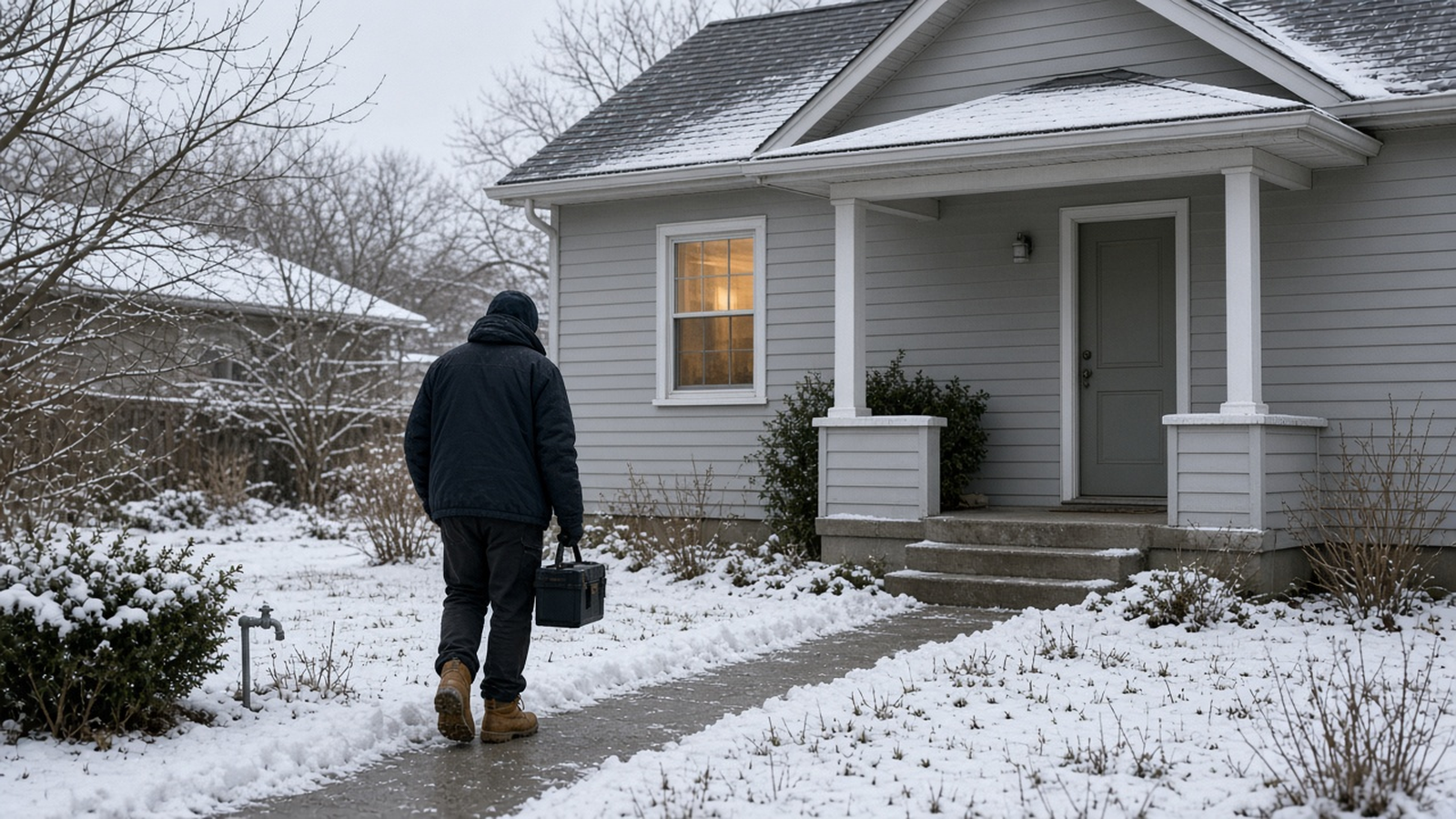
Write one of two plans, and date it. Active rehab keeps electric on, keeps water on for the work, and keeps heat at the setpoint the insurer and the plumber agree to write down. Waiting is the plan for a house that will sit before permits, where the policy allows a winterized building. A plumber shuts the water off and protects the traps and fixtures. You confirm whether any heat must remain. EPA WaterSense tells households to winterize irrigation by shutting off the water supply and draining the lines before freezing weather. Disconnect the hose. The U.S. Department of Energy's home energy checklist says to insulate hot water pipes to limit heat loss. Those are household steps. On a flip, they are the minimum you can see. The plumber still owns the decision to drain a house.
The Department of Energy's Office of Indian Energy describes a household heating habit: setting a thermostat lower by 7 to 10 degrees for 8 hours a day while people are away or asleep can shave as much as 10 percent a year off heating bills. That sentence is about an occupied home. A vacant flip with a freeze risk, a heat pump, or an insurance minimum is a different decision. Do not paste a deep setback onto a house the policy wants kept warm. Write the setpoint you and the insurer actually chose, and check it after a power outage.
Skip the unattended space heater. The same CPSC release says to keep all sides of a portable heater at least 3 feet from anything that can burn, to set it on a stable level surface, and never to leave it running unattended in a confined space. Electric heaters go in a wall outlet. The release says not to use a power strip and not to run the cord under a rug. A vacant rehab with a heater left alone overnight is the situation those sentences describe. Prefer the house heating system on a controlled setpoint.
EPA WaterSense also gives a leak check that fits an empty house. Read the water meter when nobody is using water. Read it again two hours later. If the number moved, treat it as a leak and shut the water until a plumber finds it. The agency's 12,000 gallon winter benchmark is for a family of four in an occupied home with no outdoor use. It does not describe a vacant flip. The two-hour meter test does.
6. Put utility dollars into holding costs
Holding costs are the recurring costs of owning the property from the day you are responsible until the day the relevant bill stops. The holding-cost guide builds that full stack: interest, taxes, insurance, utilities, care, and the cost of delay. The holding-cost calculator already has a monthly utilities input, described as electricity, fuel, water, sewer, trash, and communications. This section only shows how to fill that input, and how a partial month differs from the calculator's average day.
Add the accounts you will actually keep. A teaching subtotal, not a quote and not a tariff, looks like this. Electric $90. Gas $60. Water and sewer $40. Trash $25. Internet $50. The monthly utility subtotal is $265. Five full months are 5 times $265, which is $1,325. A refundable deposit is not inside the $265. If the utility quotes a $180 deposit in your file, record $180 as cash held until it comes back or is kept.
Calculation: $90 plus $60 plus $40 plus $25 plus $50 is $265. Times 5 months is $1,325. A 20-day tail inside a 30-day billing period is 20 divided by 30, times $265, which is $176.67. That is the bill method. Use it when you are splitting a real invoice.
The calculator annualizes a monthly figure for schedule sensitivity. It multiplies the monthly stack by 12 and divides by 365. Utilities alone at $265 become $265 times 12, which is $3,180. Then $3,180 divided by 365, times 20 days, is about $174.25, or about $8.71 per day. The $2.42 gap between $176.67 and $174.25 is the 30-day bill versus a 365-day year. It is not a missing charge. Reconcile invoices with the bill method. Test the full hold, including interest and insurance, in the calculator. When the schedule slips, extend the utility subtotal for the extra days and extend the rest of the stack in the holding-cost guide at the same time.
IRS Publication 551, Basis of Assets, says not to add costs you can deduct as current expenses to your basis. It names carrying charges, such as interest and taxes, that you pay to own property as costs you may be able to deduct or capitalize, except amounts the uniform capitalization rules require you to capitalize. A utility bill is not in that named list. Whether electric, gas, water, sewer, trash, and internet on a flip are a current expense or part of the cost of the house is a question for your tax professional. The holding-cost line in the underwriting model is a cash and profit forecast. It is not a tax classification.
7. See who pays at each closing
The buyer closing checklist is where you prove cash to close, title, and possession. The seller closing checklist is where you prove the sale statement, the walkthrough, and the handoff. Utility money shows up in both files as a smaller question: which days are yours, and which document charges you for them.
At the purchase, ask the closing office which services it will prorate and which ones the utility will final-bill. Bring the contract sentence that sets the seller's last day. If the statement charges you for days before that date, ask for the meter read behind the number. If the utility will bill you directly from the start date, do not also pay those same days as a proration. One document should charge each day.
At the sale, the same question runs in reverse. You are the seller. If the contract requires operable heat, water, and electric for the appraisal or the final walkthrough, service stays on through that event. The pre-listing checklist is the home for showings, photos, and pricing. Keep the meters on through listing, not only through the contractor's last day. A dark house is a hard house to show, and an appraiser who cannot test systems may condition the report.
Final reads belong on the day the contract shifts responsibility. Photograph them. Compare the photo to the final bill when it arrives. If the bill uses an estimate, ask the utility for an actual read. Give a mailing address for the final bill and for any deposit refund before you stop the account. The refund goes to the owner who paid the deposit. It is not sale proceeds, and it is not profit, until you know the utility is not netting it against a last invoice.
8. Work three named utility files
The three files below are original composites for teaching. The people, streets, quotes, and outcomes are illustrative. They are not Rehabfolio customers, and they are not testimonials. Dollar figures are educational. They are not tariffs and not quotes you should expect.
Amina Shah opens service for an LLC on closing day
Amina buys through Northline Holdings LLC. The property in this example is a bungalow at 418 Marlowe Street in Cleveland, Ohio. Closing and possession are November 14. She calls electric and gas ten days ahead, past a three-day notice window, because the date has already slipped once. Both start dates are November 14, in the LLC's name, with the LLC's mailing address. Water stays in the seller's name through a final read the morning of the 14th. The LLC's water account starts the same afternoon. She photographs both reads.
In this example the electric utility asks for a $180 deposit and the water utility asks for a $40 start fee. She logs $180 as cash held and $40 as a cost. Her monthly plan, written before closing, is electric $140, gas $95, water and sewer $38, trash $24, and internet $45. That subtotal is $342. Four planned months are 4 times $342, which is $1,368. The deposit is not inside the $1,368.
Calculation: $140 plus $95 is $235. Plus $38 is $273. Plus $24 is $297. Plus $45 is $342. Times 4 is $1,368. If the rehab runs 18 days past the plan, the extra utility holding on a 30-day bill is 18 divided by 30, times $342, which is $205.20. She adds $205.20 to the utility line and updates interest, tax, and insurance in the holding-cost guide for the same 18 days. She does not add the $205.20 a second time inside the rehab budget.
Her vacant policy in this example requires heat to stay on. She does not drain the plumbing while the plumber will pressure-test. She writes the setpoint the insurer and the plumber agreed, and she does not apply the Department of Energy's occupied-home setback to a November vacant house. The deed, the insurance named insured, and the utility accounts all say Northline Holdings LLC.
Chris Dalton leaves the seller's meter running
Chris buys in his own name. The house in this example is 902 Alameda Court in Austin, Texas. Possession is August 3. He plans to "call the power company next week." The seller's electric account stays open for 11 days. The seller then asks Chris for $210, which is the usage on those days. The contract said utilities transfer at closing. Chris pays the $210, then opens his own account and photographs the meter. The $210 is a holding cost he did not forecast. It is also a dispute he could have avoided with a start date.
He had budgeted electric at $160 a month. Eleven days of that budget, on a 30-day month, are 11 divided by 30, times $160, which is $58.67. The demand is $210. The miss is $210 minus $58.67, which is $151.33, before he even looks at the first full bill. That first full bill is $240, which is $80 over the $160 plan, because a window unit ran all day. He adds the $80 and the $210 to the utility holding line, and he labels the $210 as a one-time transfer miss so he does not treat $210 as a normal month.
He calls the city the week of closing so trash does not stop when the seller stops. Internet for cameras goes in his personal name, which matches the deed. August does not need a freeze plan. He still reads the vacancy terms. In this example the policy requires the house to be locked and checked every 14 days, and it does not require heat in August. He calendars the checks. Coverage types stay in the insurance guide.
Elena Vasquez stops service on the sale date
Elena sells through Vasquez Rehab LLC. The renovated house in this example is 27 Birch Lane in Minneapolis, Minnesota. The buyer's closing is March 6. The contract requires operable heat, electric, and plumbing at the final walkthrough on March 5. The appraisal already required the same systems. She schedules the LLC stop and the buyer start for March 6 on electric, gas, and water, and she keeps the confirmations. She does not shut the meters off the morning of the walkthrough.
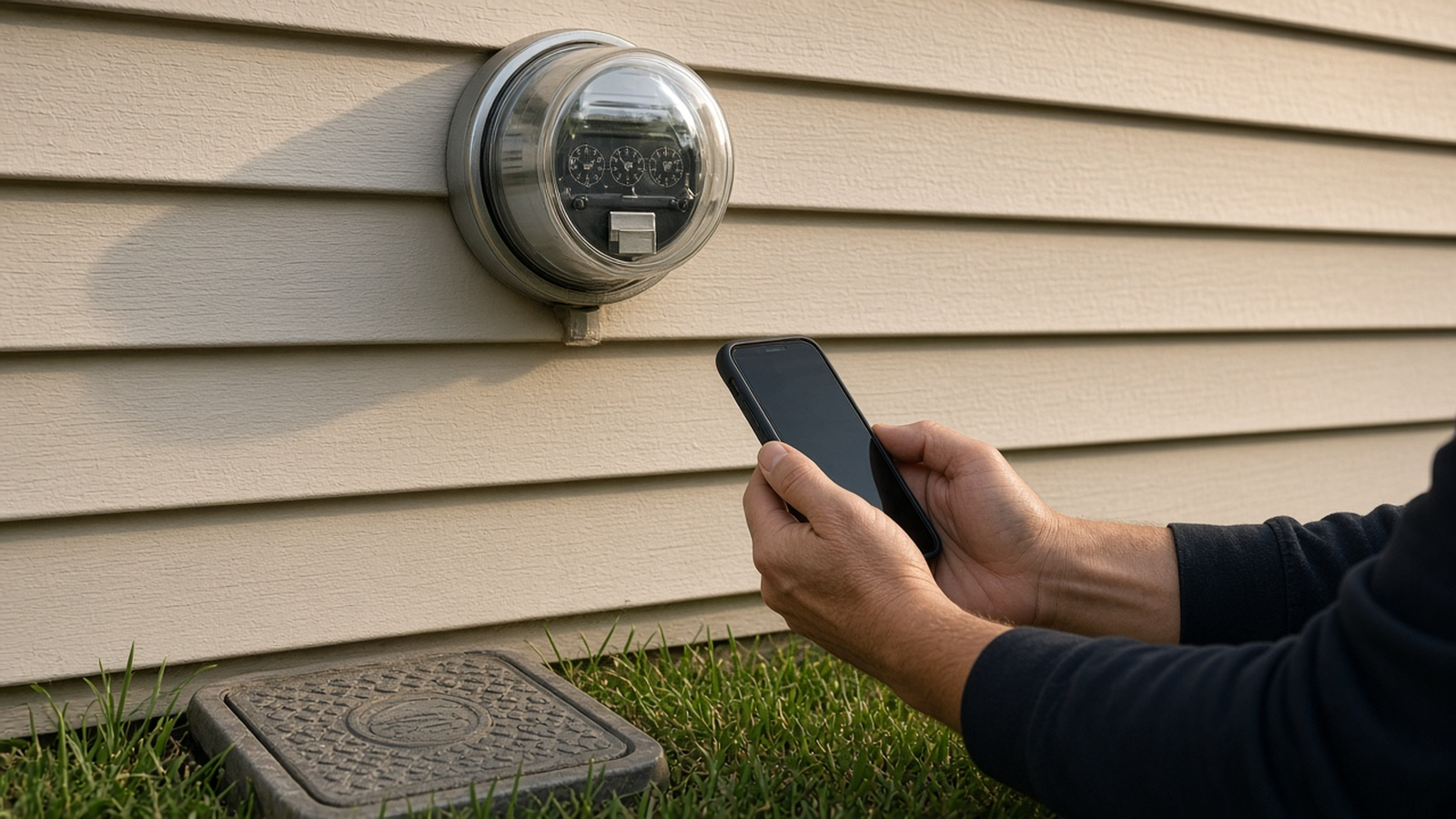
Her forecast had ended on February 28. February's utility subtotal was $310. March 1 through March 6 is 6 days. On a 30-day bill, 6 divided by 30, times $310, is $62. The alarm internet is $45 a month, and she keeps it through the day after the closing office confirms recording, which is one extra day: $45 divided by 30, which is $1.50. The sale-week tail is $63.50. She adds $63.50 and stops. She does not leave a full March bill in the model after the accounts confirm a stop.
In this example the closing office says the utilities will final-bill the LLC through March 5, and the settlement statement will not also prorate water. Elena deletes the proration line she had expected, so the same days are not charged twice. She photographs the meters on March 6, sends the deposit refund to the LLC mailing address, and compares the final bills to the $63.50 tail when they arrive. If a bill covers days after the confirmed stop, she sends the photo and the stop confirmation back to the utility.
9. Use a transfer checklist without an account
Copy this list into the notes app you already use. Check each line against a confirmation, a photo, or a bill, not against a memory of the showing.
- The account list names electric, gas, water, sewer, trash, internet or alarm, and any tank fuel, or it says none.
- The customer of record matches the deed, or the file explains which person the utility required and how the owner reimburses that person.
- The utility's notice window is written down, and the start request was made before that window closes.
- The start date matches possession. Any earlier access has a written payer.
- The seller's stop and your start are the same day, or you have accepted a written gap.
- Meter photos and reads exist for the start date.
- Deposits are logged as cash held. One-time start fees are logged as costs.
- The monthly utility subtotal is the number in the holding-cost calculator's utilities field, and it is not also inside the rehab budget.
- The vacant plan is either active rehab or a plumber's winterization, and it matches the insurance terms.
- Inspection dates sit after the meters the inspector needs are on.
- At the sale, stop dates match the buyer's start, service stays on through the walkthrough, and the final-read photos are in the file.
- The mailing address for the final bill and any deposit refund is the owner's address.
If you cannot check a line, you do not have a transfer yet. You have a task. A dark house on the first work morning is a holding-cost day you already own.
10. Transfer or stop service when you sell
Sale day is the mirror of purchase day. You are the customer who must give notice. Schedule the stop, confirm the buyer has a start, and keep heat, water, and power through every event the contract still requires. A buyer who forgets to call is not a reason to plunge the house into darkness before funding, if your contract or the closing office still expects systems to work. It is a reason to confirm both orders in writing and to keep your stop from landing early.
Trash and internet need the same calendar even when they never hit the settlement statement. Ask the city what happens to trash on the closing date. Cancel month-to-month internet on the day the security need ends. If the alarm must stay up through the night of recording, that is one tail day in the utility subtotal, as in Elena's file, not an open-ended account.
When the final bills arrive, match them to the photos and to the tail you forecast. Update the holding-cost line with the actual amounts. A model can sort bill files into electric, gas, water, sewer, trash, and internet, and it can add the months. Show the bill next to the total. A person accepts the number. If the summary and the bill disagree, the bill wins until the utility corrects it in writing. That review does not depend on which provider drafted the summary. The AI underwriting guide and the AI disclosure state the same limit: a draft is not a decision.
Rehabfolio can hold the account list, the start and stop confirmations, the meter photos, and the monthly utility subtotal on the property. The holding-cost calculator is where that subtotal meets interest, taxes, insurance, and a delay. None of those pages calls a utility, reads a meter, binds an insurer, or classifies a bill for tax.
11. Avoid the bills that show up after the appointment
- Leaving the seller's account open. The Maryland consumer sheet says billing can continue until the old customer gives notice or a new customer applies. Your crew's days become someone else's invoice and then your dispute.
- Putting the account in a name the deed does not support. A personal household account for an LLC purchase hides the cost and can conflict with what the utility is willing to accept. Match the names or document the exception.
- Treating a deposit as an expense or as profit. Cash the utility may return sits on its own line until it is kept or refunded.
- Paying the same days twice. A proration and a final bill can describe one period. Ask which document is the charge.
- Shutting water or power off to save a week. Crews and inspectors need service. A planned winterization with a plumber is a different decision from a surprise lockout.
- Heating a vacant house with a generator or a forgotten space heater. CPSC's release is specific about indoor generators, the 20-foot outdoor distance, and unattended portable heaters.
- Stopping service the morning of the walkthrough. The appointment on the calendar is not the same fact as a recorded deed and a buyer account that is already on.
- Parking utility bills inside the rehab budget and also inside holding costs. One home for each dollar. The dumpster can be a job cost. The house electric account is a holding cost.
None of these require a hostile utility. They require an ordinary week in which the fastest path is to start work and sort the bills later. The checklist is the slower path on purpose.
Frequently asked questions
When should a house flipper transfer utilities?
Open service in the name that will own or control the house on the possession date in the contract, which is often the acquisition closing date. Ask the utility for its notice window before that date. The Maryland Public Service Commission consumer sheet says most utilities want at least 72 hours to start, stop, or transfer service. Your utility can require a different window. Leaving the seller's account running after you take possession keeps the seller as the customer of record for usage your crew creates.
Should the utility account be in an LLC's name or the investor's personal name?
Match the account to the name on the deed when the utility will contract with that owner. If the deed is in an LLC, ask what documents the utility needs for an entity account, such as the entity name, a mailing address, and the person authorized to speak for it. If the utility will only open service for a person, write down who that customer of record is and how the LLC reimburses the bill. A fictitious name, or a third party's name used without that person's approval, is a reason some utilities refuse service.
Who pays the utility bills at each closing?
The contract and the closing office decide the split. A common pattern is that the seller is responsible through the day before closing and the buyer from closing day, but that pattern is not a national rule. Some utilities are prorated on the settlement statement from a final meter read. Others final-bill the customer of record and never appear on the statement. Ask which pattern applies to electric, gas, water, sewer, and trash on this file before you sign. Internet and alarm monitoring are often outside the statement entirely.
Why keep power and water on during a rehab?
Crews need light and power for tools, and they need water for mixing, cleanup, and plumbing tests. Rough inspections for electrical, plumbing, and gas work usually require the relevant system to be available to test. Shutting the meter off to save a bill can idle a crew and can fail an inspection. If the house will sit empty before work starts, a written winter or vacancy plan can turn water off on purpose. An accidental shutoff is a different event.
How should a vacant flip handle utilities in winter?
Pick one written plan and match it to the insurance vacancy terms. An active rehab usually keeps heat and water on at the level the insurer and the plumber agree. A house that will sit, where the policy allows a winterized building, can have the water shut off and the plumbing protected by a plumber. The U.S. Department of Energy describes a household setback of 7 to 10 degrees for 8 hours a day. That tip is for an occupied home. It is not a setpoint for a vacant house with freeze risk. EPA WaterSense says to shut off and drain irrigation lines before freezing weather. A space heater left running alone is a fire risk the Consumer Product Safety Commission warns against.
Are utility bills holding costs or rehab costs?
Monthly electric, gas, water, sewer, trash, and the internet or alarm line you keep because the house is yours are holding costs. They run from the day you become responsible until the day each account actually stops. A construction dumpster or a temporary power pole that exists only for the job can be a rehab cost if the scope treats it that way. Put each dollar in one place. A deposit the utility may return is cash held, not an expense, until the utility keeps it or sends it back. The holding-cost guide and the holding-cost calculator are where that utility subtotal joins interest, taxes, and insurance.
When should the seller shut utilities off after the sale?
Keep service on through the walkthrough, the appraisal, and any contract date that requires operable systems. Schedule the stop for the same day the buyer starts service, and get both orders confirmed. The Maryland Public Service Commission sheet says you remain responsible for billing until you notify the utility or a new customer applies. Do not cancel the morning of a walkthrough because the closing appointment is on the calendar. Photograph the meters on the stop date, give the utility a mailing address for the final bill and any deposit refund, and keep one day of alarm internet if the contract or your security plan needs a signal through recording.
Editorial methodology, limitations, and sources
The Rehabfolio editorial team wrote this as the utility file for a house flip. The holding-cost guide remains the home for the full carry formula. The buyer and seller closing checklists remain the homes for the settlement statement, possession, and sale handoff. The due diligence, insurance, permits, and pre-listing guides remain the homes for the inspection window, the policy, the inspection sequence, and the listing launch. This article answers a narrower question: how electric, gas, water, sewer, trash, and internet move into and out of the owner's name, and how those bills sit in holding costs.
Key public sources include the Maryland Public Service Commission consumer sheet Start, Stop or Transfer Service, on notice, the customer of record, continued billing until notice, deposits, and refusal grounds; the U.S. Department of Energy Office of Indian Energy article Six Simple Steps To Save Energy and Money This Winter, on a household thermostat setback of 7 to 10 degrees for 8 hours a day and a possible heating-bill reduction of as much as 10 percent a year; the Department of Energy home energy checklist, on insulating hot water pipes; EPA WaterSense home maintenance, on winterizing irrigation by shutting off and draining lines, and on rereading a water meter after two hours of no use; the U.S. Consumer Product Safety Commission release 25-086, January 3, 2025, on portable generators, the reported average of about 100 generator-related carbon monoxide deaths a year, gas leaks, wet appliances, and portable heaters; the NFPA article Fire and Life Safety Considerations for Vacant Buildings, including its citation of a 2018 NFPA report on vacant-building fires from 2011 through 2015 and its summary of NFPA 1 Section 10.12; and IRS Publication 551, Basis of Assets, on current expenses and carrying charges such as interest and taxes. Local utilities, closing offices, insurers, and licensed professionals still control the house you own. National pages do not set your deposit or your proration.
Public guidance cannot tell you your tariff, your vacancy warranty, or how your return should treat a utility bill. Examples are original composites created for teaching. Names, street addresses, prices, and outcomes are illustrative. They are not case studies of real customers. Dollar figures are educational, not quotes and not rate schedules.
Editorial standard. We identify the audience, the author, the review date, the topic boundary, the assumptions, and the product limit. We do not invent credentials, licenses, testimonials, market statistics, or guaranteed results. AI may help organize research and draft, and a person reviews the claims, the links, the examples, and the limitations before publication. We revise the guide when a cited public page or a material product workflow changes. See the editorial methodology on the company page.
Keep the utility dates and the holding-cost line on the same property.
Use a workspace for the start confirmations, the meter photos, and the monthly subtotal. You still call the utility and sign the closing statement.
Create free account