What a certificate of occupancy means on a house flip
A beginner can pass the last inspection, list the house, and still learn at the buyer's appraisal that the city has not said the house may be used the way the listing describes. This guide explains what a certificate of occupancy is, when a flip needs one, how a temporary certificate differs from a final one, and how to put that paper on the schedule before it delays the sale.

Written and reviewed by the Rehabfolio editorial team. Published and last reviewed October 23, 2026.
Who this guide is for. This guide is for a beginner house flipper in the United States who is renovating a one-to-four-unit property and then selling it, or holding it. You might close in your own name or in an LLC, with cash or with a loan. The guide starts when someone mentions a certificate of occupancy, a temporary certificate, a certificate of compliance, or a smoke-detector certificate at resale. It ends when you can point to the paper the city actually requires, the date it expires if it expires, the open permits that still feed it, and the days of holding cost you will pay if it is late.
The Rehabfolio editorial team builds and reviews product workflows that connect a property record to documents, dates, photos, and the offer math. That is first-hand product experience with how a deal file is organized. It does not make the team a building official, an inspector, an appraiser, a lender, or an attorney. We do not hold contractor licenses or building-official certifications, and we do not invent them.
Certificate rules differ by city and by state. A model building code, a city ordinance, and a lender guideline can use the same words for different papers. This page is educational. It is not a code determination, a permit, or legal advice. Before you rely on any step here, call the building department for the address in front of you and ask which code edition it enforces. Use that answer, the certificate in your hand, and a qualified local professional for the house you are renovating.
Tip: Read this beside the permits and inspections guide, the punch list and closeout guide, the project schedule guide, the holding cost guide, and the seller closing checklist. Those pages are the homes for the permit path, the finished-work list, the calendar, the daily carry, and closing day. This page is only the occupancy paper those steps can produce.
1. Define a certificate of occupancy in plain language
A certificate of occupancy is the building department's written permission to use a building, or a stated part of it, for a stated purpose. People shorten it to CO. You can also hear certificate of completion, certificate of compliance, or temporary certificate of occupancy. The nickname on the email matters less than three facts: the use the paper allows, the work it covers, and whether it expires.
New York City's Department of Buildings describes a certificate of occupancy as a statement of the legal use and the type of permitted occupancy. In that city, new buildings must have one. Existing buildings must have a current or amended certificate when there is a change in use, egress, or type of occupancy. No one may legally occupy a building there until the Department has issued a certificate or a temporary certificate. A final certificate, in that city's words, confirms that the completed work complies with applicable laws, the paperwork is done, fees are paid, relevant violations are resolved, and other city agencies have given the approvals they require. The Department issues that final certificate when the completed work matches the submitted plans for new buildings or major alterations.
That page is New York City. It is not a national rule, and it is not the rule in the next suburb. It is useful because it shows what a clear city page sounds like: a definition, the events that trigger a new or amended certificate, and the difference between a final certificate and a lighter closeout. Your town may post a shorter page, or none. You still need the same three facts.
The International Code Council publishes the International Building Code. Section 111 of the 2021 edition is the model certificate of occupancy section. The Council's site is where you open that model text. A city then adopts an edition and may amend it. Do not treat a model sentence as the rule on your street until the local building department confirms the adopted code. One- and two-family houses are often reviewed under a residential code instead of the building code used for larger buildings. Ask which book applies to this house.
A town can also post its own plain-language answer. Oak Bluffs, Massachusetts, describes a certificate of occupancy as the building department's permission to occupy or use structures and land for a specific purpose. Its FAQ says a building is not used, and a change in the existing occupancy classification is not made, until the building official has issued the certificate, with exceptions it prints on that page. Those exceptions and the state rules it lists are Oak Bluffs' page. A town next door can print a different answer. The habit is the same: read the local page, then call and write down what they said about your scope.
2. See when a flip needs one
Beginners ask whether "a flip" needs a certificate. The word flip does not decide it. The address and the written scope do. Take both to the building department before you freeze the bid. The scope of work guide is the home for writing that scope so a contractor can price it. If the scope changes the use, the unit count, the exits, or the size of the house, write the certificate as a deliverable in that scope. The permit fees, the inspection trips, and the wait for the paper belong in the price and on the calendar.
These are the changes that often lead a department to want a new or amended certificate. They are prompts for the phone call, not a national checklist.
- Change of use. The house will be used in a way the current legal record does not allow. A single-family house turned into a different occupancy is the obvious case. A quieter case is a room the city still classifies one way and the listing will describe another way.
- Unit count. You add a basement apartment, split a house into two dwellings, or remove a unit. The legal number of dwellings is what a buyer's lender and appraiser will be asked to believe. The kitchen you installed is not, by itself, that number.
- Addition or major rehab. You add area, change the structure, or change the exits. New York City's trigger includes a change in egress, which is the path people use to get out. A city that calls the job a major alteration may want an amended certificate even when you still call it a renovation.
- A new building. New construction is the easy case. The certificate is part of finishing the building, not an optional extra after the open house.
A flip can also need no new building certificate. Paint, floors, and similar surface work are sometimes outside the permit rules. The permits guide is the home for how to ask that question and how inspections run. This page does not restate that workflow. Ask specifically whether this scope needs a new certificate, an amended certificate, a letter of completion, or no occupancy paper at all. New York City says a letter of completion may be issued for minor alterations that do not require a new or amended certificate. Save whichever answer you receive.
Older houses are a separate question. New York City says buildings built before 1938 are not required to have a certificate of occupancy unless later alterations changed the use, the egress, or the occupancy. If you need proof of legal use for a building that is exempt, that city points you to a letter of no objection from the borough office. Your city may have no 1938 cutoff and no letter of no objection. Do not import New York's date into another town. Ask what document proves the legal use of this older house after the work you plan.
A resale certificate can be a different paper
Some towns require a certificate at the sale even when your rehab did not change the use. The paper may be called a certificate of occupancy, a certificate of continued occupancy, a certificate of compliance, or a smoke and carbon monoxide certificate. Read what it certifies.
New Jersey is a clear example of the narrow kind. Before a one- and two-family or attached single-family home is sold, leased, or otherwise made subject to a change of occupancy for residential purposes, the owner must obtain a certificate of smoke alarm, carbon monoxide alarm, and portable fire extinguisher compliance from the enforcing agency. Where a town already inspects under its own property maintenance or other code, that specific state certificate is not required, but the town may not issue its own certificate of inspection or occupancy until it has determined the dwelling meets the alarm and extinguisher rule. The state certificate is not transferable. If the change of occupancy named in the application does not happen within six months, a new application is required. A carbon monoxide alarm is part of that rule unless the building has no fuel-burning appliance and no attached garage.
That New Jersey certificate is about alarms and a fire extinguisher at the change of occupant. It is not proof that a new basement apartment is a legal dwelling. If your town's resale paper is the alarm kind, schedule it. Also ask, in the same call, whether the building certificate is a separate document. Beginners lose weeks by treating one approval as both.
3. Separate a temporary certificate from a final one
A final certificate is the department's statement that the work it cares about is complete and the stated use is allowed. New York City says a certificate of occupancy has no expiration date, and that the final certificate is issued when the completed work matches the submitted plans for new buildings or major alterations. Other cities use a certificate of completion for some jobs and reserve the occupancy certificate for a change of use. Ask which document, if either, you will receive when this permit closes.

A temporary certificate means the department will allow occupancy for a limited time while something is still outstanding. The model sentence in International Building Code section 111.3, as reprinted for that section and as quoted by the City of Redding from California Building Code section 111.3, says the building official is authorized to issue a temporary certificate of occupancy before the completion of the entire work covered by the permit, provided that portion can be occupied safely. The building official sets the time period during which the temporary certificate is valid.
Cities then add their own conditions. New York City says it may issue a temporary certificate when the property is safe to occupy but outstanding issues remain before a final certificate. Those temporary certificates typically expire 90 days after issuance and may be renewed. If the space is not occupied for more than 30 days, that city's page says a new temporary certificate is needed in order to re-occupy. The fee listed there is $130 unless the fee is exempt. Redding's building official says a temporary certificate there is valid for 60 days and must be renewed, with the fee, for each later 60-day period. Redding also says life-safety items such as stairs, exits, emergency lighting, and fire alarms have to be addressed before it will consider the request. Those numbers and lists are those two cities. Copy neither onto a house in a third city. Copy the habit: read the expiration, the fee, and the list of items that must already be safe.
A temporary certificate is not a final certificate with a softer name. It can expire before your buyer closes. It can cover one floor and not another. It can be withheld from renewal if the outstanding items stay open. The commentary Redding quotes from the 2018 International Building Code says a temporary certificate is not a way to occupy a building that is missing required fire protection or the required way out. Incidental work, such as some site work, is the sort of remainder that commentary describes. Your official decides what is incidental. Do not list the house, and do not let a buyer move in, on the theory that temporary and final are the same document.
4. Connect final inspections and open permits to the paper
The permits and inspections guide walks the path from the written scope through plan review, rough inspections, corrections, and final signoffs. The punch list and closeout guide is where you assign the last corrections, collect warranties, and put the permit record in the closeout binder. This section is only the handoff from those signoffs to the occupancy paper. It does not repeat either workflow.
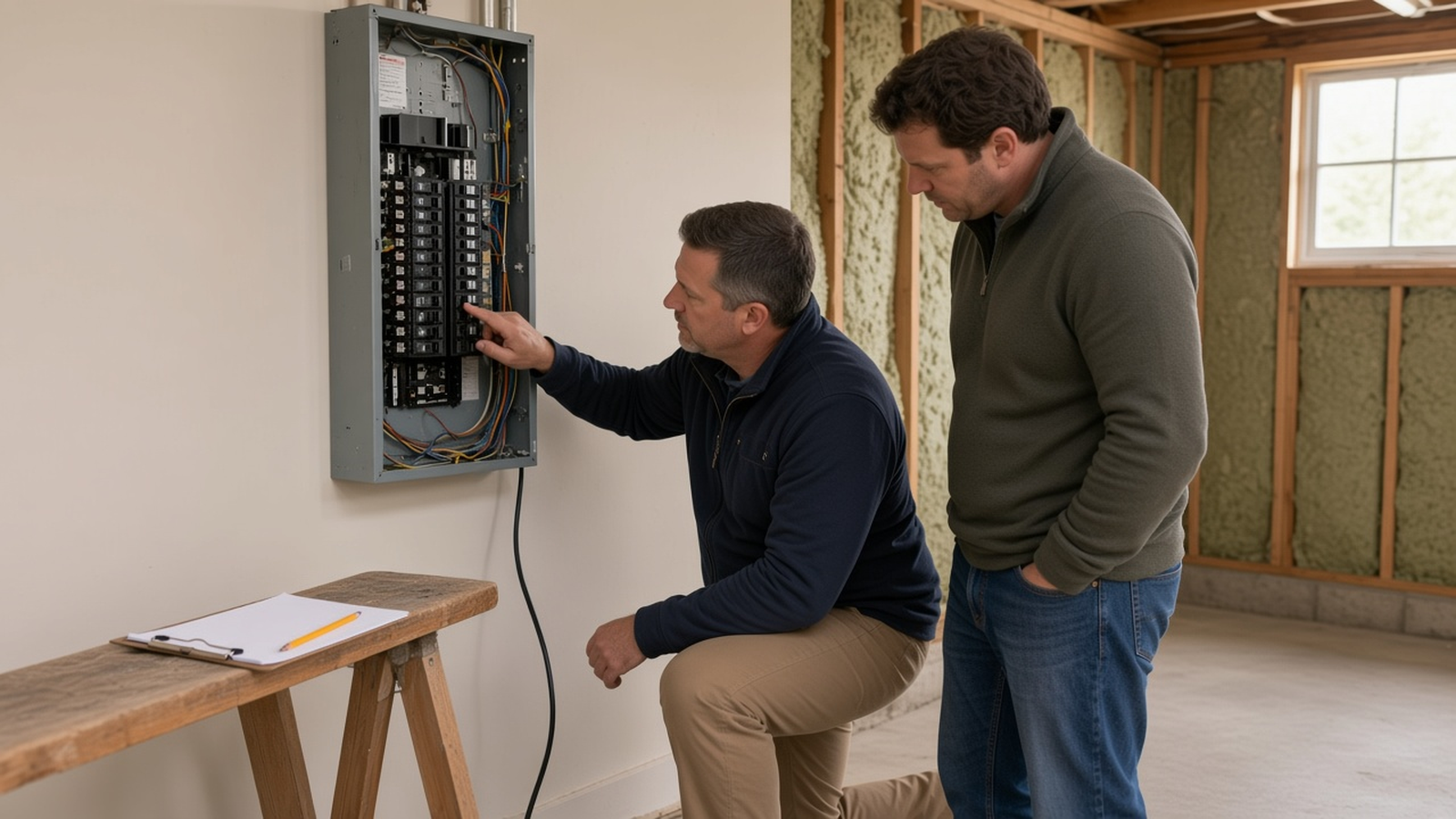
A passed final inspection and a certificate are often two steps. The inspector can approve the work in the field, and the certificate can still wait on a fee, another trade's signoff, a survey, or an application the computer still shows as open. New York City's certificate requirements include final construction, plumbing, elevator, and electrical sign-offs, a final building survey, a final builders pavement plan, no open applications, no open violations, an owner's cost affidavit, and an approved schedule of occupancy. A different city will publish a shorter list, or no public list. Ask which finals must be in the system before a certificate request is accepted, and whether a passed inspection closes the permit by itself.
An open permit is a permit the city still shows as unfinished. It can be from your job. It can be from a seller who opened a bathroom permit in 2014 and never called for the final. In a city that will not issue a certificate while an application is open, that old permit is on the critical path even though you did not pull it. In another city the same old permit is a title or disclosure item and does not block the resale certificate. You do not get to guess which kind you have. Print the permit history, match each open number to work you can see, and ask the department what must close before the certificate, or before the resale approval, will be issued.
Keep the city's inspection separate from the inspections your own construction lender runs while you renovate. A draw inspection releases your rehab loan. It does not issue a certificate of occupancy. The draw inspection guide is the home for that lender visit. A final building inspection can also be different from the certificate request that follows it. Write three dates if you have three events: the lender draw, the city final, and the certificate issuance. One checkmark cannot stand for all three.
Do not bury an open permit inside a punch list labeled cosmetic and hope the listing agent will explain it later. The closeout guide tells you to collect the permit record. This page tells you to read that record for one result: is the use you plan to sell actually authorized, and is any temporary permission still inside its dates?
5. See how a missing certificate hits the sale
A missing or delayed certificate shows up in four places. They overlap, and they are not the same problem. Fixing the listing photo does not fix the appraisal. A price cut does not issue the paper.
The sale itself
If the city says the house cannot legally be used the way you are selling it, the buyer's attorney, the buyer's inspector, or the title company can stop the closing. A narrower resale certificate can stop it too. New Jersey's alarm certificate has to match the change of occupancy you named, and it does not transfer to a different deal. If six months pass, that rule requires a new application. Put the expiration on the closing calendar the day the paper arrives. The seller closing checklist is the home for the rest of closing day. The pre-listing checklist is the home for what must be true before photos and showings. Add the occupancy paper to both lists. Do not leave it as a surprise at the final walkthrough.
The appraisal
The appraiser describes the property that can legally be used. Fannie Mae's general property eligibility rule says the use of the property must be legal or legal non-conforming. If you finished a second unit and the city's record still shows one dwelling, the appraisal ordered for a two-unit house can come back short of the price you told the buyer, or the lender can refuse to count the extra unit. A nicer kitchen does not repair that gap. The legal use does. Ask the zoning or building office, in writing, what the legal use will be on the day the appraiser walks through.
The buyer's loan
Fannie Mae's completion topic says that, generally, improvements, alterations, and repairs on the property must be complete when the loan is sold to Fannie Mae. When an appraisal is required and incomplete items affect safety, soundness, or structural integrity, the appraisal is made subject to completion of those items, and the lender has to verify completion before the loan is sold. Minor conditions that do not affect safety, soundness, or structural integrity can be reflected in an as-is value. Worn finishes are the sort of example that topic gives. The lender may escrow for those minor items at its own discretion.
For new or proposed construction, the same topic allows some postponed items, and it says acceptable postponed items do not affect the ability to obtain an occupancy permit. A different Fannie Mae topic covers construction-to-permanent loans. When that loan provides funds to acquire or refinance an unimproved lot and to build the residence, the lender must keep a certificate of occupancy, or an equivalent form from the government authority, in the loan file. Those two topics are about the loans they name. They are not a promise that every resale of an older house needs a brand-new certificate. They are a warning that a buyer's lender can ask for completion evidence, and sometimes for the occupancy paper itself, before the loan is allowed to close or to be sold.
HUD's Single Family Housing Policy Handbook glossary uses the certificate, or an equivalent, inside its definitions of new construction. Under construction runs from the first placement of permanent material to 100 percent completion with no certificate of occupancy or equivalent. Existing less than one year means the property is 100 percent complete and was completed less than one year from the date of that certificate or equivalent, and it has never been occupied. Those definitions tell an FHA lender which inspection file it is in. They do not turn every previously occupied resale flip into new construction. Ask the buyer's lender which definition applies. Do not promise the buyer that your temporary certificate will satisfy the loan.
Your holding costs
Every extra day you own the house, you pay the carry you already defined: loan payments or interest, taxes, insurance, utilities, and upkeep. The holding cost guide is the home for that formula. A certificate delay is one more reason to use it. Write the daily number from your own budget, multiply by the days the department says are still open, and put that product on the schedule before you accept an offer with a tight close. There is no national daily cost to copy. The number is the one in your file.
If the buyer will close while a certificate or a weather item is still open, the cash held back from your proceeds is a different tool. The escrow holdback guide is the home for who holds that money and what releases it. A holdback does not issue the certificate. It only changes who is waiting, and whether you receive the full wire on closing day.
6. Work three named occupancy files
Maya Ellis, Luis Navarro, and Priya Shah are fictional. Their prices and daily carrying numbers are planning figures for these illustrations. They are not comparable sales, not market averages, and not results from a Rehabfolio account. The city rules in each story are the rules that city stated to that flipper. Your city can state a different rule for a similar house.
Maya Ellis books the resale certificate before the photos
Maya is flipping 14 Cedar Lane, a one-unit house. Her scope is paint, refinished floors, and new appliances. She called the building department with that scope. The staff member told her this work does not need a new certificate of occupancy. Maya wrote down the name, the date, and the scope she described. The town does require a resale smoke and carbon monoxide certificate before the deed can transfer. She treated the building-department call as the end of the task and listed the house.
The buyer's lender then asked for the resale certificate. The next fire-inspection opening was twelve days out. Maya's own holding budget for this house is $95 a day. That figure is interest, taxes, insurance, and utilities she already uses on this project. It is not a published index. Twelve days is 12 times $95, which is $1,140, if the closing waits on that opening and nothing else slips. She also learns the certificate this town issues is good only for a limited period, so a certificate ordered too early can expire before a slow buyer closes.
Maya's decision is to book the resale inspection before listing photos on the next house, and to keep the building department's note in the file. She does not tell this buyer that the smoke certificate is a building certificate. She does not cut the price to hide a scheduling miss she can still book. She writes the inspection date, the expiration, and the $1,140 beside the closing date. If the buyer can wait those twelve days, the deal stays on her original price. If the buyer cannot, she is choosing a delay with a known carrying cost, not discovering it on the day before closing.
Luis Navarro stops advertising a unit the city has not authorized
Luis is renovating 9 Harper Street. The scope adds a basement dwelling with its own kitchen and its own exit. His resale notes assume two legal units and a planning price of $420,000. He also wrote a fallback of $360,000 if he has to sell the house as the one-unit use the city still shows. The $60,000 gap is his planning gap for this story. It is not a comparable-sale adjustment and not a statement about basement apartments in general.
The building inspector passes the basement finals. Luis asks the listing agent to advertise two units. The department then tells him the passed finals do not amend the certificate. The legal use stays one dwelling until an amended certificate is issued, and that amendment still needs an address assignment and a zoning signoff. Fannie Mae requires the use to be legal or legal non-conforming. Luis cannot hand a buyer's lender a two-unit story while the city's certificate still says one.
His decision is to stop marketing the basement as a dwelling. The second kitchen stays out of the listing until the amended certificate is in the file. If the amendment will miss the maturity date on his own loan, he reruns the sale using the $360,000 one-unit fallback and decides whether that number still clears his target. He does not ask the appraiser to count a kitchen the city has not authorized. The finals he already passed remain useful. They are not the certificate.
Priya Shah does not let a temporary certificate stand in for the loan
Priya finished most of 40 West Elm. The city issued a temporary certificate so the house could be occupied while a front-walk repair and one electrical permit stayed open. The paper she received expires 60 days after the date printed on it. That period is the date on her certificate in this illustration. It is not New York City's typical 90 days, and it is not a period you can copy.
She accepts an offer from a buyer using a conventional loan. The appraisal is subject to completion of the electrical work. A photo in the listing shows the temporary certificate on the kitchen counter, which leads the buyer to think the city is finished. The electrical permit is open because a panel record the inspector asked for was never submitted. Priya's holding budget is $110 a day, again her own number for this house. If the close slips 21 days while she books the reinspection and the certificate request, the extra carry is 21 times $110, which is $2,310, before any extension fee on her own loan.
Fannie Mae's postponed-item rule for new construction says acceptable postponed items do not affect the ability to obtain an occupancy permit. Priya's house is an existing house, so that new-construction table is not her buyer's loan. The lesson she uses is narrower. Her buyer's lender wants the incomplete electrical item finished. Her temporary certificate does not answer that request, and it will expire if she ignores the date. Her decision is to close the electrical permit, ask the city in writing whether the final certificate can be issued before the walk is poured, and, if the walk must wait on weather, negotiate a completion escrow from the holdback guide. She does not let the buyer occupy the house on a temporary certificate she has not checked for renewal.
The three files are the worksheet. Maya's building certificate was never the issue. Her resale alarm certificate was, and the cost of booking it late was twelve days of her own carry. Luis had finals and still did not have a legal second unit, so the listing had to match the certificate he actually holds. Priya had a temporary certificate and an open electrical permit, and the buyer's loan cared about the open permit. A house that "passed inspection" has been only half read until the occupancy paper, or the city's written statement that none is required, is in the file.
7. Put the certificate on the schedule and the closing list
Put the certificate on the schedule as its own activity, with the inspections it depends on named in front of it. The project schedule guide is the home for the critical path, the buffers, and the weekly update. A certificate request with no predecessor is how the paper becomes a surprise in the last week.
This order matches the way many cities describe the path. Confirm it locally before you treat it as yours.
- Freeze the scope, including any change of use, unit count, or addition. If the certificate is a deliverable, it is written there.
- Permit the work that needs a permit. Ask, on that application, whether a certificate or a resale approval will be required at the end.
- Pass the rough inspections, then cover only the work those inspections released.
- Pass the final inspection for every trade the city listed.
- Close the open permits, violations, and fees the city says must be clear before it will accept a certificate request.
- Request the certificate, or the resale alarm certificate, and write down the review time the department states.
- Save the issued paper and its expiration, if it has one. Renew a temporary certificate before it lapses if you still need it.
- Book listing photos and showings that depend on the legal use only after step 7, or after a written statement that no certificate is required. The pre-listing checklist owns the launch itself.
- Put the paper, or the appointment to get it, on the seller closing checklist before you accept a closing date the department cannot meet.
The buffer belongs after the request, not inside the contractor's last day of paint. If the department says certificate review takes ten business days, do not schedule the buyer's appraisal for the morning after the final inspection. Ten business days is an example of a duration you were told. It is not a national processing time. Write the duration you were given, then add the days your own crew needs if a correction comes back.
Holding cost sits on that buffer in dollars. If your daily carry is the number you already built in the holding-cost worksheet, multiply it by the buffer before you promise a closing date. Maya's $1,140 and Priya's $2,310 are what that multiplication looks like when the buffer is real. They are not targets. If the multiplied number eats the profit you required, the schedule is the problem to solve, or the deal is the problem to decline. Do not hide the days inside a hope that the clerk will rush your file.
8. Use an occupancy checklist without an account
Copy this list into the notes you already keep. Check a line only when a city document, a dated note from a named staff member, or the certificate itself supports it. A blank line stays open. It does not become a yes because the house looks finished.
- The scope is written, including use, unit count, additions, and egress changes.
- The building department was asked, for this address, whether a new or amended certificate is required.
- The answer names the code the city applies and the document it will issue, or states that no occupancy paper is required.
- Any separate resale, smoke, or carbon monoxide certificate is listed on its own line, with who issues it.
- Final inspections are listed by trade, with the result and the date for each one.
- Open permits and open violations are printed from the city system and matched to the house.
- The certificate request date and the review time the city stated are on the schedule, after the finals it depends on.
- A temporary certificate, if you have one, shows the expiration date, the portion it covers, and the items still open.
- The listing describes only the use the current certificate, or the city's written answer, allows.
- The buyer's lender has been asked what completion evidence the loan needs, including whether a temporary certificate is acceptable.
- Extra days are multiplied by this project's own daily holding cost and written next to the closing date.
- If the close will happen before the final paper, the holdback amount, the holder, and the release evidence are named. Otherwise that line says none.
- The paper, or the written "not required" note, is in the property file before showings that depend on legal use.
9. Keep the certificate on the property record
The certificate is a file, a date, and a dependency. It belongs with the property, next to the scope and the closing date. Rehabfolio's project management tools keep schedules, tasks, files, notes, and photos on one property record, and they let you sequence tasks so an inspection sits before the work that depends on it. Use that for the certificate the same way. Store the PDF, the city's written answer, the open permit list, and a photo of the posted approval if the city requires one. Put the expiration of a temporary certificate on the calendar. Assign the certificate request to a person, and make the listing milestone wait on it when the legal use is still open.
Software can remind you that a temporary certificate expires before the buyer is scheduled to close. It can keep the final inspection result from being mistaken for the certificate. It cannot walk the house, decide that a use is legal, or persuade a lender to waive a completion condition. If a draft note and the city's paper disagree, the paper wins. You still make the call, and you still deliver the document the closing file asks for.
A research or writing tool can help you organize the questions for that call: which use changed, which permits are open, which date the temporary certificate expires. It cannot supply the city's answer. Check every claim about a code section against the page you cite and against the building department for the house. Provider names do not make a certificate valid.
Frequently asked questions
What is a certificate of occupancy on a house flip?
A certificate of occupancy is the building department's written permission to use a building, or a stated part of it, for a stated purpose. People shorten the name to CO. The useful paper names the address, the use it allows, and whether it is temporary or final. A passed inspection, a listing photo, and a contractor's text that the job is done are not that paper. Cities use different names for related documents, including a certificate of completion or a certificate of compliance, so ask what the document in your file actually allows.
Does every house flip need a new certificate of occupancy?
No. A cosmetic scope that the city treats as permit-exempt may not need a new certificate. A change of use, a change in the number of dwelling units, an addition, or work the city calls a major alteration often does. New York City, for example, says existing buildings need a current or amended certificate when there is a change in use, egress, or type of occupancy, and it may issue a letter of completion for minor alterations that do not need a new or amended certificate. That is one city's page. Call the building department for your address and read the answer against your written scope.
What is the difference between a temporary certificate and a final one?
A final certificate is the department's statement that the completed work matches what it approved and that the stated use is allowed. New York City says a certificate of occupancy has no expiration date. A temporary certificate allows occupancy for a limited time while something is still open, and only if the occupied portion is safe. The model building-code sentence used in many places says the building official sets that time period. New York City says its temporary certificates typically expire 90 days after issuance and may be renewed. Redding, California, says its temporary certificates are valid for 60 days. Read the date on the paper you received. A temporary certificate is not a final certificate.
Can I close the sale with an open permit or only a temporary certificate?
Sometimes a buyer will still sign, and sometimes the buyer's lender will not. Fannie Mae generally expects improvements that affect safety, soundness, or structural integrity to be complete before the loan is sold, and it says acceptable postponed items on new construction do not affect the ability to obtain an occupancy permit. A temporary certificate can also expire before the closing date. Ask the building department whether the open permit blocks the certificate, and ask the buyer's lender what completion evidence the loan file needs. If the buyer will close while an item stays open, price a completion escrow on purpose. Do not treat silence as a yes.
Is a smoke-detector certificate the same as a certificate of occupancy?
No. Some states and towns require a separate life-safety certificate when a house is sold or the occupant changes. New Jersey requires a certificate of smoke alarm, carbon monoxide alarm, and portable fire extinguisher compliance before a one- or two-family home is sold, leased, or otherwise changed in occupancy, unless the town already does its own inspection and withholds that local approval until the same alarms are confirmed. That certificate is not transferable, and a new application is required if the change of occupancy does not happen within six months. It does not prove that a new unit, a new use, or an addition is legal.
What if the city says the old certificate is still valid?
Save that answer in writing, with the date, the address, and the scope you described. An old certificate can remain the legal-use record when your work did not change the things that city cares about. It stops being enough when you changed the use, the egress, or the number of units and the city requires an amendment. New York City's own example is buildings from before 1938, which were not required to have a certificate unless later alterations changed use, egress, or occupancy. Your city may have no such date. If the listing will describe a use the old certificate does not name, get the amendment or change the listing.
Can software decide whether my flip is legal to occupy?
Software can store the certificate, the expiration date, the open permit numbers, and the closing date on the property record. It can remind you that a temporary certificate expires before the buyer is scheduled to close. It cannot inspect the house, issue the certificate, or tell a lender to accept a temporary one. If a draft summary and the city's paper disagree, the city's paper wins. You still call the building department and you still hand the buyer the document the loan file asks for.
Editorial methodology, limitations, and sources
The Rehabfolio editorial team wrote this as the occupancy-paper page for a house flip. It does not replace the permits and inspections guide, the punch list and closeout guide, the project schedule, the holding cost guide, the seller closing checklist, the pre-listing checklist, the scope of work, the draw inspection guide, or the escrow holdback guide. Those pages remain the homes for the inspection path, the correction list, the calendar method, the daily carry, closing day, the listing launch, the bid-ready scope, the lender's progress inspection, and money held past closing. This article answers a different question: what a flipper should be able to prove about the right to use the finished house before listing it and before accepting a closing date.
New York City's descriptions of a certificate, of when an existing building needs a current or amended certificate, of the final certificate, of the letter of completion, of pre-1938 buildings, and of the requirement that a certificate request have no open applications or violations, come from the Department of Buildings page Certificate of Occupancy. The 90-day typical expiration, the renewal practice, the 30-day re-occupancy note, the $130 fee unless exempt, and the statement that a temporary certificate is for a property that is safe to occupy while outstanding issues remain, come from that department's Temporary Certificate of Occupancy page. Both pages are New York City. They are not a model for every town.
The International Code Council publishes the model text. Section 111 of the 2021 International Building Code is the certificate of occupancy section. Cities adopt editions and amend them. The temporary-occupancy sentence quoted in this guide is the sentence the City of Redding quotes from California Building Code section 111.3 in its building official interpretation of CBC 111.3, dated in that file as approved material from the city's development services department. That interpretation is also the source for Redding's 60-day validity, its renewal fee, and its list of life-safety items. The same temporary-occupancy sentence appears on the UpCodes reprint of section 111.3, Temporary Occupancy. Oak Bluffs' description of a certificate as permission to occupy for a specific purpose, and its statement of when a residential certificate is required, are on the town's certificate of occupancy FAQ. Use these pages as examples of how a published rule looks. Then use the page for the city where the house sits.
The New Jersey resale certificate is N.J. Admin. Code 5:70-2.3, as published by the Legal Information Institute from the New Jersey Administrative Code. That section is the source for the duty to obtain the smoke alarm, carbon monoxide alarm, and portable fire extinguisher certificate before a covered dwelling is sold, leased, or otherwise changed in occupancy, for the town-inspection exception that still withholds a local certificate until the alarm rule is met, for the rule that the certificate is not transferable, for the six-month reapplication rule, and for the carbon monoxide exception when there is no fuel-burning appliance and no attached garage. It is a state fire rule. It is not a building certificate for a new unit.
Buyer-financing statements follow Fannie Mae's Selling Guide as published on its site when this page was reviewed. B2-3-01, General Property Eligibility is the source for the requirement that the use of the property must be legal or legal non-conforming. B4-1.2-05, Requirements for Verifying Completion and Postponed Improvements is the source for the general completion expectation, for the difference between minor as-is items and items that affect safety, soundness, or structural integrity, and for the new-construction statement that acceptable postponed items do not affect the ability to obtain an occupancy permit. B5-3.1-01, Conversion of Construction-to-Permanent Financing is the source for the requirement to retain a certificate of occupancy or an equivalent form when that loan type funds acquisition or refinancing of an unimproved lot and construction of the residence. Guidelines change. Read the current Selling Guide section, and read the buyer's lender overlay, before you rely on a sentence here.
HUD definitions come from the glossary in the FHA Single Family Housing Policy Handbook 4000.1 glossary. That glossary is the source for the statements that under construction runs to 100 percent completion with no certificate of occupancy or equivalent, and that existing less than one year means a property that is 100 percent complete, was completed less than one year from issuance of the certificate or equivalent, and has never been occupied. The glossary does not say that every existing flip needs a new certificate. An FHA lender decides which definition fits the file.
Maya's, Luis's, and Priya's prices are arithmetic on the inputs stated in their sections. Twelve times $95 is $1,140. The gap between $420,000 and $360,000 is $60,000. Twenty-one times $110 is $2,310. Those inputs are illustrations. They are not quotes, indexes, or results from a Rehabfolio account.
Public codes and lender guides cannot tell you whether your town will issue a certificate for your scope, what the fee is, or how many days the review will take. Examples are original composites created for teaching. Names, prices, and outcomes are illustrative. They are not case studies of real customers, and they are not statistics.
Editorial standard. We identify the audience, the author, the review date, the topic boundary, the assumptions, and the product limit. We do not invent credentials, licenses, testimonials, market statistics, or guaranteed results. AI may help organize research and draft, and a person reviews the claims, the links, and the limitations before publication. We revise the guide when a cited public page or a material product workflow changes. See the editorial methodology on the company page.
Keep the certificate, the open permits, and the closing date together.
Use a workspace for the scope, the city's written answer, and the day the paper expires. You still call the building department, and you still meet the buyer's lender's completion rule, yourself.
Create free accountBuild the project schedule before you promise a closing date the certificate cannot meet.