House flip lead paint: disclosure, the inspection window, and the renovation rule
A beginner can buy a pre-1978 house, waive a short inspection line, and then hire a crew that is not allowed to open the windows. This guide shows how to tell whether the house is covered, what the seller must hand you before you are obligated, how the 10-day lead period differs from a general inspection, and how to price certified renovation work before that cost lands in the walk-away number.

Written and reviewed by the Rehabfolio editorial team. Published and last reviewed October 16, 2026.
Who this guide is for. This guide is for United States residential investors buying, renovating, or selling a one-to-four-unit property built before 1978. You might close in your own name or in an LLC, with cash or with a loan. The guide starts when the year built, a disclosure form, or a scope that will disturb paint is in the file. It ends when you have a written choice: require the missing disclosure, keep the inspection opportunity, put certified renovation cost in the budget, or walk. The full inspection window is the due diligence checklist. The bid-ready scope is the scope of work guide. The seller's packet on the way out is the pre-listing checklist. Those pages name lead. This page is the file they point at.
The Rehabfolio editorial team builds and reviews product workflows that connect a property record to documents, dates, photos, and the offer math. That is first-hand product experience with how a deal file is organized. It does not make the team a lead inspector, a risk assessor, a certified renovator, an attorney, or a physician. We do not invent licenses, credentials, or customer results.
Disclosure forms, renovation programs, and penalties differ by the housing, the work, and whether a state or tribe runs the renovation program instead of EPA. This page is educational. It is not legal, medical, environmental, or contracting advice. Use the pamphlet and the certified firm for the house you are buying.
Tip: Read this beside the repair budget guide, the contractor vetting guide, the permits and inspections guide, the maximum offer guide, and the full cost breakdown. Photos of peeling paint are a clue for the scope. They are not a lead test. The photo estimate guide is the home for that limit.
1. Define what the lead file has to prove
Beginners treat "pre-1978" as a slogan and then treat a signed disclosure as a clean bill of health. The federal file has to prove a shorter list. The year built is supported by something other than the listing headline. You can say whether the disclosure rule applies to this sale. The pamphlet, the known-information answers, the records, and the warning statement are in the file before you are obligated. The lead inspection period is either still open, changed in a writing you signed, or waived on purpose. The scope either avoids disturbing painted surfaces, or a certified firm owns every activity that the renovation rule covers. The dollar effect of that firm is in the same offer stack as the other repairs.
If you cannot point to those facts, you are not ready to waive. A seller's sentence that they are unaware of lead-based paint is one of the disclosure answers. It is not a certified inspection. A contractor's sentence that they "always work lead-safe" is not a firm certificate. The due diligence checklist already says to put certified-renovation cost in the rehab plan instead of discovering it on demolition day. This page is how you build that line.
EPA's renovation program page says the federal government banned the sale of lead-based paint for use in homes in 1978, and that approximately three-quarters of the homes in the United States built before 1978 still contain some lead-based paint. That is EPA's statement about the housing stock. It is not a measurement of the house in your contract. The same page says children can live safely in these homes when paint and surfaces are in good condition and surfaces are kept clean, and that deteriorated paint and renovation dust are the hazard. Your job on a flip is the second half: you are about to disturb paint on purpose.
2. Decide whether the house is covered
Start with the year built, then test the exemptions instead of assuming the slogan. EPA's real estate disclosure page, updated May 27, 2026, says the disclosure rule applies to most pre-1978 private housing, public housing, federally owned housing, and housing receiving federal assistance. The same page says the rule does not apply to housing built after 1977, foreclosure sales, zero-bedroom units such as efficiencies, lofts, and dormitories unless a child under six lives or is expected to live there, leases of 100 days or less where no renewal or extension can occur, housing specifically for the elderly or persons with disabilities unless a child under six resides or is expected to reside there, and housing whose painted surfaces a certified lead-based paint inspector or risk assessor has tested and found lead-based paint free.
Write the year and the source next to each other. A listing that says "1948" is a start. The assessor card, the appraisal, or the seller's disclosure is better. If the records disagree, you do not pick the year that makes the rule disappear. You ask which document the closing file will use, and you treat the house as covered until a reliable record shows 1978 or later.
Two exemptions get misused on flips. A foreclosure purchase can be outside the disclosure rule and still be inside the renovation rule the week you start work. EPA's contractor page does not list foreclosure as a renovation exemption. A studio or elder-housing exemption can also fail if a child under six lives there or is expected to live there. Read the exception before you skip the pamphlet.
The renovation rule has its own map. EPA's contractor page says it applies to work in houses, apartments, and child-occupied facilities built before 1978. It excludes housing built in 1978 or later, housing specifically for elderly or disabled persons unless children under six reside or are expected to reside there, zero-bedroom dwellings unless children under six reside or are expected to reside there, housing or components declared lead-free by the right person using the right method, and minor repair and maintenance inside the square-foot rule. A child-occupied facility, such as a daycare in a house, can pull the work into the rule even when your mental model was "just a rental." The definition in 40 CFR 745.83 is specific about hours and ages. If the property is a daycare, stop and read that definition with the operator. Do not borrow the house-flip examples below as if they were a school.
EPA administers the renovation program in most places and has authorized some states and a tribal program to run their own. The program page updated June 17, 2026, listed Alabama, Delaware, Georgia, Iowa, Kansas, Massachusetts, Mississippi, North Carolina, Oklahoma, Oregon, Rhode Island, Utah, Vermont, and Wisconsin, and it also listed a tribal program. Authorization changes. Open that page for the house you are buying, and ask the firm which authority issued the certificate. A certificate from the wrong program is a copy, not compliance.
3. Read the disclosure before you are obligated
EPA's disclosure page says sellers, landlords, agents, and property managers must provide specific information before a buyer signs a contract or a renter signs a lease. For a purchase, the stack has six practical pieces. You receive the pamphlet Protect Your Family From Lead in Your Home. The seller discloses known information about lead-based paint and lead-based paint hazards, which may include location and the condition of painted surfaces. The seller provides available records and reports. In a multi-unit building, that includes records for common areas and other units when the evaluation was building-wide. The contract, or an attachment in the same language as the contract, includes a Lead Warning Statement and signed statements that the requirements were completed. You receive a 10-day period to conduct a paint inspection or risk assessment, unless that period is changed or waived in writing. The seller keeps a signed copy of the disclosures for three years after the sale is completed.
EPA's pamphlet page says a revised 2026 version of Protect Your Family From Lead in Your Home is available in multiple languages. EPA does not require users to discard older versions. If someone uses an older version, EPA says to provide a supplement so the updated information is included. The 2026 pamphlet reflects dust-lead action levels and dust-lead reportable levels that were effective January 12, 2026, and an updated definition of abatement that was effective January 13, 2025. This guide does not restate those levels. Use the current pamphlet. A photocopy that drops pages is not the pamphlet the rule describes.
The seller's answer can be "known," or it can be that the seller has no knowledge. Both answers belong on the form. An empty form is not the second answer. Records you should expect, when they exist, include prior inspections, risk assessments, and test results. A flipper who is buying should ask for those documents by name. A flipper who is later selling must turn around and disclose what they actually learned, including reports they received on the way in.
Agents have a duty of their own. EPA says agents must inform the seller of the seller's obligations, and agents are responsible along with the seller unless the seller fails to disclose information to the agent. That sentence does not let the buyer skip the form. If the packet is missing on the day you would become obligated, the fix is to get the packet, not to rely on a conversation that the agent "covered lead."
Electronic delivery has its own conditions. EPA says that if the disclosures are electronic, the buyer must receive a clear statement of the right to paper, the way to withdraw consent, and how to access and retain the records, and the sender needs consent showing the buyer can access the forms. A link that expires before you download the pamphlet is a bad file. Save the pamphlet and the signed disclosure with the contract.
EPA's sample seller disclosure is a usable pattern. It is not a substitute for a state form your contract also requires. State property-condition forms ask different questions. Complete both when both apply. The pre-listing checklist is the home for the seller-side packet when you list the finished flip. This section is the buyer-side reading of the same federal rule.
4. Use the inspection opportunity on purpose
The federal lead period and the contract's general inspection period are different clocks. EPA says buyers receive 10 days unless the parties agree in writing to lengthen or shorten the time, and buyers may waive the opportunity. Your purchase contract might allow 5 days, or 15, for a home inspection. Shortening the lead period requires a writing. Silence does not shorten it. Waiving it is a sentence you should be able to find in the file.
A paint inspection and a risk assessment answer different questions. EPA describes the 10-day opportunity as time to conduct a paint inspection or a risk assessment for lead-based paint or lead-based paint hazards. A paint inspection is about where lead-based paint is. A risk assessment is about hazards, including deteriorated paint and dust. Neither one is a general home inspection, and a general home inspection is not either of them. Hire from people certified for the task. EPA points buyers to its lead-based paint professional locator.
Use the period for a decision you can price. If the inspector finds lead-based paint on windows you already planned to replace, the finding confirms that the renovation rule will apply to that work unless a narrower lead-free determination covers those components. If the inspector finds deteriorated paint you were going to "paint over during the refresh," the scope and the firm both change. If you waive the period, you still need a renovation plan. Waiver deletes the chance to test. It does not delete the work-practice rule.
Order the specialist early enough that the report arrives before the deadline. A report that arrives the morning you must object is a weak report, because you cannot price it. The due diligence checklist already says to count backward from the written deadline. Put the lead inspector on that same calendar, on a separate line from the general inspector, the sewer scope, and the insurance call.
If the seller will not deliver the pamphlet and the disclosure before you are obligated, do not fill the gap with a private guess. Ask for the documents in writing, or use the contract right that keeps you from being obligated. EPA enforces the disclosure rule and says a seller, landlord, agent, or manager who does not give the proper information may be subject to penalties. This guide does not quote a dollar penalty. The enforcement page is where EPA describes that consequence, and the report-a-violation page is where a buyer who never received the disclosure can start.
5. Separate renovation from abatement and from a lead-free claim
Three words get swapped on flip jobs, and they are different programs. Renovation, under 40 CFR 745.83, is a modification of an existing structure that disturbs painted surfaces, unless the activity is performed as part of an abatement. The examples in the definition include repairing painted components, preparing surfaces by sanding or scraping, removing walls, windows, and plumbing, and weatherization that cuts into painted surfaces. Abatement, as EPA's program page describes it, is work designed to permanently address lead-based paint hazards, and it uses a different certification. A kitchen demolition on a flip is usually renovation. Calling it abatement on an invoice does not make it abatement, and calling abatement "just a remodel" does not put it under the renovation certificate.
Lead-free is a third claim, with two different widths. For the disclosure exemption, EPA requires a certified lead-based paint inspector or risk assessor to test the painted surfaces and find the housing lead-based paint free. For the renovation rule, EPA's contractor page also allows a certified renovator to declare specific components lead-free with an EPA-recognized test kit or by collecting paint-chip samples for an EPA-recognized laboratory. A negative test on the kitchen cabinets does not make the windows lead-free. A whole-house inspection report is the document that can support the disclosure exemption. Keep the report. A remembered result does not travel to the next buyer.
The recognized test kit, as defined in 40 CFR 745.83, is a kit EPA has recognized as capable of determining lead at 1.0 milligram per square centimeter or more, or more than 0.5 percent lead by weight. A hardware-store swab that is not a recognized kit is not that determination. Paint testing is not required before a renovation. The contractor page says the opposite practical rule: unless you have documentation that the paint is not lead-based, the renovation rule applies. Testing is a way to narrow the work. It is not a prerequisite you can skip and then also skip the work practices.
Who must be certified depends on who disturbs the paint. EPA's frequent question 23002-32412 answers the flip directly. Individuals who buy, renovate, and sell pre-1978 housing for profit, and who do the work themselves, are performing renovations for compensation. They need a trained certified renovator and a lead-safe certified firm. A business that uses its own employees for that work has the same pair of duties. Individuals or businesses that hire an outside firm to perform all the work do not themselves need certification for work they are not performing. The outside firm must be certified, must use a certified renovator, and must meet the work-practice and recordkeeping requirements.
That answer has a bright edge. If your crew opens one wall and the certified firm does the rest, you are performing part of the renovation. "All the work" is the phrase in the answer. A vacant house does not blur the edge. EPA's post-disaster page states that the rule still applies when the home is unoccupied, and that temporarily unoccupied or vacant homes are not exempt. The 2010 change also removed the old owner opt-out. EPA's question 23002-32216 says the opt-out was revoked by a rule that took effect on July 6, 2010. A homeowner cannot sign a note that lets a firm skip the work practices because no child under six lives there.
Firm certification, on EPA's firm-certification page, is good for five years where EPA runs the program. The work-practices page says the job file needs the certified renovator's initial course certificate and the most recent refresher certificate, on the job and in the records kept afterward. Ask for those copies before the firm starts, and save them with the bid. The contractor vetting guide is where license and insurance checks live. Add the lead-firm certificate to that list when the house is pre-1978 and the scope disturbs paint.
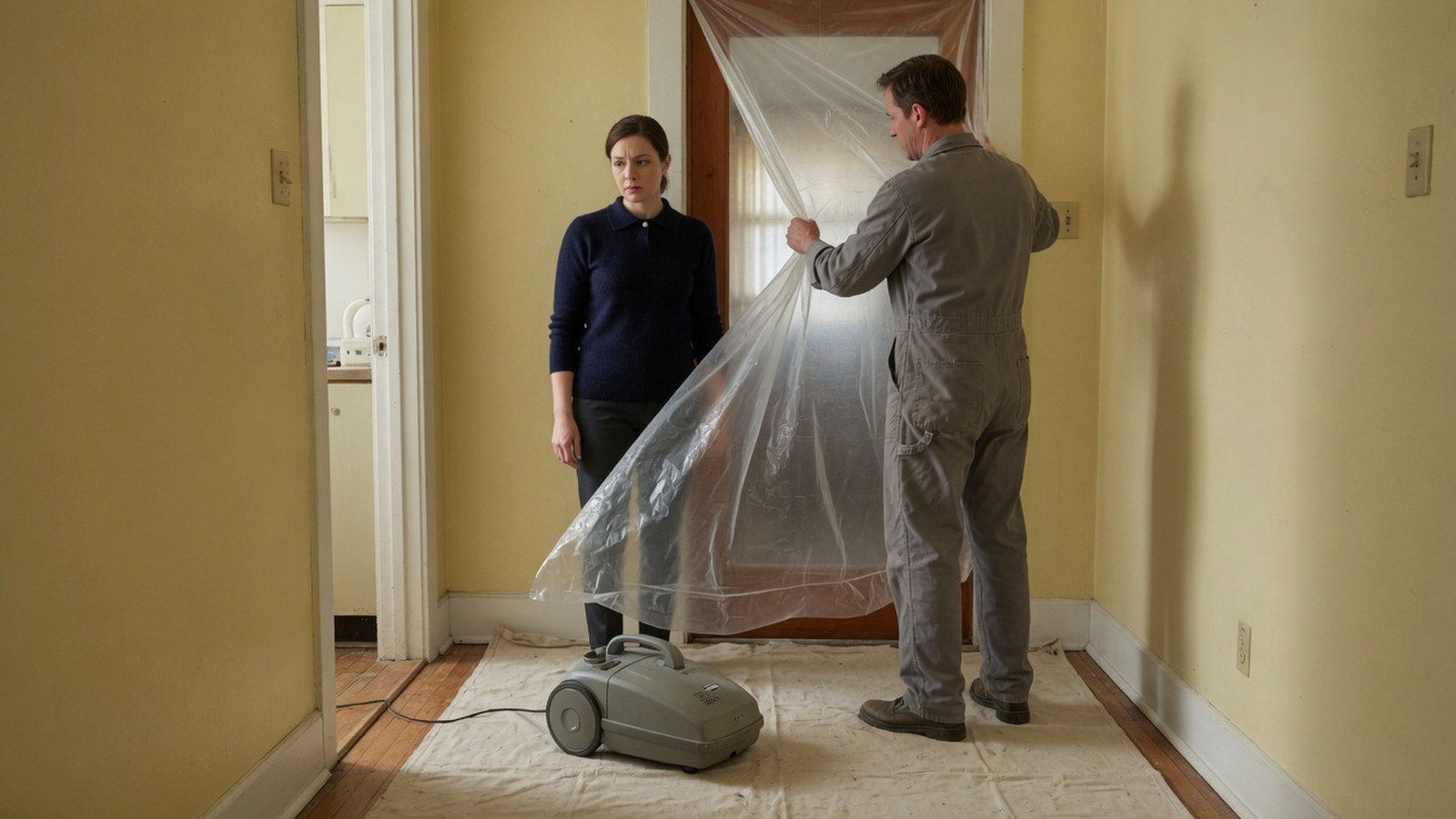
The work itself is the firm's to perform under the rule, not a blog's to improvise. EPA's work-practices page requires pre-renovation education, including distribution of the Renovate Right pamphlet before work starts, containment so dust and debris stay in the work area, a prohibition on practices such as open-flame burning and power tools without HEPA exhaust control, and thorough cleaning followed by a verification procedure. Firms keep the records for three years after the renovation is complete, including pamphlet proof, test results, worker training, and the renovator assigned to the job. Beginning with the July 6, 2010 record rule, the firm also provides the owner, and the occupant when different, with compliance information when the final invoice is delivered or within 30 days of completion, whichever is earlier. Ask for that packet in the contract. OSHA's lead standards are a separate employer duty to protect workers. HUD's Lead Safe Housing Rule can add requirements when the housing receives HUD assistance. A private cash flip is not automatically a HUD job. If you are using HUD-assisted funds, read both rules. The comparison handout HUD and EPA point to is the checklist for that overlap.
One narrow renovation exclusion is easy to overread. EPA's question 23002-18426 says a whole-house gut rehabilitation, in EPA's limited sense, means demolishing and rebuilding until the structure is effectively new construction, including removal and replacement of all interior and exterior painted surfaces, including windows. That activity is not a renovation for the rule, and later work on that rebuilt housing is outside target housing. A kitchen and a bathroom, or one floor of a house, is not that project. Partial work leaves the rest of the house covered.
6. Apply the square-foot and window tests
Minor repair and maintenance is the exception people hope will cover a flip. The definition in 40 CFR 745.83, as the eCFR displayed it on October 14, 2026, is tighter than a hunch. The activity must disrupt 6 square feet or less of painted surface per room for interior work, or 20 square feet or less for exterior work. None of the prohibited or restricted practices in 40 CFR 745.85(a)(3) may be used. The work must not be window replacement or demolition of painted surface areas. When you remove a painted component, the entire surface area removed is the amount disturbed. Jobs in the same room within the same 30 days, other than emergency renovations, count as the same job.
Here is a teaching measurement, not a field ruling. A crew removes painted door casing in one bedroom. The casing is 18 feet long and 3 inches wide. The area is 18 times 0.25, or 4.5 square feet. Taken alone, with no prohibited practice and no window replacement, that piece can fit the minor-repair definition. Ten days later, in the same room, someone sands a deteriorated patch of 3 square feet. The 30-day rule adds them. The job is 7.5 square feet. It is a renovation. The firm, the pamphlet, and the work practices come back into the file. Splitting the work across two invoices does not reset the 30 days.
Window replacement does not get the area test. EPA's contractor page says window replacement and demolition of painted surfaces are covered regardless of square footage. A small bathroom window is still a replacement if you install a new window unit. EPA has also said that replacing a pane, or releasing a sash from a hinge or jambliner, is not automatically "window replacement," and it can be minor repair when the disturbed paint stays within the square-foot limit. Read that question before you treat a balancer repair as a full window scope, and before you treat a new window unit as a balancer repair. The safe estimating habit on a flip is simple. If the scope says "replace windows," price a covered renovation.
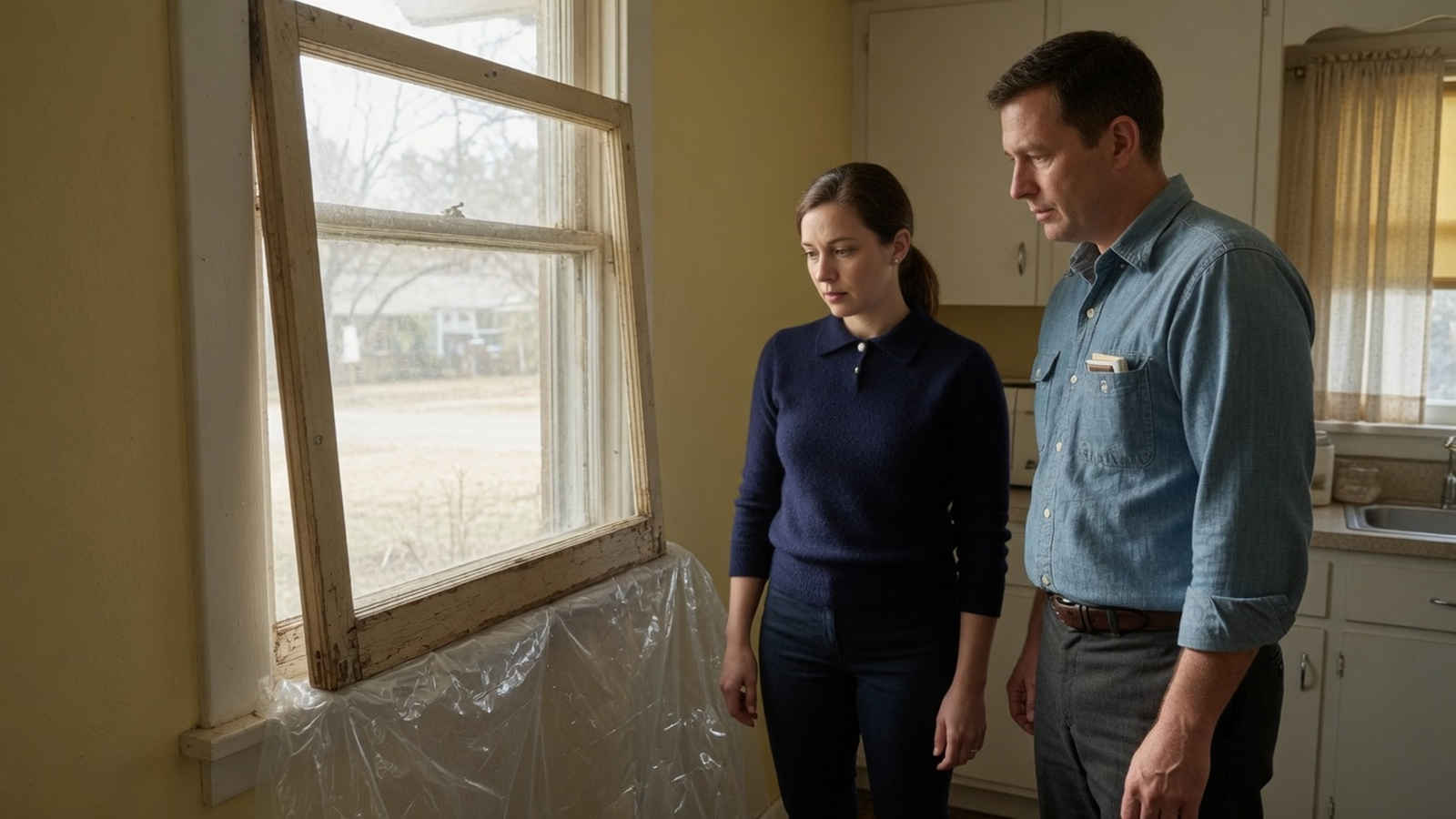
Exterior work uses 20 square feet, not 6. Scraping a whole elevation before painting is rarely a minor repair. The same 30-day idea and the same prohibited-practice ban apply. A heat gun or an open flame used on a "small" patch can take the job out of minor repair because the prohibited practice is prohibited regardless of area. When the area is close to the line, assume it is covered and let a certified renovator measure, or test the components and document a lead-free finding. A bid that says "paint and patch, no lead cert needed" is not the measurement.
Put the result on the scope before you ask for bids. The scope of work guide wants inclusions, exclusions, and named unknowns. "Lead-safe work practices on all paint disturbance in the pre-1978 house, by a currently certified firm, records delivered at invoice" is an inclusion. "Assume minor repair" is not. Contractors who bid the same inclusion can be compared. Contractors who leave the rule out of the number cannot.
7. Work three named lead files
The three files below are original composites for teaching. Names, cities, and dollar figures are illustrative. They are not customer results, local inspection fees, or surveys of contractor prices. Each one forces a written choice.
Maya Chen prices the windows before she waives
Maya is buying a 1964 bungalow in a teaching Cleveland file for $175,000. The listing year is 1964, and the assessor card matches. The seller's disclosure says the seller has no knowledge of lead-based paint. The pamphlet and the warning statement are not in the packet. Her general inspection period is 7 days. She has not signed a writing that shortens the federal 10-day lead period. She asks for the pamphlet, the warning statement, and any prior reports before she treats the contract as past this condition. She also keeps the lead inspection opportunity. A certified inspection in this teaching file costs $650, which she pays either way, so the offer comparison below leaves that bill outside the stack.
The inspection finds lead-based paint on the windows and exterior trim. Her scope already replaces the windows. That is window replacement, so it is a renovation regardless of the area. Her base repair budget, without the lead-safe adder, is $48,000. A certified firm's adder for containment, cleaning verification, and the window package is $14,000 in this teaching file. Repairs become $62,000. After-repair value is $310,000. Buying costs are 2 percent. Selling costs are 8 percent of $310,000, or $24,800. Holding cost is five months at $1,960, or $9,800. Financing is $10,000. Her walk-away profit is $30,000.
Calculation at $175,000: $310,000 minus $175,000 is $135,000. Minus $62,000 is $73,000. Minus $3,500 is $69,500. Minus $24,800 is $44,700. Minus $9,800 is $34,900. Minus $10,000 is $24,900. That is $5,100 under the $30,000 walk-away.
If she leaves the adder out, repairs stay $48,000 and the same stack shows $38,900 of profit, which is $8,900 over the walk-away. The $38,900 number is the mistake. The windows are still a covered renovation. She does not waive the lead period in order to keep the prettier profit.
A price of $170,000 changes buying costs to 2 percent of $170,000, or $3,400. $310,000 minus $170,000 is $140,000. Minus $62,000 is $78,000. Minus $3,400 is $74,600. Minus $24,800 is $49,800. Minus $9,800 is $40,000. Minus $10,000 is $30,000. The $5,000 cut works because buying costs fall by $100, and $5,100 minus $100 is $5,000. She asks for $170,000 with the certified firm written into the scope. If the seller will not complete the disclosure or will not move the price, she uses the contract exit. She does not trade the pamphlet for a faster closing.
Luis Ortega keeps his own crew off the windows
Luis is buying a 1972 house in a teaching Richmond file for $240,000. He plans to do the rehab with his own employees and sell. EPA's answer on for-profit flips says that pattern requires his business to be a lead-safe certified firm and requires a certified renovator on the covered work. The house will be vacant. Vacancy is not an exemption. He is not yet certified. A handyman bids $9,000 to replace the windows. A lead-safe certified firm bids $16,500 for the same window package, including the practices and the records. Other repairs that do not disturb paint are $35,000. His walk-away is $40,000. After-repair value is $410,000. Buying costs are 2 percent, or $4,800. Selling costs are 7 percent of $410,000, or $28,700. Holding cost is five months at $2,000, or $10,000. Financing is $7,200.
Calculation: $410,000 minus $240,000 is $170,000. Minus $35,000 is $135,000. Minus $16,500 is $118,500. Minus $4,800 is $113,700. Minus $28,700 is $85,000. Minus $10,000 is $75,000. Minus $7,200 is $67,800. That clears the $40,000 walk-away by $27,800.
Booking the handyman at $9,000 would show repairs $7,500 lower and profit of $75,300. Luis does not use that number. His employees are not the certified firm, so they do not remove the windows, sand the trim, or "just open one wall" before the certified firm arrives. He hires the certified firm for every paint-disturbing activity, puts $16,500 in the budget, and keeps $67,800 as the profit he is willing to underwrite. The deal still works. The rule does not have to kill a deal to be worth following. If he would rather train and certify his own firm, that choice happens before anyone disturbs paint, and the holding-cost clock for the training days gets rerun in the holding-cost guide. He does not start the demo while the application is in the mail.
Aisha Bennett sells without calling the house lead-free
Aisha is listing a 1955 house in a teaching Tucson file. She replaced the kitchen and two bathrooms. She kept the original windows. She painted the remaining walls. EPA's gut-rehabilitation answer does not treat a kitchen and two baths as a whole-house removal of every painted surface, including windows. The house is still target housing. Her buyer must receive the pamphlet, the known information, the records she has, the warning statement, and the 10-day opportunity unless that period is changed or waived in writing. She has the inspection report from her own purchase and the certified firm's renovation records. She provides the inspection report because it is a record on the presence of lead-based paint. She keeps the renovation records in the same folder so she can show what work happened. She does not write "lead-free" in the listing. New paint is not a certified inspector's finding.
The buyer's risk assessment finds deteriorated paint on the original windows. The buyer asks for a $4,000 credit at the contract price of $365,000. Aisha's flip profit at that price, after the commission and costs she already modeled, is $38,000. Her acquisition walk-away was $32,000. A $4,000 credit at the same price drops profit to $34,000. Commission does not fall, because the price did not fall. The credit still clears $32,000 by $2,000. She can agree to the credit and still must complete the disclosure. Hiding the old report would not save the $4,000. It would leave her without the record the rule tells a seller to provide.
She also checks the other shape of the concession, using the same habit as the AS-IS credit guide. A price cut to $361,000, with a 6 percent commission, reduces commission by 6 percent of $4,000, or $240. Her profit would fall by $3,760, to $34,240, if every other cost stayed flat. That is $240 better than the credit for her, and it is a different contract for the buyer. She does not choose in the driveway. She writes the number, confirms the disclosure packet is complete either way, and uses the seller closing checklist so the signed form is in the file she must keep for three years after the sale. The renovation records stay for three years after the renovation was completed. Those clocks are different. She does not throw the firm's packet away on the day of the sale because the disclosure folder feels finished.
8. Use a lead checklist without an account
Copy this list into the notes app you already use. Check each line against the contract, the pamphlet, the firm's certificate, or a written reply. An empty line is an open item.

- The year built is written down, with the document that supports it. Conflicting years stay unresolved on purpose, and the house stays covered until a reliable record shows 1978 or later.
- You have checked the disclosure exemptions against EPA's list, including foreclosure, zero-bedroom, elderly or disability housing, a short lease, and a real lead-free inspection. A hoped-for exemption is not checked off.
- The Protect Your Family pamphlet in the file is complete. If it is an older printing, the 2026 supplement is with it.
- The seller's known-information answer, the records and reports, and the Lead Warning Statement are signed, in the language of the contract, before you are obligated.
- The 10-day lead period is on the calendar. Any shorter or longer period is a writing you signed. A waiver, if you made one, is a writing too, and the renovation cost is already in the budget.
- The scope states which activities disturb paint. Window replacement is marked as covered. Same-room work inside 30 days is added together before anyone calls it minor repair.
- The firm that will disturb paint is certified by EPA or by the authorized state or tribal program for that house. The renovator's course certificate and latest refresher are in the file. If your own employees will do any of that work, your firm is the certified firm.
- The bid includes containment, the banned-practice rule, cleaning verification, Renovate Right delivery, and delivery of the compliance records. A lower bid that omits those lines is not the comparable bid.
- Component test results, if any, name the components. They are not described as a whole-house lead-free finding unless a certified inspector or risk assessor made that finding.
- The offer stack uses the certified number. Profit is recomputed before you waive, cut the price, or accept a credit.
- On the sale, the next buyer receives the pamphlet, what you know, the records you have, the warning statement, and the inspection opportunity. The listing does not say lead-free unless the inspection report says that.
- The disclosure file is kept for three years after the sale. The renovation file is kept for three years after the renovation. Both dates are written down.
If you cannot check a line, you are not required to waive in order to look cooperative. Ask for the page, or keep the inspection period. A short delay has a holding cost you can compute. A waived lead period plus an uncertified crew is a different kind of cost.
9. Keep the lead file on the property record
The pamphlet, the disclosure, the certificate, and the inspection report are project documents. The day they arrive, put five facts on the property: the year built and its source, the date the lead period ends, whether you waived it, the firm certificate identifier and its authority, and the dollar change in repairs. The four-stage pipeline should show the disclosure as an open task until the packet is complete. A task called "inspection ordered" is not a waiver.
Rehabfolio is where those facts can sit on the deal you are already underwriting. The property research page is the place for the year built and the documents. The deal analysis page is where the certified-firm adder changes the number. The rehab estimating page is where the window line stays attached to the lead inclusion. The fix-and-flip workflow is the path from that number to the job. You still hire the inspector, and you still hire the firm, yourself.
If a tool summarizes a disclosure or a lab report, keep the PDF next to the summary. The AI underwriting guide and the AI disclosure state the same limit for value and repairs. A model can list the federal questions and can remind you that window replacement is covered. It cannot look at a kitchen photo and declare a component lead-free. It cannot decide that your state runs its own program, or that a certificate from another state covers this house. You compare the summary with the pamphlet, the signed disclosure, and the firm's certificate before the deadline. The editorial methodology is where that review standard is described.
When you sell, the buyer's disclosure is a new packet. The reports you received, and the renovation records your firm produced, are what you will be asked to hand over. Build that folder during the rehab, not on the night before the photographer arrives. The permits guide remains the home for the building permit. A lead-firm certificate does not replace a building permit, and a building permit does not replace the lead-firm certificate.
10. Avoid the waivers that hide a renovation cost
- Treating the listing year as proof. Write down the document. If the assessor and the disclosure disagree, the house stays covered until you resolve the year. The cheaper assumption is the one that skips the pamphlet.
- Reading "no knowledge" as "no lead." The seller's lack of knowledge is an allowed answer on the disclosure. It is not a certified inspection, and it does not remove the renovation rule from the windows you plan to replace.
- Letting the general inspection eat the 10-day period. The clocks match only when a writing says they match. A 7-day general inspection does not, by itself, shorten the lead opportunity.
- Using vacancy or "no kids" as an opt-out. EPA says vacant homes are not exempt. The owner opt-out ended when the 2010 rule took effect on July 6, 2010. A note in the contract does not revive it.
- Splitting one room across 30 days to stay under 6 square feet. The definition adds those jobs together. Two small invoices can be one renovation.
- Calling a new window a minor repair because the glass is small. Window replacement is excluded from minor repair. Price the certified firm. Then decide whether the deal still clears the walk-away.
- Letting your own crew start because the certified firm is booked. If your employees disturb paint, your firm needs the certification. Hiring an outside firm avoids your own certificate only when that firm performs all of the paint-disturbing work.
- Painting the house and typing "lead-free" on the listing. The disclosure exemption is a certified inspector or risk assessor's finding. Aisha's file is the pattern. Provide the records, and reprice a credit before you agree to it.
None of these require a careless seller. They require an ordinary week in which the fastest path is to say the disclosure "came back fine" and to let the cheapest crew open a window. The checklist is the slower path on purpose.
Frequently asked questions
What is target housing for the lead disclosure rule?
Target housing is most housing built before 1978. EPA's disclosure page says the rule does not apply to housing built after 1977, foreclosure sales, zero-bedroom units unless a child under six lives or is expected to live there, housing built specifically for the elderly or persons with disabilities unless a child under six resides or is expected to reside there, leases of 100 days or less with no renewal or extension, or housing a certified lead-based paint inspector or risk assessor has tested and found lead-based paint free. A flipper still reads the page for the house in the contract. A year-built field on a listing is a clue, not the test.
Do I have to disclose lead paint when I sell the flip?
If the house is target housing, yes. EPA requires the seller, before the buyer is obligated, to give the Protect Your Family From Lead in Your Home pamphlet, disclose known lead-based paint and hazards, provide available records and reports, include a Lead Warning Statement, and give the buyer a 10-day opportunity for a paint inspection or risk assessment unless the parties change or waive that period in writing. Renovation and a fresh coat of paint do not retire those duties. Keep the signed disclosures for three years after the sale is completed.
Can I waive the 10-day lead inspection period?
EPA says homebuyers may waive the inspection opportunity, and the parties may agree in writing to a longer or shorter period. A waiver is a choice about information, not a finding that the paint is safe. The general home-inspection window in your contract can be a different number of days. If you waive the lead period, put the renovation-rule cost into the repair budget before you treat the offer as final.
Does the renovation rule apply if I flip the house myself?
EPA's frequent question 23002-32412 says yes when you buy, renovate, and sell pre-1978 housing for profit and you or your employees do the paint-disturbing work. You then need a certified renovator and a lead-safe certified firm. If an outside firm performs all of that work, that firm must be certified and must meet the work-practice and recordkeeping rules, and you do not also need your own certification for work you are not performing. A homeowner renovation of the home the owner lives in is the common exclusion. A flip is the example EPA names on the other side of that line.
Is window replacement a minor repair if the window is small?
No. The definition of minor repair and maintenance in 40 CFR 745.83, as displayed in the eCFR on October 14, 2026, excludes window replacement and demolition of painted surfaces. Those activities are renovations even when the area is 6 square feet or less. Replacing a pane, or releasing a sash from a hinge, can fall on the minor-repair side only when the disturbed area stays within the square-foot limit and no prohibited practice is used. A flip that installs a new window unit should price it as a covered renovation.
Does painting over old paint make the house lead-free?
No. EPA's disclosure exemption for lead-based paint free housing requires a certified lead-based paint inspector or risk assessor to test the painted surfaces and find them free of lead-based paint. New paint over old paint is not that test. A certified renovator may use an EPA-recognized test kit, or paint-chip sampling, to document that specific components to be disturbed are lead-free for the renovation rule. That component record is not a whole-house lead-free certificate for the next buyer.
Are vacant houses exempt from the renovation rule?
No. EPA's post-disaster lead page states that the renovation rule still applies when a home is unoccupied, and that temporarily unoccupied or vacant homes are not exempt. A flip that is empty during construction is still pre-1978 housing if it was built before 1978 and no lead-free determination covers the surfaces you will disturb.
Editorial methodology, limitations, and sources
The Rehabfolio editorial team wrote this as the lead-paint page for a house flip. It does not replace the due diligence checklist, the repair budget, the contractor vetting guide, the scope of work, the permits guide, or the pre-listing checklist. Those pages remain the homes for the full inspection window, the estimate, the hire, the bid document, the building department, and the listing packet. This article answers a different question: what a buyer, a renovator, and a later seller should be able to prove about lead-based paint before they waive, hire, or list.
Disclosure duties, exemptions, the pamphlet, the 10-day period, agent duties, electronic delivery, record retention, and enforcement are described from EPA's Real Estate Disclosures about Potential Lead Hazards page, updated May 27, 2026, and from EPA's seller duties answer. The 2026 pamphlet, the instruction not to rely on an older printing without a supplement, and the January 12, 2026 dust-lead levels and January 13, 2025 abatement-definition note are from EPA's Protect Your Family pamphlet page. This article does not restate the numeric dust standards. Use the pamphlet.
The renovation rule's coverage of house flippers, the outside-firm path, vacancy, the revoked opt-out, minor repair, window replacement, and whole-house gut rehabilitation are described from EPA's Lead Renovation, Repair and Painting Program page, updated June 17, 2026, the contractor page, updated March 31, 2026, and these frequent questions: 23002-32412 on flippers, 23002-32216 on the opt-out, 23002-18426 on gut rehabilitation, and the minor-repair interpretation. Vacant housing is addressed on EPA's post-disaster renovations page, which states that unoccupied homes are not exempt. The state and tribal authorization list is taken from the program page as updated June 17, 2026. Recheck it. Firm certification length is from EPA's firm certification page. Work practices, Renovate Right, and the three-year renovation records are from EPA's work practices page, updated December 9, 2025, and from the July 6, 2010 owner-delivery answer, question 23002-18103.
The square-foot definition, the 30-day same-room rule, the window and demolition exclusions, the recognized-test-kit thresholds, and the renovation definition are taken from 40 CFR 745.83 as displayed in the eCFR on October 14, 2026. The eCFR is a current electronic version. It is not the official printed edition of the CFR. Prohibited practices are cited at 40 CFR 745.85(a)(3) by that cross-reference. This article uses EPA's plain-language examples, open-flame burning and power tools without HEPA exhaust control, and does not try to restate every restricted practice.
HUD assistance can add the Lead Safe Housing Rule. The overlap handout linked from EPA's work-practices page is HUD's LSHR and RRP comparison. Worker protection is a separate OSHA duty, described from OSHA's lead standards page. This article does not state a permissible exposure limit.
Dollar amounts, cities, and timelines in the three scenarios are teaching assumptions. They are not quotes, averages, or predictions. Health effects are why the rules exist. Diagnosis and treatment belong to clinicians. The National Lead Information Center number published by EPA is 1-800-424-5323, and EPA's violation page is epa.gov/lead under report a violation. Readers should recheck EPA, the authorized program, HUD, OSHA, and the contract for the property in front of them. The review date for this page is October 16, 2026.