How to read a house flip title commitment before you waive
A beginner flip can close on a clean-looking house and still take the land subject to a payoff, an easement, or a policy that covers the lender and not you. This guide shows how to name the commitment form, read Schedule A, separate requirements from exceptions, choose owner and lender coverage, and price what the policy will not cover before the objection deadline.

Written and reviewed by the Rehabfolio editorial team. Published and last reviewed October 16, 2026.
Who this guide is for. This guide is for United States residential investors buying a one-to-four-unit property they intend to renovate, then sell or hold. You might close in your own name or in an LLC, with cash or with a loan. The guide starts when a title commitment, or a document that claims to be one, arrives. It ends when you have a written choice: object, require a listed cure, buy the owner's policy you actually want, or walk. The inspection window as a whole is the due diligence checklist. The measured drawing of the land is the property survey guide. The day you take the deed is the buyer closing checklist. Those pages name title. This page is the file those checklists point at.
The Rehabfolio editorial team builds and reviews product workflows that connect a property record to documents, dates, photos, and the offer math. That is first-hand product experience with how a deal file is organized. It does not make the team a title agent, a closer, an attorney, an insurer, or a surveyor. We do not invent licenses, credentials, or customer results.
Commitment forms, objection clocks, premium rates, and which exceptions a company will delete differ by state, underwriter, contract, and the land in front of you. This page is educational. It is not legal, title, insurance, or lending advice. Use the commitment in your hand and a qualified closing professional for the house you are buying.
Tip: Read this beside the survey guide, the earnest money guide, the lien waiver guide, the maximum offer guide, and the full cost breakdown. The survey guide is the home for the sheet and, on a Texas resale contract, the shared objection clock. This page only teaches the commitment those tools already assume you can read.
1. Define what the commitment has to prove
Beginners treat the commitment as a stamp that says the title is fine. The 2021 ALTA Commitment for Title Insurance says the opposite in its notice. The commitment is an offer to issue one or more title insurance policies. All claims involving the content of that commitment or the later policy must be based in contract. The same notice says the commitment is not an abstract of title, a report of the condition of title, a legal opinion, an opinion of title, or another representation of the status of title. The search the company ran was for the company's own decision to insure. It does not, by itself, become your report.
On a flip, the offer still has to prove a short list before you give up a contractual right to object. The land description matches the contract. The vested owner matches the seller who signed. Every requirement that must be cleared is written down. Every exception you would take the land subject to is written down. You can point to whether an owner's policy is offered to you, a loan policy is offered to the lender, or both. The commitment date is recent enough that you know what the gap until recording still needs.
If you cannot point to those six facts, you are not ready to waive. A closer's verbal "we will take care of it" is not one of them. The due diligence checklist already says a commitment or an abstract is evidence, and a verbal assurance is not. This page is how you read that evidence.
2. Name the form you actually received
Two files can both be called a commitment and use different schedules. Write the form name at the top of your notes before you look for a heading that the form does not have.

| What you are holding | Where the requirements are | Where the exceptions are |
|---|---|---|
| 2021 ALTA Commitment for Title Insurance, adopted July 1, 2021 | Schedule B, Part I | Schedule B, Part II |
| Texas Department of Insurance Form T-7, Commitment for Title Insurance | Schedule C | Schedule B. Schedule D is the premium and ownership disclosure, not a list of title defects. |
| A pro forma policy, a title opinion, or a search report that is not this offer | Ask what document it is before you treat it as the commitment | Do not waive from a preview |
The 2021 ALTA form says it is not valid without the notice, the commitment to issue policy, the commitment conditions, Schedule A, Schedule B Part I, Schedule B Part II, and a counter-signature by the company or its issuing agent, which may be electronic. If a page of that set is missing, ask for it. Do not reconstruct the missing page from memory of another closing.
The same form's commitment to issue policy says the offer ends if the Schedule B, Part I requirements have not been met within 180 days after the commitment date. That sentence is on the ALTA blank. A state form can use a different period. Read the expiration sentence on the first page of the file you received, and put that date on the calendar next to the contract objection date. They are two clocks.
Texas Form T-7 is a different promulgated form. Its Schedule C is the requirements list. Its Schedule B is the exceptions list. The Texas Real Estate Commission One to Four Family Residential Contract (Resale), form 20-19, talks about Schedule C because that is the requirements schedule on the Texas commitment. The survey guide walks the objection, cure, and waiver sentences on that contract. This page only needs the title consequence: a missed objection can waive your right to complain about exceptions, and the form says Schedule C requirements are not waived by that silence.
A pro forma is a third document. ALTA commitment condition 8 says the company may provide a pro forma policy that illustrates coverage it may provide. That preview does not reflect the status of title on the day it is delivered, and it is not a commitment to insure. If the only PDF in the email is labeled pro forma, you do not yet have the offer.
3. Read Schedule A in one order
Schedule A is the face of the offer. The 2021 ALTA schedule uses the same order on every file, which is why you should read it that way even when the contract deadline is close. The picture of the house is not on this page. The names and the land are.
- Commitment date. This is the date the offer is effective, not the day the email arrived. Matters that first show up in the public records after this date can sit in the gap until the requirements are met. Write the date down. A commitment that is already several weeks old is a reason to ask for an update, not a reason to feel finished.
- Each policy to be issued. Owner's policy, loan policy, or both. The proposed insured. The proposed amount of insurance. The estate or interest to be insured, such as fee or leasehold. The ALTA commitment to issue policy says the offer is effective for a policy only when Schedule A shows both the dollar amount and the name of the proposed insured. A blank name or a blank amount is not a small clerical hole. The offer for that policy is not effective yet.
- The estate at the commitment date. You want to see the same estate you think you are buying. A leasehold, a life estate, or a contract-for-deed interest is a different purchase from fee simple. If the words are not the words in your contract, stop and ask before you price the rehab.
- Vesting, and how long it has been vested. The name on this line has to be the seller who can sign the deed, or you need a written path from that name to the seller: an estate, a trust, an LLC consent, or a prior deed the company is requiring. A spouse, an heir, or a member who is not in the vesting is a requirement, not a surprise for the closing table.
- The land. Lot, block, and subdivision, or the metes and bounds. Compare every word with the contract and with the survey. A commitment on the parent parcel, or on the lot next door, is the wrong land. The survey guide is where you check the drawing. This line is where you check that the drawing and the offer describe one parcel.
One definition on the ALTA form changes what a "clean" commitment can mean. Public records, for this commitment, are the recording system that gives constructive notice of matters relating to title. The definition says that term does not include other recording systems, including systems for environmental remediation, planning, permitting, zoning, licensing, building, health, public safety, or national security. An open building permit, a zoning limit on a second unit, and a rental-license problem can all be real and still be absent from this document. Those questions stay on the permits and inspections guide and in the municipal file. Do not close them because Schedule B is short.
4. Separate requirements from exceptions
A requirement is something the company wants done before it will issue the policy. An exception is something the policy, once issued, will not cover. Mixing them up is how a flipper wires earnest money into a deal that cannot close, or waives a defect that will still be on the land at the sale.
On the 2021 ALTA form, Schedule B, Part I starts with four requirements the blank already prints. The proposed insured must notify the company in writing of any party, not already named, who will take an interest in the land or make a loan on it. The company may then add requirements or exceptions. You pay the agreed price for the estate. You pay the premiums, fees, and charges for the policy. Documents that convey the title or create the mortgage must be authorized, signed, delivered, and recorded. After those four, the company numbers the items that are specific to this land: releases, payoffs, entity papers, probate, judgments, and anything else it will not insure over.
If you are buying in an LLC, or borrowing in a name that is not on the contract, the notice requirement is yours. Send the name before the company finds it on a draft deed. An added exception the week of closing is more expensive than a name sent on day one.
Texas Form T-7 says the policy will not cover loss, costs, attorneys' fees, and expenses resulting from the Schedule C requirements, and that those requirements will appear as exceptions in Schedule B of the policy, unless you dispose of them to the company's satisfaction before the policy is issued. The promulgated items include signed and recorded documents, evidence about occupants, payment of taxes and assessments, evidence that improvements or repairs are completed and that contractors and suppliers are paid so no mechanic's lien has attached, legal access, payment of the price, and defects or liens that arise or are filed after the effective date. Specific items for this file are added under those.
Read the completed-work item as a closing condition, not as coverage for the rehab you have not started. It asks whether the seller's work is done and paid. If it is not, that matter can become an exception on your policy. Crews you hire after the policy date are not cleared by a checkbox at closing. Their invoices, draws, and releases belong on the lien waiver guide and the payment schedule. Title insurance, as the Consumer Financial Protection Bureau describes the owner's policy, is aimed at claims from before you bought.
Payoffs are requirements with a clock. A mortgage release the seller promises, a judgment, and a tax lien each need a current payoff figure that is good through the day you record. Put the figure on the settlement statement. If the seller's proceeds cannot pay it, the shortage is not your quiet contribution unless you rewrite the price and rerun the profit. The earnest money guide is where a failed closing meets the deposit. Do not skip the requirement because the listing agent said the seller has equity.
5. Price the exceptions you would live with
Exceptions are the part you may still own after a perfect closing. The 2021 ALTA Schedule B, Part II says the policy will not insure against loss from the terms of any lease or easement identified in Schedule A, and it will include the listed exceptions unless they are cleared to the company's satisfaction. The blank form's first exception is the gap: any defect, lien, or other matter that first appears in the public records, or is created or disclosed, between the commitment date and the date all of the Schedule B, Part I requirements are met.
Ask what the company will do about that gap on this file. Some closings update the search at recording. Some offer a gap endorsement where the state and the underwriter allow it. The blank form does not promise either one. A commitment dated three weeks ago, with the gap exception still printed, is not a search through the hour the deed is recorded.
Issued commitments often add more exceptions after that first one: rights of parties in possession that are not in the public records, easements that are not in the public records, matters a correct survey would show, mechanic's liens that are not of record, and taxes or assessments that are not yet liens. Those lines are common. They are not a reason to skip the numbers on your own PDF. Read the list you received. A standard exception the company later deletes, in writing, is a different document from the same sentence left in the policy.
The survey exception is why the commitment and the survey are one file. The company is telling you it will not cover what a survey would reveal until it is willing to say otherwise. Ordering the survey, and asking the company to review it, is how that sentence sometimes comes off. Deletion is the company's written decision. The survey guide is where you read the sheet. This page is where you notice that the exception is still on Schedule B until someone removes it.
A recorded easement is more specific than the standard survey sentence. It has a book and page or an instrument number. Open that document. A utility easement along the side lot can prohibit the addition you used in the after-repair value even when the house itself sits inside the boundary. The company is not offering to move the easement. You are deciding whether the rehab you underwrote can be built on the land the policy will actually insure.
The ALTA exceptions page also says discriminatory covenants are treated as redacted, and that only the remaining provisions of the document are excepted. That sentence does not delete a use limit, a building line, or a rental restriction that is still legal. If a declaration is listed, read the use rules before you underwrite a short-term rental or a second kitchen. The municipal code is a separate check, because zoning is outside the commitment's definition of public records.
6. Choose owner coverage, lender coverage, or both
The Consumer Financial Protection Bureau describes the two policies as different contracts. Lender's title insurance protects the lender against title problems. It is usually required to get a mortgage, and it covers the lender's loan. It does not protect your equity. If someone sues with a claim against the home, you are the first person responsible. Owner's title insurance protects you if someone later says they have a claim from before you purchased, including a previous owner's unpaid taxes or a contractor who was not paid for work done before the purchase. You may want to buy it. Most lenders do not require it for you.
When the creditor does not require the owner's policy, the bureau's title-insurance disclosure fact sheet says the Loan Estimate and Closing Disclosure show that charge with an "(optional)" label. Optional means the lender is not making it a loan condition. It does not mean the risk is small. On a cash purchase, or on a hard-money loan that only orders a loan policy, you can reach closing with no owner's policy at all unless you ask. The hard money comparison is where you compare the loan. The commitment is where you see whether your name is a proposed insured.
The bureau also says you can usually shop for the title provider, and that the total is usually lower if the same company issues both the loan policy and the owner's policy. Compare the bottom-line total of title charges. An itemized list from the title company can look different from the Loan Estimate or Closing Disclosure and still add up to the same title total. A lower owner's premium that drops a survey deletion, or that uses a smaller amount of insurance, is not automatically the cheaper file.
Ask three coverage questions in writing. Which form is the owner's policy, and which is the loan policy? What is the amount of insurance on each? Which Schedule B exceptions will still be on the policy the day it is issued? Some companies offer an enhanced owner's product that adds coverage and may increase the amount of insurance as the property appreciates. The fact sheet describes that product. It is not the default. Get the form name and the premium before you treat appreciation as insured.
ALTA commitment condition 7 draws one more line. If an issuing agent signs the commitment, that agent is the company's agent only for issuing commitments and policies. The agent is not the company's agent for closing, settlement, or escrow. The person who hands you the keys can be excellent at the table and still not be the underwriter who decides an exception. Ask the company, in writing, for a deletion.
7. Work three named commitment files
The three files below are original composites for teaching. Names, streets, and dollar figures are illustrative. They are not customer results, filed title rates, or surveys of local premiums. Each one forces a written choice.
Priya Shah compares a loan policy with her cash
Priya is buying a ranch in a teaching Columbus file for $280,000 with a $210,000 hard-money loan. Schedule A lists a loan policy for $210,000 with the lender as the proposed insured. It does not list an owner's policy. Her cash into the price is $70,000. Buying costs in this file are 2 percent, or $5,600. She still plans $55,000 of repairs after closing. The company quotes an owner's policy premium of $1,450. That premium is a teaching assumption, not an Ohio rate.
A contractor who worked for the seller before this contract claims $18,000 and says the lien relates to work done before Priya's purchase. That is the shape of claim the Consumer Financial Protection Bureau uses for an owner's policy. Whether this claim is covered depends on the policy form, the exceptions, and the facts. The loan policy can protect the lender's $210,000. It does not put Priya's $70,000 back, and it does not insure the $55,000 she has not spent yet.
Calculation: $70,000 plus $5,600 is $75,600. Plus $1,450 is $77,050. The $1,450 is the price of asking for a contract that can defend and indemnify her, up to the amount of insurance, if the claim is covered and not excepted. The $18,000 is not a promise that a policy pays that invoice. She buys the owner's policy, and she still reads every exception before she treats the claim as insured.
Andre Williams prices an easement that blocks the addition
Andre is under contract at $185,000 in a teaching San Antonio file. Schedule B lists a recorded utility easement along the side yard. The survey shows the easement on the strip where he planned a bedroom addition. He cannot force the utility to move it. His walk-away profit is $40,000. Buying costs are 2 percent. Holding cost is 5 months at $1,800, which is $9,000. Financing is $7,500. Selling costs are 7 percent of after-repair value. With the addition, value is $340,000 and repairs are $62,000. Without it, value is $290,000 and repairs are $40,000.
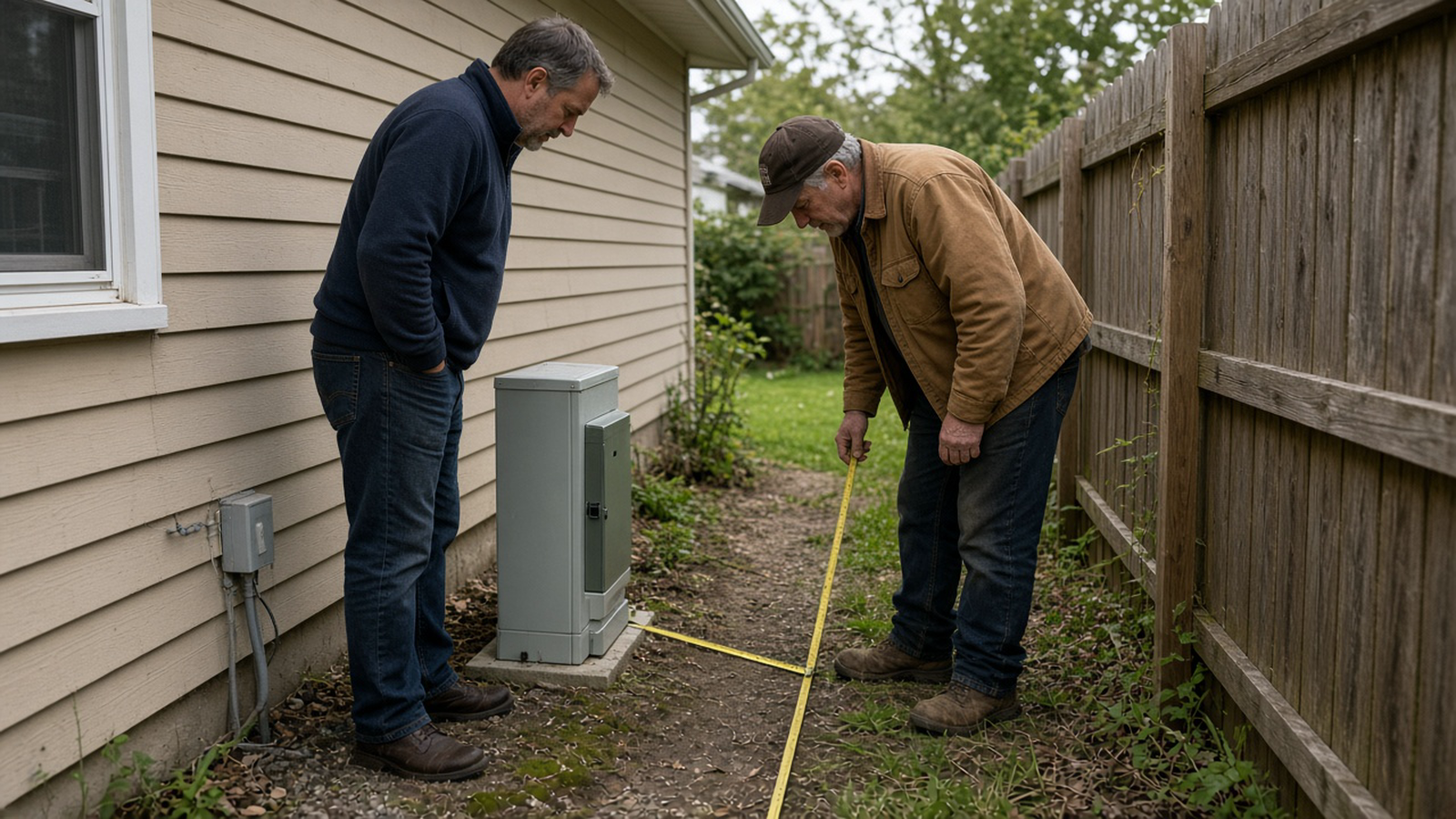
Calculation, with the addition: $340,000 minus $185,000 is $155,000. Minus $62,000 is $93,000. Minus $3,700 is $89,300. Minus $9,000 is $80,300. Minus $7,500 is $72,800. Minus $23,800 is $49,000.
Calculation, without the addition: selling costs are 7 percent of $290,000, or $20,300. $290,000 minus $185,000 is $105,000. Minus $40,000 is $65,000. Minus $3,700 is $61,300. Minus $9,000 is $52,300. Minus $7,500 is $44,800. Minus $20,300 is $24,500. That is $15,500 under the $40,000 walk-away.
A price cut of $15,500, to $169,500, changes the buying-cost line to 2 percent of the new price, or $3,390. $290,000 minus $169,500 is $120,500. Minus $40,000 is $80,500. Minus $3,390 is $77,110. Minus $9,000 is $68,110. Minus $7,500 is $60,610. Minus $20,300 is $40,310. The smaller plan then clears the walk-away by $310. The bedroom is still impossible. Andre objects in writing. He accepts the cut only as a rewrite of the scope, not as a way to keep the addition in the underwriting. If the seller will not cure or cut the price, he uses the contract's termination window instead of waiving the easement.
Denise Alvarez refuses to fund an expired payoff
Denise is buying at $210,000 in a teaching Sacramento file. The requirements list an open deed of trust and a recorded judgment. The payoff letters that are good through her closing day are $164,900 and $9,100. Seller closing costs in the example are $6,000, and the commission is 5 percent, or $10,500. Her own flip math uses a $320,000 after-repair value, $45,000 of repairs, and buying costs of $4,200, which is 2 percent of the $210,000 price. Selling costs are 8 percent of value. Holding cost is 4 months at $1,600. Financing is $6,000. Her walk-away is $22,000.
Calculation: $210,000 minus $164,900 is $45,100. Minus $9,100 is $36,000. Minus $6,000 is $30,000. Minus $10,500 is $19,500. Both requirements can be paid from the seller's side if those letters are still good on recording day. Denise does not waive them. She requires the settlement statement to show both payoffs.
The next deed-of-trust letter arrives at $186,000. Payoffs are then $186,000 plus $9,100, or $195,100. $210,000 minus $195,100 is $14,900. Minus $6,000 is $8,900. Minus $10,500 is a seller shortage of $1,600. Raising the price by that same $1,600, to $211,600, does not clear it. Commission is 5 percent of the new price, so it rises from $10,500 to $10,580. $211,600 minus $195,100 is $16,500. Minus $6,000 is $10,500. Minus $10,580 leaves the seller $80 short.
In this file the $6,000 seller closing figure does not move with the price, and the payoff letters do not either. The only seller cost that scales with price is the 5 percent commission. Each extra dollar of price therefore puts 0.95 toward the shortage. $1,600 divided by 0.95 is $1,684.21. A whole-dollar raise of $1,684, to $211,684, still leaves $0.20 short, because 5 percent of $211,684 is $10,584.20 and $211,684 minus $195,100 minus $6,000 minus $10,584.20 is negative $0.20. The next whole dollar clears. A raise of $1,685, to $211,685, makes the commission $10,584.25. $211,685 minus $195,100 is $16,585. Minus $6,000 is $10,585. Minus $10,584.25 leaves $0.75, so the seller side clears. Denise's buying costs would become 2 percent of $211,685, or $4,233.70. Selling costs stay 8 percent of $320,000, or $25,600. Holding cost stays 4 times $1,600, or $6,400.
Her profit at $210,000: $320,000 minus $210,000 is $110,000. Minus $45,000 is $65,000. Minus $4,200 is $60,800. Minus $25,600 is $35,200. Minus $6,400 is $28,800. Minus $6,000 is $22,800. That is $800 over her walk-away.
Her profit at $211,685: $320,000 minus $211,685 is $108,315. Minus $45,000 is $63,315. Minus $4,233.70 is $59,081.30. Minus $25,600 is $33,481.30. Minus $6,400 is $27,081.30. Minus $6,000 is $21,081.30. That is $918.70 under the walk-away. She does not absorb the expired payoff. She waits for a letter the seller's proceeds can pay, or she objects. The holding-cost guide is where a delayed closing changes the $6,400 line. She reruns that line before she extends.
8. Use a commitment checklist without an account
Copy this list into the notes app you already use. Check each line against the PDF, the contract, or a written reply. An empty line is an open item.

- The form name is written down: 2021 ALTA commitment, Texas Form T-7, or something else. A pro forma is not checked off as the commitment.
- The notice, the promise to issue, the conditions, Schedule A, the requirements schedule, the exceptions schedule, and the signature are all in the file.
- The commitment date and the expiration sentence are on the calendar, separate from the contract objection date.
- Schedule A shows the proposed insured and the amount of insurance for each policy. Your name is on an owner's policy, or you have a written reason it is not.
- Vesting matches the seller, or the curative documents are listed as requirements.
- The legal description matches the contract and the survey. You opened every easement that has a recording number.
- Each requirement has an owner and a document: payoff letter, release, entity paper, or deed. Seller proceeds can pay the seller's liens, or the price is being rewritten on purpose.
- The gap exception is either updated in writing or still an open question. Survey exceptions are matched to the survey, not assumed deleted.
- You have asked which exceptions will remain on the policy. Permits, zoning, and the rehab you have not started are not treated as insured.
- The owner's premium and the loan-policy premium are bottom-line numbers, and the amount of insurance is the amount on Schedule A.
- Any open exception that changes the rehab is priced on the offer stack, using the same walk-away you already set.
- The written choice is in the file: object, accept a named cure, or walk. Silence is not one of the three.
If you cannot check a line, you are not required to waive in order to look cooperative. Ask for the page or send the objection the contract allows. A short delay has a holding cost you can compute. A waived easement is still on the land when you sell.
9. Keep the commitment on the property record
The commitment is a project document, not an email attachment that expires with the thread. The day it arrives, put five facts on the property: the form name, the commitment date, the objection deadline, the owner's policy amount or the note that there is none, and the dollar change if you priced an exception. The four-stage pipeline should show the commitment as an open task until that written choice exists. A task called "title ordered" is not a waiver.
Rehabfolio is where those facts can sit on the deal you are already underwriting. The property research page is the place for the address file. The deal analysis page is where the easement, the payoff, or the owner's premium changes the number. The fix-and-flip workflow is the path from that number to the rehab. The project management page is where the objection date stays visible after you leave the inbox. You still send the objection, and you still buy the policy, yourself.
If a tool summarizes the PDF, keep the PDF next to the summary. The AI underwriting guide and the AI disclosure state the same limit for value and repairs. A model can group exceptions into a list. It cannot delete one, and it cannot tell you that your state's form uses Schedule C. You compare the summary with the signed commitment before the deadline.
When you sell, the buyer's commitment will be a new offer. The exceptions you accepted, and the liens from your own rehab, are what that file will be checked against. The seller closing checklist is the home for that day. Clearing your contractor releases before you list is how Schedule C on the next commitment stays short.
10. Avoid the waivers that happen by silence
- Calling the commitment a clean title. The ALTA notice says it is an offer to insure, not a representation of the status of title. A short exceptions list can still omit permits and zoning because those systems are outside the form's public records.
- Waiving because the email said "clear to close." Clear to close often means the lender's remaining items, or the closer's list. It is not your written waiver analysis. Read Schedule B anyway.
- Leaving your name off Schedule A. A loan policy with the lender as the only proposed insured protects the loan. Your cash and your repair budget need an owner's policy if you want that contract. Optional, on a Closing Disclosure, means the lender is not requiring it.
- Letting a requirement become an exception. Texas Form T-7 says uncleared Schedule C items will appear as Schedule B exceptions. A seller payoff that is "to follow" can become your exception if you close over it.
- Treating the gap as insured. The ALTA blank excepts matters that arise between the commitment date and the date the requirements are met. Ask for the update or the endorsement in writing. Do not assume it.
- Using the commitment as a permit file. Open permits, code cases, and a zoning limit on the unit count are outside the ALTA definition of public records. Price them from the city, not from a missing line on Schedule B.
- Insuring the rehab you have not started. Coverage the bureau describes is about claims from before the purchase. Draws you pay later are the lien-waiver file.
- Absorbing a seller shortage without new math. A price increase equal to the $1,600 shortage does not clear the seller once the 5 percent commission is recomputed. Rerun the seller remainder, profit, buying costs, and the walk-away before you sign. Denise's file is the pattern.
None of these require a careless title officer. They require an ordinary week in which the fastest path is to say title "came back fine." The checklist is the slower path on purpose.
Frequently asked questions
What is a title commitment?
A title commitment is an offer to issue one or more title insurance policies if the requirements in the commitment are met. The 2021 ALTA Commitment for Title Insurance says the commitment is not an abstract of title, a report of the condition of title, a legal opinion, or another representation of the status of title. Read it as the company's written offer, with a date, a dollar amount, a proposed insured, requirements, and exceptions.
Is a title commitment the same as an owner's title policy?
No. The commitment is the offer. The policy is the contract the company issues after the requirements are met and the premium is paid. On the 2021 ALTA form, when the policy is issued, liability under the commitment ends and the company's remaining liability is under the policy. Keep both documents. The commitment shows what had to be cleared. The policy shows what was actually insured.
Does lender's title insurance protect the flipper?
The Consumer Financial Protection Bureau says lender's title insurance protects the lender against title problems up to the loan, and it does not protect the owner's equity. An owner's policy is the contract that can protect the owner's investment if someone later claims a right from before the purchase, such as unpaid taxes or unpaid work from before you bought. A hard-money or cash purchase can still have no owner's policy unless you ask for one and pay for it.
What is the difference between a requirement and an exception?
A requirement is work the company says must be finished before it will issue the policy. An exception is a matter the policy will not insure against. On the 2021 ALTA commitment, requirements are Schedule B, Part I, and exceptions are Schedule B, Part II. On Texas Form T-7, requirements are Schedule C and exceptions are Schedule B. If a requirement is not cleared, the Texas form says it can show up later as an exception.
Why does my commitment say Schedule C when another file says Schedule B?
The labels follow the form, not a national habit. The 2021 ALTA commitment puts requirements in Schedule B, Part I. Texas Department of Insurance Form T-7 puts requirements on Schedule C. The Texas resale contract's objection clause talks about Schedule C because that is the Texas commitment's requirements schedule. Read the heading on the page you have. Do not search a Texas file for an ALTA part number, or an ALTA file for Schedule C, and then assume the item is missing.
Does title insurance cover liens from the rehab I start after closing?
The Consumer Financial Protection Bureau describes owner's coverage for claims from before you purchased, including contractors who say they were not paid for work done before the purchase. Work you hire after the policy date is a different file. Texas Form T-7 Schedule C asks for evidence that improvements are completed and that contractors are paid before the policy is issued, or those matters can become exceptions. Your own later draws, invoices, and lien waivers belong on the payment schedule, not inside a sentence on the commitment.
What happens if I stay silent past the title deadline?
The contract you signed answers that. On the Texas Real Estate Commission One to Four Family Residential Contract (Resale), form 20-19, failure to object in time is a waiver of the buyer's right to object, except that Schedule C requirements are not waived. A second silence, after the seller does not cure an objection, can also waive. Other states use other sentences. Silence is a choice only when you have read the requirements, the exceptions, and the survey together.
Editorial methodology, limitations, and sources
The Rehabfolio editorial team wrote this as the commitment-reading page for a house flip. It does not replace the survey guide, the due diligence checklist, the earnest money guide, the buyer closing checklist, the lien waiver guide, or the permits guide. Those pages remain the homes for the drawing, the full inspection window, the deposit, the purchase day, the releases, and the city file. This article answers a different question: what a buyer should be able to prove from the title commitment before waiving the right to object.
The 2021 ALTA forms used here are the Commitment for Title Insurance, the Owner's Policy, and the Loan Policy. Each is effective July 1, 2021. The American Land Title Association lists those three jackets on its policy forms page. The commitment sentences in this guide, including the notice, the 180-day commitment period, Schedule A, Schedule B Part I, Schedule B Part II, the definition of public records, the issuing-agent limit, and the pro forma condition, are taken from the blank 2021 commitment in the Florida Office of Insurance Regulation title-forms library (2021 ALTA Commitment PDF). That library also posts the 2021 ALTA form filings, including the commitment, the owner's policy, and the loan policy. A state filing can add state modifications. Read the jacket you received.
Texas requirements and exceptions are described from the Texas Department of Insurance Form T-7, Commitment for Title Insurance. Schedule C is the requirements schedule on that form, including the statement that those requirements will appear as exceptions unless they are disposed of before the policy is issued. Schedule D on T-7 is the disclosure schedule. Form T-7 is Texas promulgated language. It is not the commitment of any other state.
The Texas objection point uses the Texas Real Estate Commission One to Four Family Residential Contract (Resale), form 20-19, effective July 1, 2026, including the treatment of Schedule C in paragraph 6. The promulgated PDF is TREC No. 20-19. The survey guide is the home for the day-count on that form. This page does not restate a national deadline, because there is not one.
Owner's and lender's policies are described from the Consumer Financial Protection Bureau's owner's title insurance answer, last reviewed October 19, 2023, and its lender's title insurance answer, last reviewed September 11, 2024. Shopping and the instruction to compare the bottom-line title total are from the bureau's closing-services page. The "(optional)" label, and the note that some companies offer an enhanced owner's product, are from the bureau's TRID title insurance disclosures fact sheet.
Public guidance cannot tell you whether to waive, whether a particular easement blocks your plan, or whether a company will delete an exception. Examples are original composites created for teaching. Names, prices, premiums, and outcomes are illustrative. They are not case studies of real customers. Dollar figures are educational, not quotes and not surveys of filed title rates.
Editorial standard. We identify the audience, the author, the review date, the topic boundary, the assumptions, and the product limit. We do not invent credentials, licenses, testimonials, market statistics, or guaranteed results. AI may help organize research and draft, and a person reviews the claims, the links, the examples, and the limitations before publication. We revise the guide when a cited public page or a material product workflow changes. See the editorial methodology on the company page.
Keep the commitment, the deadline, and the revised number together.
Use a workspace for the PDF, the objection date, and the price or repair change. You still send the objection, or buy the policy, yourself.
Create free account