When to test a house flip for radon before you waive
A seller's old first-floor result can look fine and still say nothing about the basement you plan to finish. This guide shows when to test a flip for radon, how a short-term test differs from a long-term test, what the 4 pCi/L action level does and does not mean, and how to put mitigation and the extra days into the offer.
Written and reviewed by the Rehabfolio editorial team. Published and last reviewed October 26, 2026.
Who this guide is for. This guide is for United States residential investors buying a one-to-four-unit property they intend to renovate, then sell or hold. You might close in your own name or in an LLC, with cash or with a loan. The guide starts when a radon question shows up: a seller result in the listing packet, a blank line in the inspection window, or a finished basement that has never been tested on the floor you will sell. It ends when you have a written choice: proceed on the current repair budget, order a short-term test before you waive, add a mitigation line and a holding-cost line, change the purchase price, or walk. The full inspection window is the due diligence checklist. The general home inspection, which does not measure radon, is the home inspection report guide. Those pages can name the test. This page is how you read the result and decide when to run it.
The Rehabfolio editorial team builds and reviews product workflows that connect a property record to documents, dates, photos, and the offer math. That is first-hand product experience with how a deal file is organized. It does not make the team a radon measurement provider, a mitigation contractor, a physician, or an attorney. We do not hold those licenses, and we do not invent them.
Red is the founder of Rehabfolio. He has bought and renovated houses for ten years, across more than 30 projects, and he keeps the city off this page on purpose. On those jobs a radon question has never been one number copied from the house next door. The floor that was tested, the device, and the bid to fix it are separate lines. The three files below are original teaching examples built in that shape. They are not records of a named customer, a named city, or a result the product promises.
Test devices, closed-house rules, licensing, disclosure forms, and the number of days in your contract differ by state. A federal consumer guide and a state health department can use the word radon for different duties. This page is educational. It is not a radon test, a mitigation plan, medical advice, or legal advice. It does not tell anyone where to drill the slab. Use the report in your hand, the agreement you signed, and qualified local professionals for the house you are buying.
Tip: Read this beside the repair budget guide, the holding cost guide, the contingency guide, the mold inspection guide, the scope of work guide, and the free maximum offer calculator. Moisture and radon can show up in the same basement. They are not the same repair. Do not let one clear result stand in for the other.
1. Decide what the radon file has to prove
A radon file has one job before you waive. It has to show the radon level in the air of this house, on a floor a person could actually use, from a test that followed a written protocol. You cannot see radon, smell it, or taste it. EPA's Citizen's Guide says testing is the only way to know whether you are at risk, and that EPA and the Surgeon General recommend testing all homes below the third floor. A walkthrough that "felt fine" has not done that job. A general home inspection has not done it either.
InterNACHI's Standards of Practice say the inspector is not required to determine the presence of airborne hazards, including radon. A summary that never uses the word is often the report doing what the standard permits. It is not a clearance. If you want a number in picocuries per liter, you order a radon test. The home inspection report guide is where that boundary is written down for the rest of the inspection file.
You are also not trying to prove the house matches the county average. The Home Buyer's and Seller's Guide says you cannot predict radon levels from state, local, or neighborhood measurements, and that homes next to each other can have different indoor levels. EPA publishes a map of radon zones and a directory of state and tribal contacts. That map is how you find the office that lists qualified testers. It is not a substitute for a device in this basement. The Citizen's Guide says nearly 1 out of every 15 homes in the United States is estimated to have an elevated level. The buyer guide states that elevated means 4 pCi/L or more. That sentence is a reason to test. It is not a reading of the house under contract.
Write the question in one sentence before you open the PDF. "Was this basement, the floor I will finish and sell, tested for at least 48 hours under closed-house conditions, and is the average at or above 4 pCi/L?" is a question the file can answer. "Is this neighborhood a radon neighborhood?" is not. Health risk is why the test exists. EPA estimates that radon is responsible for about 21,000 lung cancer deaths every year, and that about 2,900 of those deaths occur among people who have never smoked. The Surgeon General's January 2005 advisory, quoted in the buyer guide, says indoor radon is the second-leading cause of lung cancer in the United States and that the threat is preventable with a test and established venting. This page does not diagnose anyone who will live or work in the house. It tells you which paper has to be in the deal file before you waive.
2. Choose pre-offer, the inspection period, or after rehab
A flip meets radon at three different clocks. The evidence you can get, and the lever you still have, changes with the clock. Pick the clock you are actually on before you decide that a single number has closed the question.
| Moment | What you can know | What you can still do |
|---|---|---|
| Pre-offer | The seller's existing result, or the fact that none exists. Not the house next door. | Ask for the report. Price a test and a named allowance. Put who pays for mitigation in the offer before you are obligated. |
| Inspection period | A short-term real estate test, at least 48 hours, with interference controls. | Object, replace the allowance with a bid, reprice, or walk before you waive. |
| After rehab | A test of the house you finished, on the lowest level a buyer could use. | Install or activate a system, retest, and give the buyer that file. A missing test becomes their objection. |
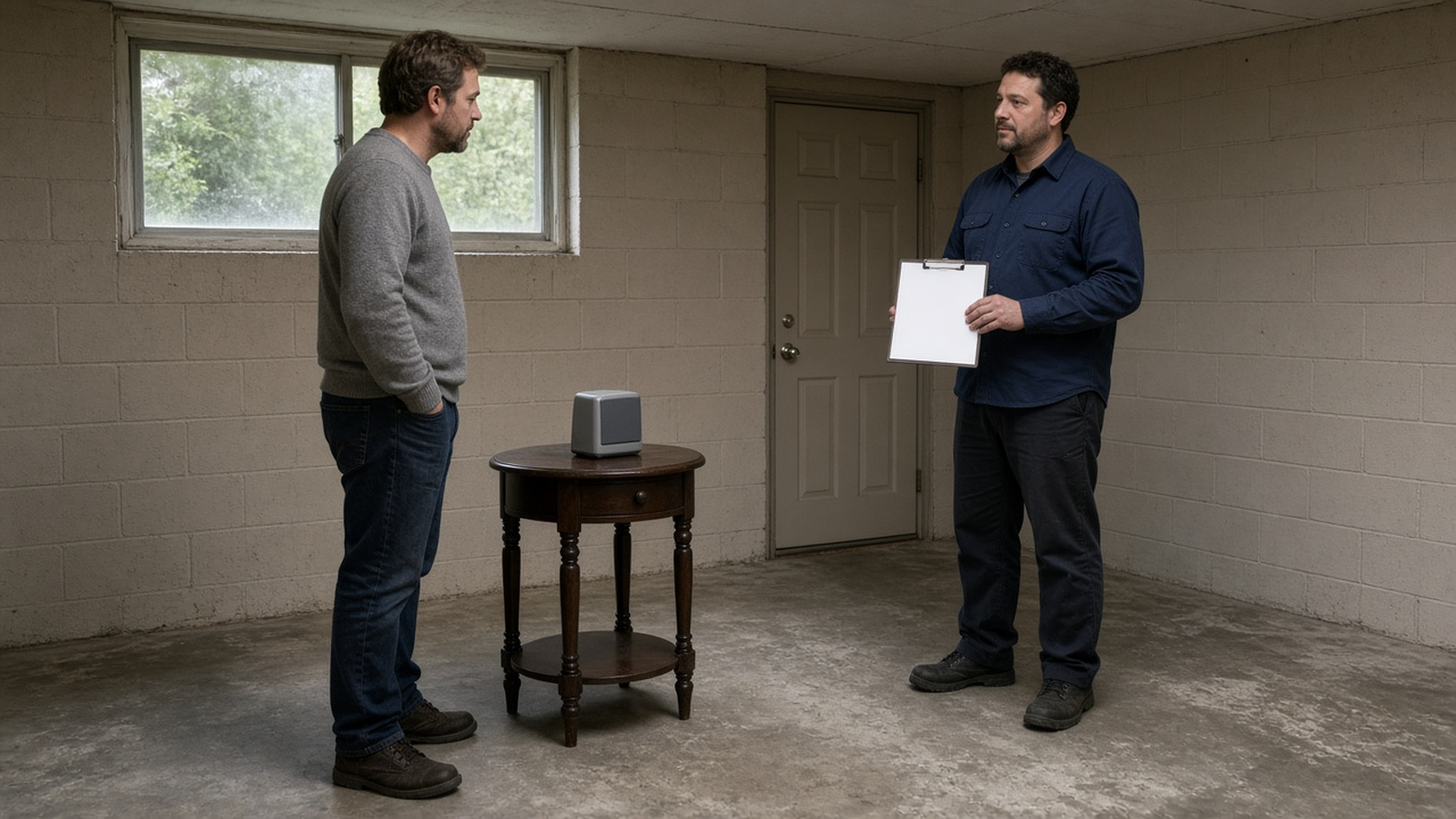
Before you offer, the buyer guide says to ask the seller for their radon test results, and for information about any radon-reduction system already in the house. Read the result against the guide's own reasons a buyer may refuse it. The checklist items were not met. The last test is not recent, and the guide's example of "not recent" is within two years. You renovated, or the seller renovated, after the test. You plan to use a lower level than the one that was tested, such as a basement a buyer could use regularly. Any one of those is a reason to order a new test. A pretty 1.8 pCi/L from the first floor three years ago is not a basement clearance.
If the house has not been tested, the buyer guide says to have a test done as soon as possible. It also says to consider contract language for where the test will be located, who conducts it, what type of test, when it happens, how the seller and buyer share results and costs, and when mitigation happens and who pays. That list is the pre-offer lever. Waiting until the objection deadline to invent those sentences is how the test gets squeezed into a weekend the protocol will not fit.
During the inspection period, time is the constraint the buyer guide was written for. It says its real estate guidelines differ from EPA publications written for a home that is not for sale, because sales move quickly and because someone may interfere with the device. Use one of the three short-term options in the next section. Book it while the due diligence checklist still has days left. A long-term test of more than 90 days will not finish inside a typical inspection window. Do not pretend it will.
After the rehab, test again. The Citizen's Guide says major renovations can change the radon level in any home, and that you should always test again after the work is completed. It also says to test an area before you convert it into living space, and that radon-resistant techniques can be included in that renovation. The buyer guide says a radon test should be done before you start finishing an unfinished area and again after the project is finished, and that it is generally less expensive to install a system before or during the renovation than afterwards. A flip that turns a basement into a bedroom has changed the floor a buyer will use. The first-floor test from the purchase file does not describe that room.
3. Read a short-term test against a long-term test
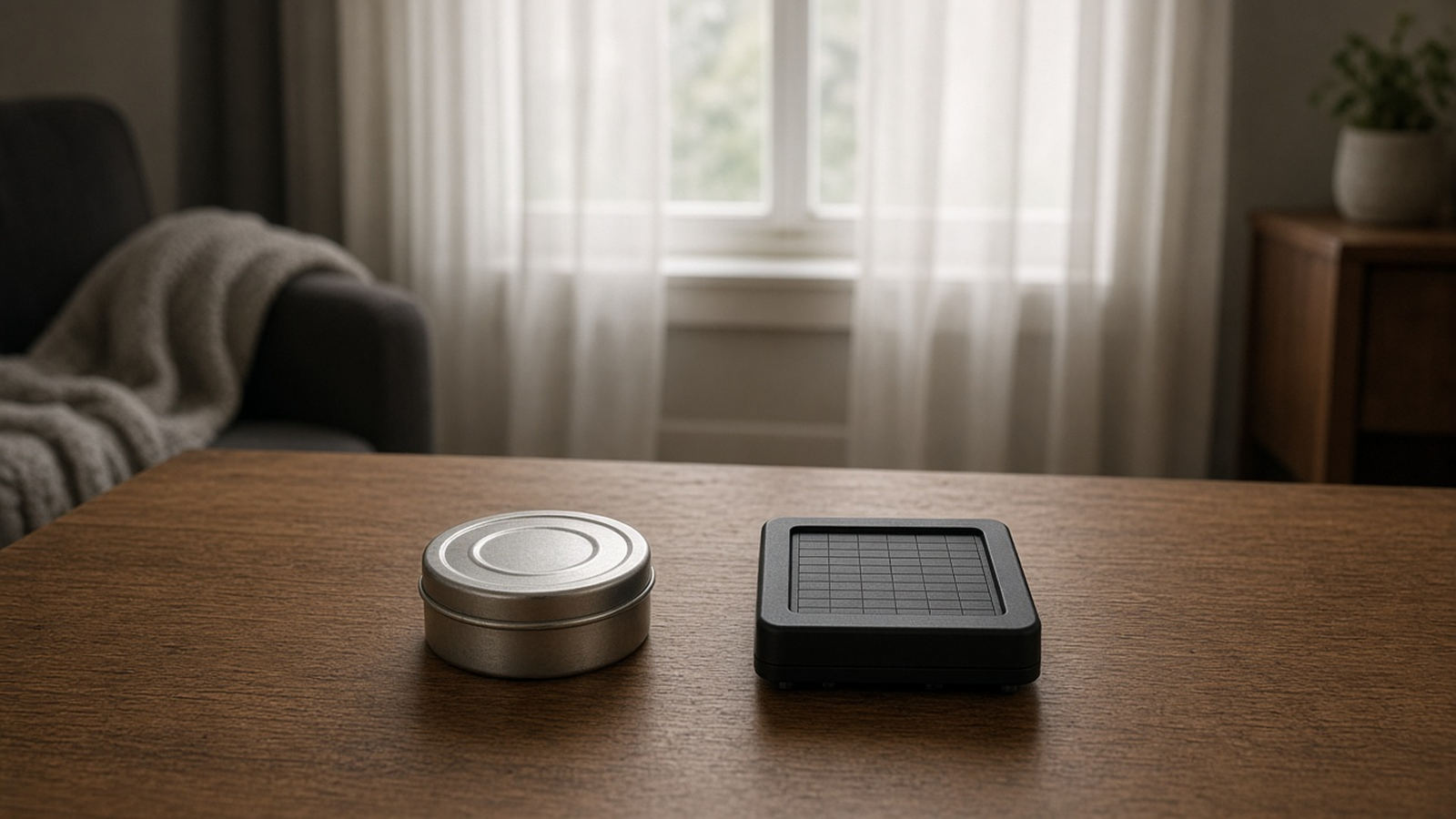
The amount of radon in air is measured in picocuries per liter, or pCi/L. The Citizen's Guide splits the devices into two jobs. Short-term tests remain in the home for two days to 90 days, depending on the device. Charcoal canisters, alpha track, electret ion chamber, continuous monitors, and charcoal liquid scintillation detectors are the types it names for short-term testing. Long-term tests remain for more than 90 days. Alpha track and electret detectors are the types it names for that longer job. A long-term result is more likely to represent the year-round average, because radon varies from day to day and from season to season. A short-term result is what you use when you need an answer before a deadline.
For a home that is not in a sale, the Citizen's Guide gives three steps. Take a short-term test. If the result is 4 pCi/L or higher, follow up. The follow-up is either a long-term test, when you want the year-round average, or a second short-term test, when you need speed. If the first short-term result is more than twice the 4 pCi/L action level, take the second short-term test immediately. Fix the home if the long-term result is 4 pCi/L or more. If you used a second short-term test, the higher the results, the more certain you can be that you should fix. The guide also says the result of two short-term tests can be used to decide whether to mitigate when the test is part of a real estate transaction.
The buyer guide is the real estate version of that decision. If you need results quickly, any of three short-term options is acceptable for deciding whether the home should be fixed. Every option includes steps to prevent or detect interference with the device.
| Option | How it is run | When EPA says to fix |
|---|---|---|
| Two passive tests at once | Same time, same location, at least 48 hours. The guide says simultaneous tests improve precision. | The average of the two tests is 4 pCi/L or more. |
| Two passive tests in a row | At least 48 hours, then immediately a second identical device in the same place. The guide says a sequential pair is more likely to represent the seasonal average. | The average of the two tests is 4 pCi/L or more. |
| Continuous monitor | An active device for at least 48 hours. Some active devices record swings and are built to deter interference. They may cost more. | The average radon level is 4 pCi/L or more. |
All radon tests should be taken for a minimum of 48 hours. Some devices require longer. A 7-day charcoal canister is the buyer guide's example. Do not pull a 48-hour device on the afternoon of day one because the objection deadline moved. Record the start time and the stop time. Send the passive device back to the lab on the package as soon as the test ends. The buyer guide says you should receive results within a few days or weeks, and that you should ask about expedited service if the contract will not wait.
Closed-house conditions are part of the result, not a courtesy. For a short-term test, close windows and doors to the outside and keep them closed except for normal entry and exit. If the test lasts less than four days, close windows and outside doors at least 12 hours before it begins. Do not run a short-term test of less than four days during severe storms or high winds. The Citizen's Guide says heating and air-conditioning fans that recirculate indoor air may operate, and that you should not operate fans or other machines that bring in air from outside. A radon system's own fan, and small exhaust fans used only for short periods, may run. Place the device at least 20 inches above the floor, away from drafts, high heat, high humidity, and exterior walls.
Where you place it depends on which guide you are following, and the flip usually needs the stricter of the two. The Citizen's Guide says to use the lowest lived-in level, for example the basement if it is frequently used, otherwise the first floor, in a room that is used regularly, and not the kitchen or bathroom. The buyer guide, written for a sale, says to test the lowest level that could be used regularly, whether it is finished or unfinished, because the buyer may live lower than the seller did. It says to use a space that could be a bedroom, play area, family room, den, exercise room, or workshop. It says not to test in a closet, stairway, hallway, crawl space, or an enclosed area of high humidity or high air velocity, and it names a kitchen, bathroom, laundry room, or furnace room as that kind of enclosed area. If you will finish the basement and sell it as living space, test that basement. A first-floor den does not answer the question the buyer will ask.
Interference can erase the file. The buyer guide says disturbing the device, or disturbing closed-house conditions, may invalidate the results, and that interference is illegal in some states. It lists practical controls a qualified tester can use: a non-interference agreement signed by the seller or occupant, and tamper-evident seals on windows so closed-house conditions can be checked. On a vacant flip, the person who can invalidate the test is often the crew. A demo day with exterior doors propped open is not a closed-house test. Schedule the 48 hours, plus the 12 hours before a short test, when the house can actually stay closed. If power is required for a continuous monitor, confirm the utility is on before the clock starts. The utility transfer guide is the page for that service, not this one.
Hire the tester the way the buyer guide describes. Many states require radon professionals to be licensed, certified, or registered. Most states can give you a list. In states that do not regulate the work, ask whether the person holds a proficiency credential and check it with the organization that issued it. EPA's page for finding a test kit or a measurement and mitigation professional is the federal starting point. The state office on EPA's zone map is the local one. This article does not invent a national license, and it does not name a private credential as if it were a law.
4. Use the action level without treating it as a safe line
EPA recommends that homes be fixed if the radon level is 4 pCi/L or more. The same action-level page says there is no known safe level of exposure, so EPA also recommends that people consider fixing homes between 2 pCi/L and 4 pCi/L. The average indoor concentration it cites for homes in the United States is about 1.3 pCi/L. The average outdoor concentration it cites is 0.4 pCi/L. The buyer guide says Congress set a long-term goal that indoor levels be no more than outdoor levels, and that the goal is not yet achievable for every home. A result of 3.2 pCi/L is under the action level. It is not a certificate that the house has no radon, and it is not a reason to skip a retest after you finish a lower floor.
Short-term results near the line are less certain. The Citizen's Guide uses the example of two short-term tests that average 4.1 pCi/L, and says there is about a 50 percent chance that the year-round average is somewhat below 4 pCi/L. EPA still says any exposure carries some risk. On a flip, that sentence means you do not round 4.1 down to "basically 4" and waive. You either fix, follow up with the test the clock allows, or write that you are accepting a result at the action level. The buyer guide says to fix the home if the average of the real estate tests is 4 pCi/L or more. Consider fixing when the level is between 2 and 4.
The action level is also not a scope of work. It does not say whether the house has a basement, a slab, or a crawl space. It does not say whether a passive vent was installed when the house was built. It does not say what a mitigator in your city will charge. EPA says the action level you observe should comply with the guidance of the country, state, or other local authority where the test is conducted. If your state uses a different instruction, the state instruction is the one that belongs in the file next to the federal page. Do not average them into a private number.
Radon in well water is a different test. The Citizen's Guide says soil gas is the main cause of radon problems in a home, and that radon entering through water is usually a much smaller risk than radon entering from the soil. It also says a water problem is more likely with ground water, such as a private well, than with surface water. If you have tested the air, found a problem, and the water comes from a well, the guide says to have the water tested. Point-of-entry treatment can remove radon from the water before it enters the home. A filter on one tap does not do that job for the air. Call EPA's Safe Drinking Water Hotline, 800-426-4791, or the state radon office, for the water question. Do not bury a well result inside the air-test line on the repair budget.
5. Turn a result into a repair line and a holding line
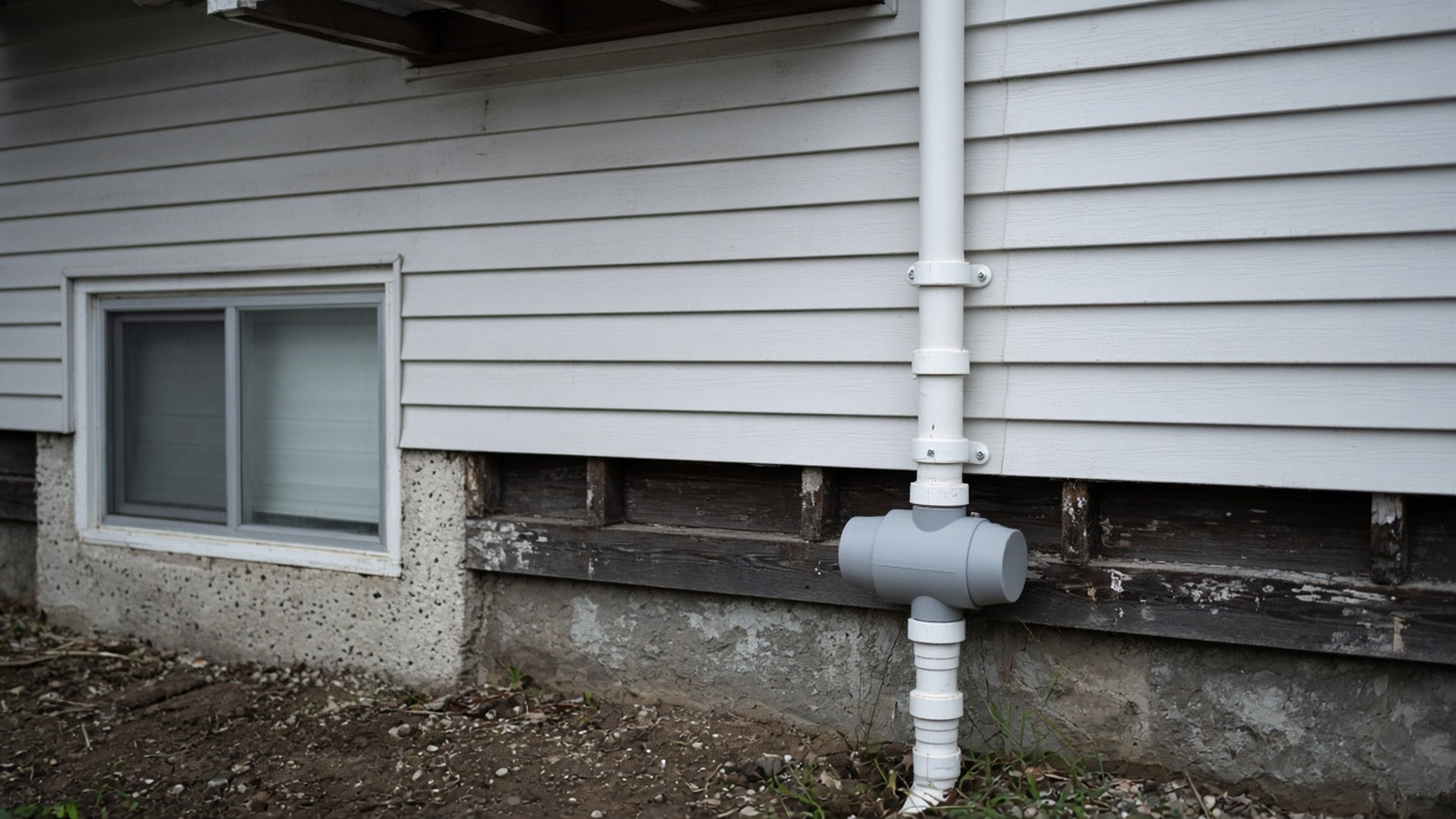
EPA's Citizen's Guide says there are several proven ways to reduce radon, and that the method primarily used is a vent pipe and fan that pulls radon from beneath the house and vents it outside. That system is called a soil suction radon reduction system. Sealing foundation cracks makes the system more effective. Sealing is not the system by itself. The consumer guide's table says sealing of radon entry routes is normally used only with other techniques. For a basement or a slab, the consumer guide says active subslab suction, also called subslab depressurization, is the most common and usually the most reliable method. Its table lists a typical reduction of 50 to 99 percent for that technique, and says it works best when air can move easily in the material under the slab. A crawl space is often a different technique, such as submembrane depressurization. The right system depends on the house. The mitigator picks it after looking at the foundation. You do not pick it from a blog.
The price is the mitigator's bid, not a national average this page is allowed to invent. The Citizen's Guide says the cost of reducing radon depends on how the home was built and the extent of the problem, that most homes can be fixed for about the same cost as other common home repairs, and that the cost can vary widely. It tells you to get one or more estimates from qualified mitigators. The same sentence appears in the buyer guide for an existing home. The cost is much less if a passive system was installed during construction and a fan can be added to activate it. None of those sentences is a dollar figure for the house you are buying. If a seller, a wholesaler, or a software draft gives you a single national price, replace it with a written estimate or with a named allowance you are willing to lose.
The consumer guide says to use a qualified contractor because lowering radon takes technical knowledge, and that the wrong work can increase the level or create other hazards. Many states require a license, certification, or registration and require the system to meet state rules. The contract should state the total cost, including taxes and permit fees, the time needed to complete the work, and an agreement to obtain necessary permits and follow building codes. "Necessary" is the word in the guide. It is not a claim that every city requires a permit. The permits and inspections guide is where you record what the local office actually told you. If the scope is already frozen when the result comes back, the system is a change, and the change order guide is the packet for the added cost and the added days.
Time is its own line. The install duration is whatever the contract states. EPA does not publish a national number of days for the crew. What it does publish is the retest window. The consumer guide says a post-mitigation radon test should be done within 30 days of installation, and no sooner than 24 hours after the system is in operation with the fan on, if it has one. The contractor may test their own work. The guide recommends that you also get an independent follow-up measurement. For a short check of the system's initial effectiveness, it says a two- to seven-day measurement is recommended. Those hours and days are holding time. They are not a line item buried in the mitigation invoice, and they are not free because the house is vacant. The holding cost guide is where a day of carry gets a dollar figure from your own taxes, insurance, interest, and utilities.
| Line | What belongs on it | What does not |
|---|---|---|
| Test | Device, floor, start and stop, closed-house notes, lab or monitor report | A zone map, a neighbor's result, or a home inspection that never measured the air |
| Mitigation | The mitigator's bid, permits the bid includes, and the system the contract describes | A national price this guide does not have, or a spray or a bead of caulk used as the whole repair |
| Retest | An independent test no sooner than 24 hours after the fan is on, and within 30 days of installation | The contractor's own checkout used as the only evidence you will show a buyer |
| Holding | Closed-house days before you waive, plus install days and the retest window after you own the house | Those days hidden inside the repair total so the carry looks unchanged |
| Already in the scope? | A passive pipe the builder already installed, priced only for the fan that activates it | A second full system stacked on top of a pipe you are already paying to use |
A fan-powered system has to keep running. The consumer guide says the fan should not be turned off, because the system does not work if it stops, and that fans may last five years or more and then need repair or replacement. It also says fan systems are more effective and will slightly increase the electric bill. For the months you hold the flip, that increase belongs with utilities. Do not invent a dollar amount for it. Ask the mitigator what the fan draws, then put the usage in the holding budget the way you put any other electric load. A warning device is part of the system the consumer guide describes, so a buyer can see that the fan stopped. If you later rent the house instead of selling it, the guide's advice to retest at least every two years is an operating item, not a second copy of this acquisition file.
Once the result is a number and the bid is a number, the work is no longer a mystery for the contingency percent. The contingency guide is for what you have not named. An 8 pCi/L average with a mitigator's proposal is named. Leave the percent reserve for the crawl space nobody has opened and the finish choices you have not made. Then rerun the offer. The maximum offer guide is the 70 percent screen. The detailed ceiling is the formula in the scenarios below.
6. Work three named radon files
The offer math below uses the detailed maximum-offer formula on Rehabfolio's maximum offer calculator: (after-repair value minus repairs minus financing minus holding minus selling costs minus target profit) divided by (1 plus the buying-cost rate). Selling costs in these examples are 8 percent of after-repair value. Buying costs are 2 percent of the purchase price, which is why the formula divides by 1.02. The 70 percent screen is after-repair value times 0.70, minus repairs, as stated on the maximum offer guide. Ceilings are rounded to the nearest dollar. The people, the streets, the test quotes, and the mitigation bids are hypothetical teaching composites. They are not customers, and they are not EPA prices. EPA's own cost language is "about the same cost as other common home repairs," and it says the cost varies. Each bid below is a number the character wrote down or received on paper in the example.
Elena Cho's first-floor result does not cover the basement
Elena is deciding whether to offer on 18 Cedar Lane. The asking contract she is testing is $210,000. After-repair value is $360,000. Selling costs are $28,800. Repairs are $52,000 and include finishing the basement into a den and a bedroom. Financing is $8,400. Holding is $6,000. Target profit is $36,000. The detailed ceiling is ($360,000 minus $52,000 minus $8,400 minus $6,000 minus $28,800 minus $36,000) divided by 1.02, which is $228,800 divided by 1.02, or $224,314. The 70 percent screen is $252,000 minus $52,000, or $200,000. The contract is $14,314 under the detailed ceiling and $10,000 over the quick screen. She does not waive because the detailed number is prettier. She reads the radon page in the packet.
The seller's report is a long-term test of the first-floor living room. The result is 1.8 pCi/L. The test date is three years before this contract. The basement is unfinished, and the report says the device was not placed there. Elena will finish that basement and sell it as living space. The buyer guide says a buyer may ask for a new test when the last test is not recent, when the home was renovated after the test, or when the buyer will use a lower level than the one that was tested. She is that buyer. A result under 4 pCi/L on a different floor, taken outside the guide's two-year example, is not the file for the room she is about to create.
She does not invent a national mitigation price. She writes two lines she can point at. A qualified short-term test during the inspection, on the lowest level she will use, is quoted to her at $250. Until a mitigator sees the house, she parks $3,500 as a named allowance she is willing to spend if the average is 4 pCi/L or more. Both numbers are her teaching figures, not a survey of contractors. Repairs become $55,750. The new ceiling is ($228,800 minus $3,750) divided by 1.02, or $220,637. The new 70 percent screen is $196,250. The $210,000 contract is still $10,637 under the detailed ceiling and $13,750 over the quick screen. Her decision is to offer only with the test written into the inspection period and the allowance written on the repair budget. If the average comes back at 4 or more, she replaces the $3,500 with the mitigator's bid before she waives. If she waives on the 1.8 from the living room, she has accepted a floor she is about to demolish.
Andre Brooks's inspection average breaks the ceiling
Andre is under contract at $275,000 for 7 Oak Terrace. After-repair value is $455,000. Selling costs are $36,400. Repairs are $74,000. Financing is $12,500. Holding is $8,100, which he is treating as six months at $1,350 a month. Target profit is $42,000. The detailed ceiling is ($455,000 minus $74,000 minus $12,500 minus $8,100 minus $36,400 minus $42,000) divided by 1.02, which is $282,000 divided by 1.02, or $276,471. The 70 percent screen is $244,500. Buying costs at his contract are 2 percent of $275,000, or $5,500. Profit on the original stack is $455,000 minus $411,500, or $43,500, which is $1,500 above his $42,000 target. Before the radon report, the detailed number still works. The contract is $1,471 under the rounded ceiling and $30,500 over the quick screen.
The inspection-period test is the buyer guide's simultaneous option. Two short-term devices sit in the basement family room, which he intends to keep as living space, for 48 hours. The house is vacant. Windows and the exterior door stay closed, and they were closed for 12 hours before the test, because the test is shorter than four days. No storm is in the notes. The average of the two results is 8.4 pCi/L. The buyer guide says to fix the home if that average is 4 pCi/L or more. He does not average 8.4 with the neighbor's result, and he does not open EPA's zone map to talk himself out of the devices that were actually in the room.
A mitigator walks the basement and the slab and writes $4,800 for an active subslab system, including the permit fee the proposal lists. That bid is the example's paper. It is not a claim that EPA priced the job. The proposal says the work will take a week once the material is on site. Andre wants the independent retest the consumer guide recommends, inside the 24-hour to 30-day window, and he blocks 10 days of carry so the crew and the retest are not pretend-free. He treats a month as 30 days, so $1,350 is $45 a day, and 10 days are $450. New repairs are $78,800. New holding is $8,550.
The new ceiling is ($455,000 minus $78,800 minus $12,500 minus $8,550 minus $36,400 minus $42,000) divided by 1.02, which is $276,750 divided by 1.02, or $271,324. The contract is $3,676 over that ceiling. Profit on the same $275,000 contract falls to $38,250, which is $3,750 under his target. The new 70 percent screen is $239,700. A bead of caulk along the slab crack, with the $4,800 left out, would have kept the old ceiling and ignored the guide that says sealing is normally only a companion to another technique. Andre objects in writing and asks for a price of $271,324, or he walks. He does not accept a seller credit that leaves the basement at 8.4 pCi/L and calls the credit a repair. The AS-IS offer credit guide is the page for when a price cut is cleaner than a credit. The cut still has to land on the new ceiling, not on the old one.
Sofia Marin's finished basement needs its own test
Sofia already closed on 41 Pine Court at $192,000. After-repair value is $340,000. Selling costs are $27,200. The rehab budget was $44,000 and included finishing the basement. It did not include radon. Financing is $5,800. Holding was $5,400, which is $1,200 a month for four and a half months. Target profit was $34,000. The ceiling she used before she closed was ($340,000 minus $44,000 minus $5,800 minus $5,400 minus $27,200 minus $34,000) divided by 1.02, which is $223,600 divided by 1.02, or $219,216. The 70 percent screen was $194,000. The price she paid sits $27,216 under that ceiling and $2,000 under that screen. Buying costs were 2 percent of $192,000, or $3,840. Profit on the original stack is $61,760. On the day she closed, radon was a page she had not opened, because the purchase file held a first-floor long-term result of 2.1 pCi/L from the seller.
The rehab finishes the basement into a bedroom. Before she lists, she tests that new room. The short-term average is 5.2 pCi/L. The Citizen's Guide says that if you begin occupying a lower level you should retest on that level, and that you should test again after major work. The buyer guide says the test belongs before the project and after it, and that installing during the renovation is generally less expensive than installing afterwards. Sofia missed the "during" sentence. She is now in the afterwards. A 2.1 on the first floor is not a 5.2 in the new bedroom, and 5.2 is above the 4 pCi/L level EPA says to fix.
The mitigator's bid, after the basement is already finished, is $3,200 in this example. An independent retest is quoted at $200. She adds 14 days of carry for scheduling and for the retest window. Fourteen thirtieths of $1,200 is $560. New repairs are $47,400. New holding is $5,960. The ceiling, recomputed only as a check against the price she already paid, is ($223,600 minus $3,960) divided by 1.02, or $215,333. She cannot reopen the purchase. She can see that $192,000 is still $23,333 under that revised ceiling. The new 70 percent screen is $190,600, so the price she paid now sits $1,400 over the quick screen. Profit on the closed deal, with the new lines and the same $3,840 of buying costs, is $57,800. The target was $34,000. The money still works. The listing still needs the test.
A buyer asks for an $8,000 price cut and points at the 5.2. If Sofia pays the cut and also pays for the system, profit falls by another $8,000, to $49,800, and she has fixed a problem she also paid the buyer to accept. Her decision is the one the buyer guide describes for a seller: provide the results, install the system, and hand over the independent post-mitigation test once the fan has been on for at least 24 hours and the retest is inside 30 days. She does not list the bedroom as handled on the strength of the old 2.1. She does not promise the buyer a result of 2 pCi/L. The consumer guide says that with today's technology, levels in most homes can be reduced to 2 pCi/L or below. The sentence is a reason to hire a qualified mitigator. The retest is the evidence. If that retest is still 4 pCi/L or more, the house is not ready to list, and the contract's guarantee language is the next conversation with the contractor, not a discount invented to hide the report.
The three files are the worksheet. Elena refuses to let a first-floor 1.8 clear a basement she has not tested, and she writes the allowance before she is obligated. Andre's 8.4 average, run under the real estate protocol, pushes the contract through the detailed ceiling, so he reprices or walks. Sofia's purchase math can still clear and she still refuses to list, because the room she built was not the room the seller tested. A radon file that only changes a dollar figure has been only half read.
7. Use a radon-file checklist without an account
Copy this list into the notes you already keep. Check a line only when the report, a photo of the device in place, a closed-house note, or a written bid supports it. A blank line stays on the objection list.

- The file matches this address and a date you can place before the waiver or before the listing.
- The floor is the lowest level a buyer could use regularly, not only the floor the seller happened to live on.
- The device type and the hours are written. A real estate decision uses one of the three short-term options, each at least 48 hours, or you have written why a long-term test was the right clock.
- Closed-house conditions are noted, including the 12 hours before a test shorter than four days. Exterior doors were not propped open for demo.
- The device was at least 20 inches off the floor, outside the kitchen, bathroom, closet, stairway, hallway, crawl space, and furnace room.
- The average is compared with 4 pCi/L, and a result between 2 and 4 is marked "consider fixing," not "safe."
- A seller test older than the guide's two-year example, or taken before a renovation, is marked for a new test.
- The state radon office, not a zone color, is the source for who may test and who may mitigate.
- The mitigator's bid is a separate line from the test fee. A national price is not used in place of that bid.
- Permits the contractor says are necessary are named. The install duration in the contract is copied onto the schedule.
- The post-mitigation test is scheduled no sooner than 24 hours after the fan is on, and within 30 days, and it is independent of the installer's own checkout.
- Extra days sit in holding cost. They are not buried in the mitigation invoice or in a percent contingency.
- The detailed ceiling and the 70 percent screen are both rerun with the new repair total and the new holding total.
- The written choice is proceed, reprice, fix and retest, or walk, dated before the deadline.
That list is enough to decide this contract. A workspace can hold the same lines later. You do not need one to refuse a waiver you cannot explain.
8. Keep the report on the property record
When you do use a workspace, put the radon file where the offer already lives. Store the seller's prior result, the new report, the photo of where the device sat, the closed-house note, the mitigator's proposal, the permit, the objection deadline, and the post-mitigation retest on the property. Then update the repair line and the holding line and rerun the ceiling. Rehab estimating is the workflow for the lines a contractor can price. Deal analysis is the workflow for the ceiling after those lines change. The fix-and-flip workflow is the path that keeps both on one property from contract to resale.
A draft summary that says the house is "low radon" loses to the floor that was not tested and to an average at or above 4 pCi/L. The AI page describes drafts a person accepts. A radon report is one of those drafts' source documents. The software does not place the canister, sign the report, or send the objection. If the summary and the file disagree, keep the file and correct the number.
If you buy, the same report becomes the baseline for the renovation. The mitigator's invoice should name the same system you wrote down. A change from "no radon work" to an active fan is a change order with its own cost and its own days. If you walk, keep the report on the pipeline card so the next offer does not start from a blank basement. If you later hold the house as a rental, a retest at least every two years is the consumer guide's maintenance note, and the fan's electric use is an operating cost. The rental operating expense guide is the page for that monthly bucket. Do not count the same installation in the flip budget and again in the first month of operating expenses.
9. Hand the buyer a test of the house you finished
The resale is a new transaction, with a new buyer who has the same guide you used. The buyer guide tells a seller who has tested to review the testing checklist and, if the test was done correctly, provide the results. It also lists why that buyer may refuse your packet and ask for their own test. The checklist was not met. The test is not recent, and the example given is within two years. You renovated or altered the home after the test. The buyer plans to use a lower level than the one you tested. A flip fails the renovation sentence on purpose. You altered the home. The test that matters is the one taken after the alteration, on the lowest level the new buyer could use.
Some states require disclosure of radon information to buyers. The buyer guide says that requirement is its own reason for a buyer to ask for a new test. It does not publish one federal disclosure form the way lead-based paint has a federal pamphlet and a federal disclosure. This page will not invent one. The state radon office linked from EPA's zone map and supplemental contact page is the place to ask what your state actually requires of a seller, a tester, and a mitigator. Put that answer in the listing file next to the report. The pre-listing checklist is where disclosures, property facts, and the documents a buyer will request get reviewed before you go live. The lead paint guide stays the page for the federal lead packet. Do not staple a radon printout to the lead disclosure and call both jobs done.
A buyer who wants their own short-term test will need closed-house conditions again. Showings, open exterior doors, and a painter running a fan that pulls outdoor air can invalidate that test. Put the 48 hours, and the 12 hours before a short test, on the listing calendar the way you would put a final walkthrough on it. If you installed a system, the packet the buyer should see is the mitigator's contract, any permit the jurisdiction required, the note that the fan runs continuously, and the independent retest. The Citizen's Guide says buyers often ask whether the home was tested and whether elevated levels were reduced, and that buyers frequently want a test by someone who is not involved in the sale. Have that independent page ready. Do not argue them back to the seller's pre-rehab number.
If the buyer's new test comes back at 4 pCi/L or more, you are in a repair negotiation, not a branding problem. Price the work from a bid, add the days to the holding clock if you still own the house, and compare the net with your walk-away number. A credit that does not pay for a system leaves the next owner with the same average you already measured. Sofia's $8,000 request is that mistake in one sentence. Fix it, retest it, and show the paper.
10. Avoid the waivers that happen from a zone map
- Waiving because the general inspection never said radon. InterNACHI does not require the inspector to determine airborne hazards, including radon. Silence is not a measurement. Order the test, or write that you are accepting the unknown.
- Using the zone color as the result. The buyer guide says homes next to each other can differ, and that neighborhood results do not estimate this house. The map finds the state office. The device finds the level.
- Trusting a first-floor test for a basement you will finish. Elena's 1.8 was real. It was the wrong floor, and it was older than the two-year example in the buyer guide. The room she is building is a new test.
- Running a 48-hour test with the back door open. Closed-house conditions are part of the protocol for a short test. A crew airing out drywall mud is not a radon test. Invalid hours do not become a low result.
- Treating 3.9 as a safe certificate. EPA says there is no known safe level, and it says to consider fixing between 2 and 4 pCi/L. Under 4 is not the same sentence as "do nothing forever." Retest after the rehab anyway.
- Pricing the job from a number this guide does not contain. EPA says most homes can be fixed for about the same cost as other common home repairs, and that the cost varies. Andre's $4,800 and Sofia's $3,200 are hypothetical example bids. Your number is the estimate in your hand.
- Calling caulk the mitigation. The consumer guide says sealing entry routes is normally only used with another technique. Active subslab suction is the method it calls the most common and usually the most reliable for a basement or a slab. The mitigator confirms that on your foundation.
- Hiding a known average inside a blanket contingency. A percent reserve is for what you have not named. An 8.4 pCi/L average with a written proposal is named.
- Leaving the extra days out of holding cost. The closed-house period, the install duration in the contract, and the retest window from 24 hours to 30 days are calendar time. Andre's 10 days were $450 on his own daily rate. They were not inside the $4,800 bid.
- Listing on the pre-rehab test. Major renovations can change the level. A buyer may ask for a new test because you altered the home. Sofia's 5.2 in the new bedroom is the page the listing has to carry, together with whatever the post-mitigation retest later shows.
- Turning the fan off for showings. The consumer guide says the fan must run continuously for the system to work. A quiet fan is not a selling feature if the system stops.
- Letting a draft summary overrule the report. If the summary says the house is fine and the average is 8.4, the average wins. You still send the objection yourself.
None of these require a careless tester. They require an ordinary week in which the fastest path is to say the neighborhood is not a radon neighborhood, or to panic at 4 pCi/L and skip the bid. The floor, the protocol, and the two budget lines are the slower path on purpose.
Frequently asked questions
Should I test for radon before I offer on a flip?
Ask for any test the seller already has, and read it before you treat the house as clear. EPA's Home Buyer's and Seller's Guide says to know the indoor radon level in any home you consider buying, and to ask the seller for their results. A result from another house, a neighborhood average, or a radon zone on a map is not this house. If the seller has no test, or the test is old, was taken on a floor you will not use, or predates a renovation, the inspection period is the time to run a short-term test. You can also write a named allowance into the offer so a blank result cannot hide inside the old repair number. The allowance is your number until a mitigator bids. It is not an EPA price.
Is a radon test the same as a home inspection?
No. InterNACHI's Standards of Practice say the inspector is not required to determine the presence of airborne hazards, including radon. A general report that never uses the word radon has not measured the air. Order the radon test on its own while the contract still lets you object. The home inspection guide is the page for the general report. This page is the test that report does not replace.
What is the difference between a short-term radon test and a long-term test?
EPA's Citizen's Guide says a short-term test stays in the home from two days to 90 days, depending on the device, and a long-term test stays more than 90 days. A long-term test is more likely to tell you the year-round average. A short-term test is what you use when the sale will not wait. For a real estate transaction, the Home Buyer's and Seller's Guide accepts three short-term options, each at least 48 hours: two tests at the same time in the same place, one test followed immediately by a second identical test in the same place, or a continuous monitor. Fix the home if the average is 4 pCi/L or more. A short-term test under four days also needs closed-house conditions, including closed windows and outside doors for at least 12 hours before it starts.
What does EPA's 4 pCi/L action level mean?
EPA recommends that homes be fixed if the radon level is 4 picocuries per liter (pCi/L) or more. EPA also says there is no known safe level of exposure, and recommends that people consider fixing homes with levels between 2 and 4 pCi/L. The action level is not a promise that a result under 4 is safe, and it is not a repair bid. The average indoor level EPA cites is about 1.3 pCi/L. The average outdoor level it cites is 0.4 pCi/L. Your state or local authority can set the guidance you must follow. The number on the report still has to be this house, this floor, and this test.
How do I budget radon mitigation on a flip?
Put the test, the mitigation bid, and the extra days on separate lines. EPA's Citizen's Guide says most homes can be fixed for about the same cost as other common home repairs, and that the cost varies with how the home was built and the extent of the problem. It does not publish a national price for your house. Use the mitigator's written estimate. The consumer guide says a post-mitigation test should be done within 30 days of installation, and no sooner than 24 hours after the system is running with the fan on. Those days belong in holding cost. They do not belong inside the mitigation invoice, and they do not belong in a blanket contingency once the result is known.
Do I have to disclose radon when I resell the flip?
Disclosure rules are state and local. EPA's Home Buyer's and Seller's Guide tells a seller who has already tested to provide those results to the buyer, and it says a buyer may ask for a new test if the state or local government requires disclosure. The same guide says a buyer may ask for a new test when the last test is not recent, for example within two years, when you renovated after the test, or when the buyer will use a lower level than the one you tested. This page is not a disclosure form and it does not invent a federal radon form. Call the state radon office listed from EPA's zone and contact page, and hand the buyer the test you actually ran after the rehab.
Can software decide whether a radon result is acceptable?
Software can store the report, the device type, the floor that was tested, the closed-house notes, the mitigator's bid, the post-mitigation retest, and the objection date next to the offer. It cannot place the device, keep the windows closed, certify a mitigator, or decide that a first-floor result covers a basement you plan to finish. If a draft summary and the report disagree, the report wins. You still compare the new repair number with the contract deadline and send the objection yourself.
Editorial methodology, limitations, and sources
The Rehabfolio editorial team wrote this as the radon page the home inspection guide and the due diligence checklist point toward and did not yet have. It does not replace those pages, the mold guide, the sewer scope guide, the termite guide, the lead paint guide, the asbestos guide, the permits guide, the holding-cost guide, the repair budget, the scope of work, the contingency guide, the change-order guide, the pre-listing checklist, or the maximum-offer guide. Those pages remain the homes for the general inspection, the moisture file, the building sewer, the insect report, the federal lead and asbestos rules, the city process, the daily carry, quantities, bid-ready lines, the reserve, written changes, the sale packet, and the offer formula. This article answers a different question: when a buyer should test a flip for radon, how to read a short-term result against a long-term result, and how the action level changes the offer and the resale.
The recommendation to fix homes at 4 pCi/L or more, the recommendation to consider fixing between 2 and 4 pCi/L, the statement that there is no known safe level, the average indoor level of about 1.3 pCi/L, the average outdoor level of 0.4 pCi/L, the estimate of about 21,000 radon-related lung cancer deaths a year based on that indoor average, and the note that the action level should comply with the country, state, or local authority are from EPA's action level page, last updated October 13, 2026 on the copy reviewed for this guide. The statement that radon is the second leading cause of lung cancer, that it is the number one cause among non-smokers according to EPA estimates, that radon is responsible for about 21,000 lung cancer deaths every year, that about 2,900 of those deaths occur among people who have never smoked, and that Dr. Richard H. Carmona, then U.S. Surgeon General, issued a national health advisory on January 13, 2005, are from EPA's Health Risk of Radon page, last updated June 24, 2026 on the copy reviewed here. EPA revises these pages. Read them again before you treat a sentence here as today's wording.
Testing all homes below the third floor, the Surgeon General's warning that radon is the second leading cause of lung cancer, short-term tests of two days to 90 days, long-term tests of more than 90 days, the device types named for each, closed-house instructions for a short test, the 12-hour precondition for a test of 2 or 3 days, placement at least 20 inches above the floor and outside the kitchen and bathroom, the follow-up steps when a result is 4 pCi/L or higher, the instruction to take a second short-term test immediately when the first result is more than twice 4 pCi/L, the 4.1 pCi/L example of a result near the line, the estimate that nearly 1 out of every 15 homes has an elevated level, the instruction to test again after a major renovation and before converting a lower level to living space, soil gas as the main source, well water as a separate and usually smaller path, the vent-pipe-and-fan system, and the statement that most homes can be fixed for about the same cost as other common home repairs are from EPA's A Citizen's Guide to Radon. The file at that URL carried the header EPA 402/K-12/002 | 2025 on the copy reviewed October 26, 2026. The drinking-water hotline number 800-426-4791 is the number that guide prints for the water question.
The real estate testing options, the minimum of 48 hours, the three choices of simultaneous short-term tests, sequential short-term tests, or a continuous monitor, the rule to fix when the average is 4 pCi/L or more, closed-house conditions for a test shorter than four days, placement in the lowest level that could be used regularly, the list of rooms not to test, interference controls, the contract terms for who tests and who pays, the reasons a buyer may ask for a new test, the two-year example, the instruction to provide results when selling, the January 2005 Surgeon General advisory quoted in the guide, the statement that neighborhood results do not predict this house, the note that nearly 1 out of every 15 homes is estimated to have a level of 4 pCi/L or more, and the statement that an existing-home system costs about the same as other common home repairs are from EPA's Home Buyer's and Seller's Guide to Radon. The file at that URL carried the cover header EPA 402/K-24/001 | March 2024 (revised) on the copy reviewed October 26, 2026. The same office's retest question page points sellers and buyers back to those two guides, including the two-year example and the renovation example.
Active subslab suction as the most common and usually the most reliable method for a basement or slab, the table entry of 50 to 99 percent typical reduction for that method, the note that sealing is normally used only with other techniques, the instruction that the contract state the time to complete the work and that the contractor obtain necessary permits, the post-mitigation test window of within 30 days and no sooner than 24 hours after the fan is on, the recommendation for an independent follow-up, the statement that the fan must run continuously, the note that fans may last five years or more, the note that fan systems slightly increase the electric bill, the statement that levels in most homes can be reduced to 2 pCi/L or below, and the instruction to retest at least every two years are from EPA's Consumer's Guide to Radon Reduction. The file at that URL carried the header EPA 402/K-10/005 | 2025 on the copy reviewed October 26, 2026. This article does not reprint the guide's installation steps.
State and tribal radon programs, and the zone maps that are not a substitute for a test, are the directory at EPA's map of radon zones and supplemental information. Finding a test kit or a measurement and mitigation professional starts at EPA's professional locator. The general-inspection boundary for radon is InterNACHI's Standards of Practice, which says the inspector is not required to determine the presence of airborne hazards, including radon. This article uses that sentence only to keep a general report from being mistaken for a radon test.
The offer arithmetic is the detailed formula and the 70 percent screen named above. Elena's, Andre's, and Sofia's prices are computed from those inputs in the sections above. The mitigation bids and test fees are illustrations. They are not quotes, indexes, or results from a Rehabfolio account.
Public pages cannot tell you whether to waive, what a mitigator in your city will charge, which state license applies, or how a disclosure statute reads this year. Examples are original composites created for teaching. Names, prices, bids, and outcomes are illustrative. They are not case studies of real customers.
Editorial standard. We identify the audience, the author, the review date, the topic boundary, the assumptions, and the product limit. We do not invent credentials, licenses, testimonials, market statistics, or guaranteed results. AI may help organize research and draft, and a person reviews the claims, the links, and the examples before publication. We revise the guide when a cited public page or a material product workflow changes. See the editorial methodology on the company page.
Keep the radon report, the deadline, and the two cost lines together.
Use a workspace for the report, the objection date, and the mitigation or holding price. You still hire the tester, and you still send the objection, yourself.
Create free accountRun the free ARV calculator if you want the ceiling in the browser before you create an account.