How to read a house flip termite inspection report before you waive
A pest company can text "clear" and still leave a blocked crawl, old damage at a sill, or a treatment price that is not a repair. This guide shows how to name the form you were given, separate a treatment recommendation from a carpenter's number, and put both on the offer before the inspection deadline.
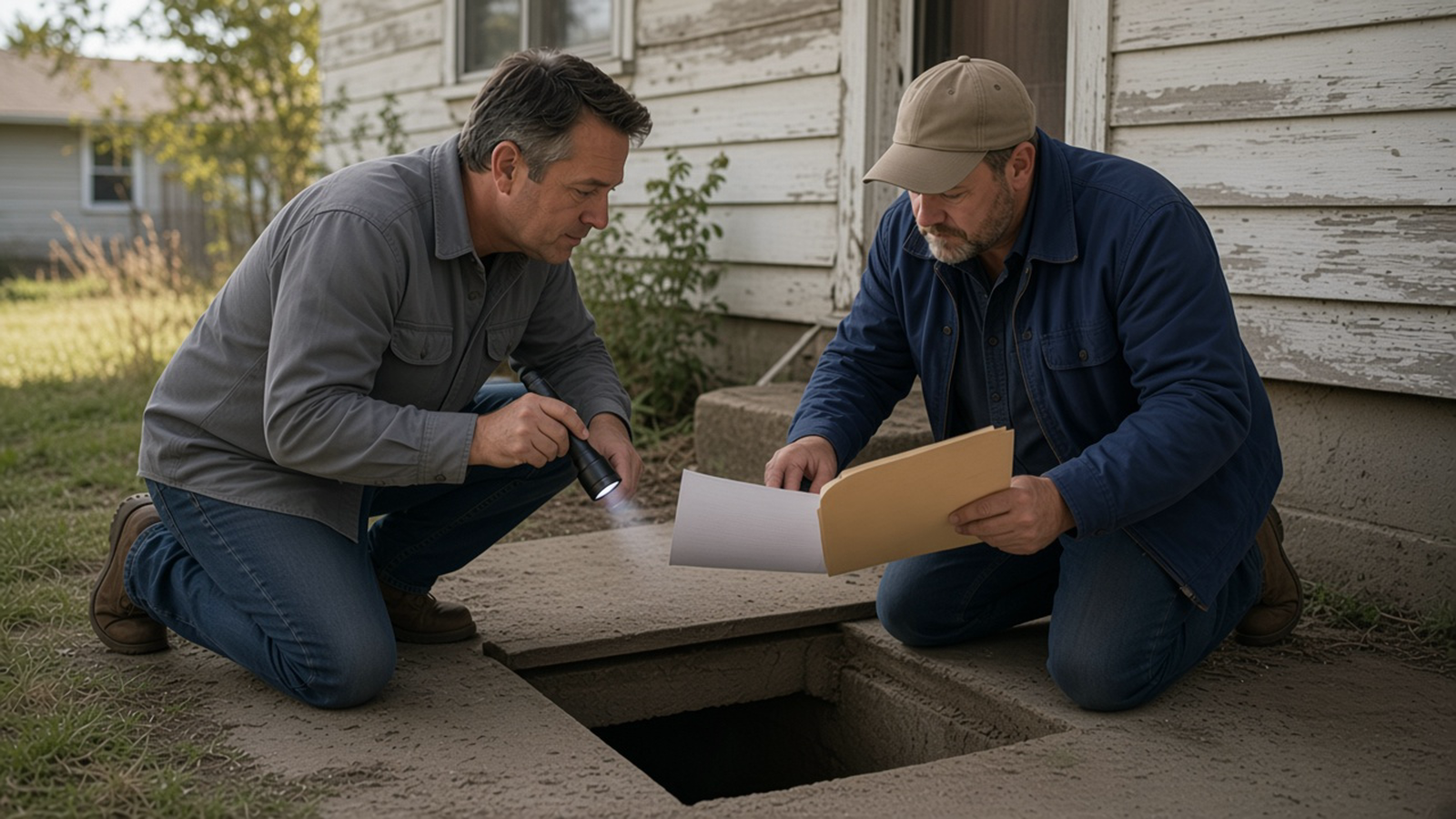
Written and reviewed by the Rehabfolio editorial team. Published and last reviewed October 23, 2026.
Who this guide is for. This guide is for United States residential investors buying a one-to-four-unit property they intend to renovate, then sell or hold. You might close in your own name or in an LLC, with cash or with a loan. The guide starts when a wood destroying insect file arrives: an NPMA-33, a state form, a graph, or a one-line email. It ends when you have a written choice: proceed on the current repair budget, add a treatment line, add a separate repair line, keep a named allowance for wood nobody saw, change the purchase price, or walk. The full inspection window is the due diligence checklist. The general home inspection, which does not determine insects, is the home inspection report guide. The camera file for the building sewer is the sewer scope guide. Those pages can name a termite report. This page is how you read the pest form those checklists point at.
The Rehabfolio editorial team builds and reviews product workflows that connect a property record to documents, dates, photos, and the offer math. That is first-hand product experience with how a deal file is organized. It does not make the team a pest control operator, a structural engineer, or an attorney. We do not hold pest control licenses, and we do not invent them.
License rules, state forms, and the number of days in your contract differ by state. A model form and a state statute can cover different organisms. This page is educational. It is not a pest inspection, a treatment plan, or legal advice. It does not tell anyone how to mix or apply a pesticide. Use the report in your hand, the agreement you signed, the state agency that licensed the company, and a licensed pest control company for the house you are buying.
Tip: Read this beside the repair budget guide, the scope of work guide, the contingency guide, the lead paint guide, and the free maximum offer calculator. A treatment invoice is a pest-control price. A sill replacement is a different line. Do not paste one into the other and call them the same scope.
1. Decide what the report has to prove
Beginners treat the pest visit as a pass-fail sticker. A short text that says the house is clear feels like a pass. The word "termites" on page one feels like a failed house. The report has a narrower job. It records visible evidence of a defined group of insects, on a stated date, in the structures the order named, in the areas the inspector could reach. Your job is to decide whether that record is complete enough to leave the repair budget alone.
Before you waive, you should be able to prove five things in writing.
- Which form this is, which company signed it, and which structures on this address were included.
- Which box is checked for evidence, and whether live insects, old signs, visible damage, or more than one of those are described with a location.
- Whether the recommendation is treatment, no treatment with an explanation, or a note that a service agreement already exists.
- Which rooms, the crawl, the attic, and the garage were obstructed or inaccessible, and what those areas still need.
- The treatment number and the separate repair number you will use, and the offer math after both.
If any line is blank, the pest file is unfinished. Unfinished is a status you can manage. Calling it a pass is how a sill becomes a surprise after the earnest money is harder to recover. The earnest money guide is the home for how a contingency protects the deposit. This page is the home for the evidence you need before you release a pest contingency.
A flip adds two questions a retail buyer sometimes skips. First, will the renovation open the exact wood the inspector could not see? If your scope already removes the fascia where carpenter bees left holes, that evidence may already have a line. If your scope never touches the sill, the pest note is a new line, not a comment in the margin. Second, will a structural repair need a building permit and extra days? Those days belong in holding cost. The holding-cost guide is where extra days get a daily price. Leave them out of the pest company's invoice so you can see them.
2. Name the form and the insects it covers
People say "termite letter" for several different pieces of paper. Start by reading the title on the page you have. The national form published for real estate transactions is the National Pest Management Association Wood Destroying Insect Inspection Report, NPMA-33. NPMA's suggested guidelines for completing that form, version 1.3, revised August 13, 2019, say the form must be used for HUD and VA transactions. The same page says it is also typically used for conventional transactions. If a state, by regulation or statute, requires its own form and excludes all others, the state form is the one that counts.
NPMA's forms page lists states that mandate their own wood infestation form: Alabama, Arizona, California, Florida, Georgia, Hawaii, Louisiana, Maryland, Mississippi, Nevada, North Carolina, Oklahoma, South Carolina, and Texas. The same page says HUD may still require NPMA-33 on some HUD-insured loans in those states. That list is NPMA's published list, not a statute this article can freeze. Read the title on your copy. A Florida wood destroying organism report is not an unlabeled NPMA-33, and an NPMA-33 is not a clearance for fungus just because someone called it a termite letter.
The insects are a closed list for this inspection. The guidelines say wood destroying insects, for the purpose of the report, include termites, carpenter ants, carpenter bees, and reinfesting wood boring beetles. Subterranean termites, which the guidelines say include Formosan termites, are inside that list. Rodents, mold, and rot are not. NPMA prepared a separate wood destroying organism attachment for fungus conditions, and the guidelines say HUD and VA do not require that attachment as part of national requirements for those loans. A clear insect form can sit next to a crawl that still has decay. Decay is a different report, or a note you still have to price. It is not a box the insect form already closed.
The general home inspection does not close the insect file either. InterNACHI's Standards of Practice say the inspector is not required to determine insects. The home inspection guide on this site is where that exclusion is worked through, next to the American Society of Home Inspectors standard. Use this page only after you have a pest report, or after you have written down that you did not order one.
Loan rules are not the same as a cash contract. FHA's Single Family Housing Policy Handbook 4000.1, in the compilation dated August 13, 2025, says that for existing properties the mortgagee must confirm the property is free of wood destroying insects and organisms. If the appraisal is made subject to inspection by a qualified pest control specialist, the mortgagee must obtain that inspection and evidence of any required treatment. The post-closing list in that same compilation says the file must contain NPMA-33 or the state-mandated infestation report, as applicable. NPMA's forms page describes four situations in which it says the handbook calls for the inspection: customary to the area, mandated by the state or locality, evidence of active infestation, or the lender's discretion. Read that page next to the handbook paragraph your lender is actually using. Do not let a summary turn four conditions into "every house, every loan, every week."
VA is more map-specific, and the map is not something to memorize from a blog. Circular 26-22-11, June 15, 2022, says it is valid until rescinded. It requires a wood destroying pest inspection report, as a minimum property requirement, for certain properties in an area on the termite infestation probability map where the probability is "very heavy" or "moderate to heavy." Change 1, July 28, 2022, points that map citation at VA Lenders Handbook M26-7, Chapter 12, Topic 33. When the requirement applies, the Notice of Value is conditioned for it, and minimum-property repairs identified on the report must be completed before guaranty. The circular also says the veteran may be charged the inspection fee and the repairs, and encourages the veteran to negotiate those costs with the seller. Local handbook pages have been more specific than the national map. Read the Notice of Value and the current topic. A cash or hard-money purchase does not inherit that circular. Ask the lender whose money you are using, and still read the report if your contract gave you the right to order one.
3. Read the header before the boxes
Section I of NPMA-33 is general information. The guidelines say every box in that section must be filled out. You want the inspection company's name, address, and phone, the company's pest control business license number, the date or dates of the inspection, the property address, the inspector's name and signature, and the inspector's certification, registration, or license number. Where a state issues no business license, the guidelines say to enter "not required." A blank license line in a state that does license companies is not the same entry.
Structures inspected are part of the header, not a footnote. The guidelines use the example "house and detached garage." The person who ordered the inspection is supposed to say which structures are in the order. Findings are limited to visible evidence in, on, or under those structures, including crawls, basements, and porches. A deck attached to the structure is part of the structure. Areas under a deck, under a roof overhang, and the mulch, landscape timbers, stumps, and woodpiles nearby are not reported in the evidence section. The inspector may note them in the comments. A clear house can still sit beside a woodpile the report was not required to grade. If that pile touches the siding, write it down yourself. The form's silence is not a finding that the pile is harmless.
Match the address and the date to this contract before you read the boxes. A report for the neighboring unit, or a report dated during the seller's previous listing, can be a useful history. It is not this purchase's inspection. The guidelines also say the buyer and the seller sign the report, that it is not the inspector's job to collect those signatures, and that the closing firm or the agent usually does. The seller's signature means the seller agrees that pertinent history of infestation, damage, repair, and treatment has been disclosed. The buyer's signature means the buyer acknowledges receipt. Neither signature is a waiver of your inspection contingency. An unsigned report can still be read. A signature without the page that lists obstructions is not a complete copy.
4. Separate evidence, damage, and a recommendation
Section II is the result. The guidelines say the inspection reports conditions on the date of the inspection only, and that no warranty is provided unless an attachment provides one and that attachment is listed in the comments. There are two top-level results.
The no-evidence result is for absolutely no visible evidence, past or present, in, on, or under the structure. The guidelines say this box should not be checked if there is any visible evidence. Old shelter tubes, exit holes, and staining are evidence. They do not become "nothing" because the insects are gone.
The evidence result is for any visible evidence, regardless of extent or age. If it is checked, at least one of three details must be checked, with a description and a location. More than one may be checked. The three details are live insects, then dead insects or insect parts, frass, shelter tubes, exit holes, or staining, and then visible damage. The location should be specific enough that another person can find the area. "Throughout" is a weaker note than "east sill at the crawl access."
The damage line is the one flippers misread. The form says it is not a structural damage report. The guidelines say the inspector should probe or sound readily accessible wood, that the inspector is not a damage expert, and that the inspector should not distinguish structural damage from cosmetic damage. Damage on this form is visible evidence of a current or previous infestation. If the evidence result is checked, the form tells the buyer and the seller that some degree of damage, including hidden damage, may be present, and that questions about that damage should go to a qualified structural professional. A pest license is not that professional's license. If the company also sells repair, the guidelines say that work belongs on a separate contract, listed as an attachment. Do not treat the damage sentence as the bid.

Section III is the recommendation. Lenders and buyers look here for whether the inspector thinks treatment or another corrective step is prudent. The guidelines are explicit that live insects do not have to be seen before a treatment is recommended. Fresh frass, carpenter bee staining, or subterranean termite signs without paperwork of a prior treatment are the examples they give.
For termites, the guidelines say a treatment or corrective action should be recommended if live termites are observed, whether or not the structure was treated before. If the evidence is bodies, wings, pellets, kickout holes, mud tunnels, carton nests, staining, or damage, and there is no documentation that the infestation was addressed, they say treatment or corrective action should be recommended. For subterranean termites, including Formosan termites, evidence on a structure that was treated before still calls for a recommendation when there is no documentation of a treatment by a licensed company, even if no live insects are seen. If a documented treatment exists, a new recommendation may still be made unless the structure is under warranty or a service agreement with a licensed company. If paperwork shows up after the report is finished, the inspector should not rewrite the report. The paperwork goes to the lender or the other parties. A bait system with an unknown contract can be written as a treatment recommendation "unless there is a current baiting system service agreement." The word unless is the open item. Find the agreement, including its expiration date, or keep the recommendation.
The guidelines say these treatment rules are suggested guidelines. A state rule or a special condition can produce a different recommendation. Your job is not to overrule the inspector from the kitchen table. Your job is to see whether the recommendation matches the evidence boxes, and whether "no treatment" is explained when evidence was checked. The guidelines say that explanation is required in that case. A no-treatment box with a blank explanation, next to visible damage, is an unfinished report.
Carpenter ants, carpenter bees, and reinfesting beetles have their own paragraphs in the same guidelines. Live insects in the structure, or evidence without documentation that it was addressed, are again the pattern for a recommendation. Carpenter bees moving into structural members are called out specifically. None of those paragraphs set a repair price. They tell you whether a licensed company is recommending its own work. The wood they leave behind is still the carpenter's question when the damage line is checked.
5. Treat an obstruction as wood you have not seen
Section IV is obstructions and inaccessible areas. The guidelines say virtually every property has some. The form lists basement, crawlspace, main level, attic, garage, exterior, porch, and addition, plus a key for conditions such as fixed ceilings, stored items, furnishings, no access, and no access beneath. A crawlspace marked with the no-access key is not a crawlspace that passed. It is a crawlspace that was not entered.
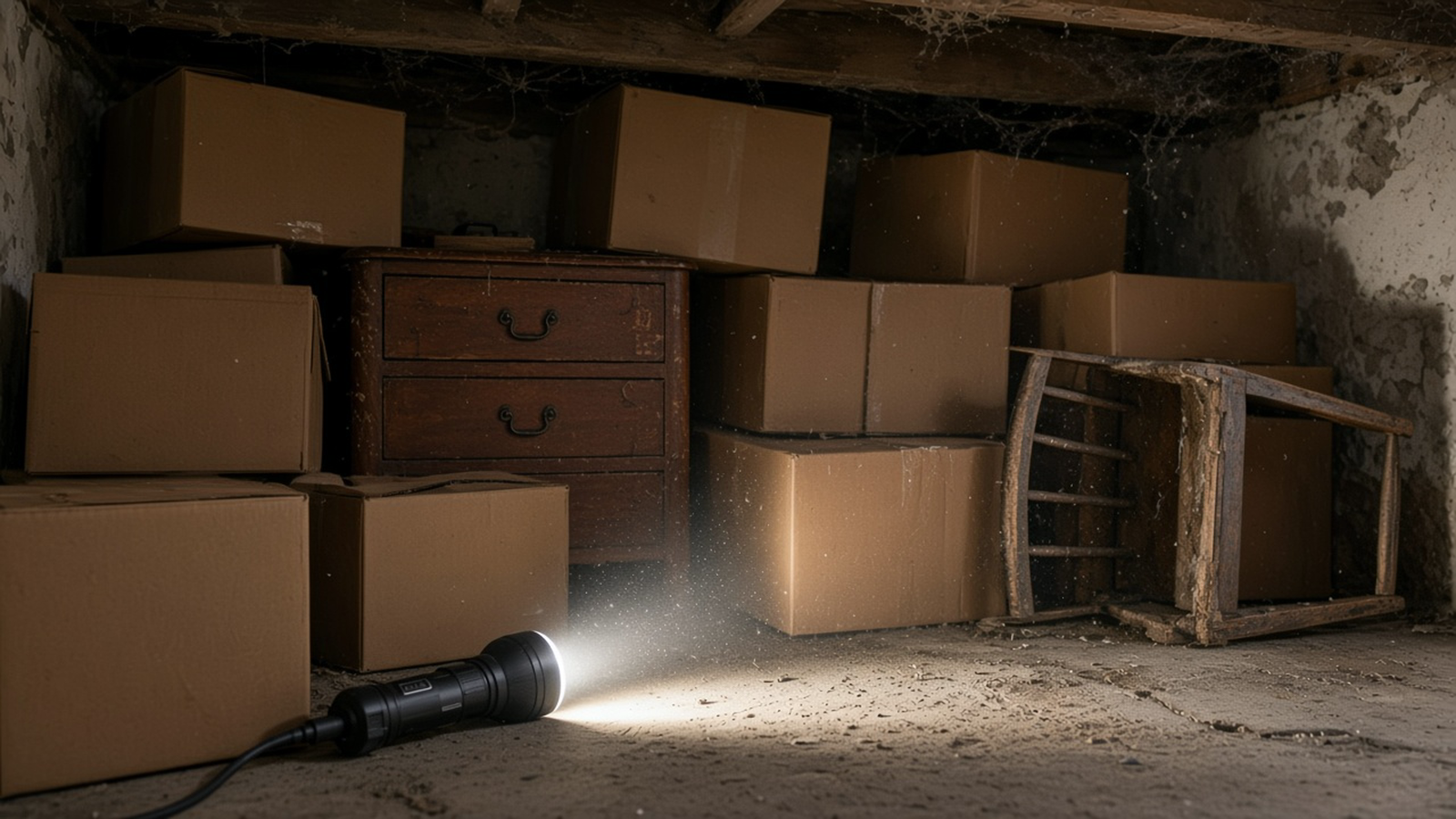
Write the obstructed area in your own notes in the inspector's words, then decide the next step while the contingency is still open. The usual choices are a return visit after the seller clears the storage, an allowance you label as your assumption for the wood you could not see, or a walk if the area is the one that would change the deal and nobody will open it. A percent contingency is the wrong drawer for a named crawl. The contingency guide is for uncertainty you have not named. "No access beneath" is named.
Section V is additional comments and attachments, and the guidelines say those attachments are an integral part of the report. Previous treatment paperwork, photos, diagrams, and a service agreement belong here. If a service agreement is mentioned, the guidelines say to include the expiration date. A graph that is not listed can still matter, but you should not assume a page you were not given. Ask for the attachments named on the form before you waive. Page two of NPMA-33 is consumer information about the limits of the inspection. The guidelines say a full understanding of the scope requires that page. Read it. The inspector is not responsible for corrective action unless a separate contract says so.
6. Turn one finding into two budget lines
A checked box becomes money only after you translate it. Use one row for treatment and a second row for wood repair. Leave each price blank until a bid or a written allowance exists. An empty price is more honest than a round number you cannot explain.
| Field | What to write | Example, live termites at a sill |
|---|---|---|
| Form and date | The form title, the company, and the inspection date | NPMA-33, dated inside this contract, house and garage |
| Evidence | Which result is checked, and which detail boxes | Evidence checked. Live insects and visible damage, east sill |
| Recommendation | Treatment, no treatment with the explanation, or a service agreement | Treatment recommended for subterranean termites |
| Not seen | Obstructions, and any area with no access | Attic stored items. Crawl was entered at the east sill only |
| Treatment number | A written bid from a licensed company, separate from repairs | $1,650 treatment bid. Teaching figure, not a price list |
| Repair number | A carpenter or structural bid for the damaged members | $16,800 sill and joist bid, plus a $1,200 engineer allowance |
| Already in the scope | Whether your renovation already replaces that wood | Kitchen scope does not include this sill. It is a new line |
| Permit and days | Whether the repair needs a building permit, and the extra hold | Ask the building department. Keep extra days in holding cost |
The repair budget guide is the home for quantities, labor, and allowances. The scope of work guide is the home for a line a contractor can bid: which member, which bay, what is removed, and what is excluded. This page only gets the pest sentence onto those lines. The recommendation is not the carpenter's bid. The damage note is not a price. FHA's handbook also says soil poisoning is an unacceptable termite treatment unless the mortgagee obtains satisfactory assurance that the treatment will not endanger the water supply. On a private well, that assurance is a question for the lender and the pest company. This guide does not describe how any treatment is applied.
Then rerun the offer. Rehabfolio's maximum offer calculator uses this detailed ceiling:
Detailed maximum offer = (after-repair value - repairs - financing - holding - selling costs - target profit) / (1 + buying-cost rate).
Selling costs in that calculator are a percent of after-repair value. Buying costs are a percent of the price you solve for, which is why the formula divides instead of subtracting a guessed closing figure at the end. In the examples below, selling costs are 8 percent of after-repair value and buying costs are 2 percent. Those rates are the examples' assumptions, matching the calculator's published inputs, not a survey of closing costs. Dollar figures are rounded to the nearest dollar where the division does not land evenly.
The 70 percent screen is a different number: after-repair value times 0.70, minus repairs. The 70 percent guide treats that screen as a quick filter. When the pest file changes repairs, change both numbers, and write down which one is your walk-away. The cost breakdown guide is the home for the full stack this report is about to edit.
One arithmetic point saves a bad negotiation. If you already have a contract price, profit at that price uses buying costs as a percent of that contract. The detailed ceiling solves for a different price, so buying costs shrink if the price drops. The dollar gap between the contract and the new ceiling is the price cut that restores the target profit. It is a bit smaller than the raw profit shortfall, because the buying-cost dollars move with the price. The examples show both figures so you can see they are the same decision.
7. Work three named pest files
These three buyers are original composites for teaching. The names, streets, bids, and outcomes are illustrative. They are not customer stories, not local price surveys, and not bids you should reuse. Each one uses the same calculator formula so you can see the report move the ceiling by itself.
Elena Voss keeps a blocked crawl on its own line
Elena is under contract at $215,000 for 19 Pine Court. Her after-repair value is $360,000. Selling costs at 8 percent are $28,800. The repair budget before the pest report is $52,000. Financing is $8,500. Holding is $6,500. Her target profit is $38,000. Buying costs at 2 percent of the contract are $4,300.
The detailed ceiling before the report is ($360,000 - $52,000 - $8,500 - $6,500 - $28,800 - $38,000) / 1.02, which is $226,200 / 1.02, or $221,765. The contract sits $6,765 under that ceiling. Projected profit at the contract is $360,000 - $315,100 = $44,900, which is $6,900 over her target. The 70 percent screen is $252,000 - $52,000 = $200,000. The contract is already above that screen. She is in the common flip position: the quick rule would have said no, and the full stack still says yes, with a thin cushion. The pest file is what can spend the cushion.
The report checks the no-evidence box. Section IV says the attic has stored items and the crawlspace has no access beneath. There is no live insect, no tube, and no damage sentence, because the inspector did not claim to see the sills. A return visit after the seller clears the attic is bid at $450. Elena writes her own $2,500 allowance for the unopened crawl and labels it as her assumption, not as a second inspection. Both numbers are teaching assumptions, not a price list.
New repairs are $54,950. Profit falls by $2,950, to $41,950, still above the $38,000 target. The new ceiling is ($226,200 - $2,950) / 1.02, or $218,873. The contract remains $3,873 under it. Her decision is to proceed, with the $450 and the $2,500 written as their own lines. She does not delete the crawl allowance because the no-evidence box was checked, and she does not waive with those lines left at zero.
Marcus Hale's live termites move the ceiling under the contract
Marcus is under contract at $238,000 for 6 Oak Terrace. After-repair value is $420,000. Selling costs are $33,600. Repairs before the report are $70,000 and already include the kitchen, the bath, and flooring. They do not include the sill. Financing is $12,000. Holding is $9,000 across a five-month plan, or $1,800 a month. Target profit is $45,000. Buying costs on the contract are $4,760.
The detailed ceiling before the report is ($420,000 - $70,000 - $12,000 - $9,000 - $33,600 - $45,000) / 1.02, which is $250,400 / 1.02, or $245,490. The contract is $7,490 under that ceiling. Profit at the contract is $420,000 - $367,360 = $52,640. The 70 percent screen is $294,000 - $70,000 = $224,000, so this contract was already above the quick screen and still inside the detailed model. Same pattern as Elena. Different insect file.
The evidence box is checked. Live subterranean termites are described at the east sill, and visible damage is described at that sill and at two joist ends. Section III recommends treatment. A licensed company bids $1,650 for the treatment. A carpenter bids $16,800 to replace the sill and sister the joist ends. That bid does not include an engineer. Marcus writes a $1,200 allowance for a structural look because the form says questions about damage go to a qualified structural professional. He does not bury the carpenter inside the $1,650. The permits guide is where he will ask whether this repair needs a building permit. He does not hide those days inside the pest invoice.
The three additions are $19,650. Repairs become $89,650. Profit at the contract falls to $32,990, which is $12,010 under the $45,000 target. The new ceiling is ($250,400 - $19,650) / 1.02, or $226,225. The contract is $11,775 over that ceiling. The $11,775 price cut and the $12,010 profit gap describe one decision: $12,010 / 1.02 = $11,775, because a lower price also lowers the 2 percent buying-cost line.
If scheduling the sill adds two weeks, holding grows by about $900, to $9,900. Profit falls to $32,090, short of the target by $12,910. The ceiling is ($420,000 - $89,650 - $12,000 - $9,900 - $33,600 - $45,000) / 1.02, or $225,343, and the price gap becomes $12,657. $12,910 / 1.02 = $12,657.
Marcus's decision is to object in writing. He asks for an $11,775 price reduction if he ignores the extra hold, or $12,657 if he also prices the two weeks. He does not accept a seller-paid $1,650 treatment that pretends the sill is free. A seller credit is a different tool, with lender and title limits of its own. The AS-IS credit guide is the page for that choice. If the seller will not move and the deadline is here, he walks. The sill does not get stronger because the earnest money is at risk.
June Patel's calculator still clears
June is under contract at $190,000 for 41 Harbor Avenue. After-repair value is $340,000. Selling costs are $27,200. Repairs are $44,000 and cover finishes, not the sill. Financing is $7,000. Holding is $5,500. Target profit is $32,000. Buying costs on the contract are $3,800. The detailed ceiling is ($340,000 - $44,000 - $7,000 - $5,500 - $27,200 - $32,000) / 1.02, which is $224,300 / 1.02, or $219,902. Profit at the contract is $62,500. The 70 percent screen is $238,000 - $44,000 = $194,000. The contract is under both numbers. On price alone, this is the easiest of the three files.
The evidence box is checked. No live insects are listed. Dead evidence and visible damage are described at the west sill. Section III says no treatment is recommended, and Section V cites a service agreement. The agreement's expiration date is on the attachment. The pest company's new price is zero if that agreement is real. The damage sentence is still on the page, and the form still says hidden damage may be present.
She tests a stand-in number so the blank repair cannot hide. If a carpenter later prices the sill at $9,500, repairs become $53,500 and the ceiling becomes ($224,300 - $9,500) / 1.02, or $210,588. The $190,000 contract would still sit $20,588 under that ceiling, and profit would still be $53,000, above her $32,000 target. The calculator would say the money works. The damage line says the wood has not been priced by someone who is allowed to call it structural or cosmetic. Her decision is to keep the objection open until a carpenter sees the sill, or until she writes the $9,500 as a named allowance she accepts. She does not waive because the treatment box says no action.
The three files are the worksheet. Elena adds a small return visit and a crawl allowance, and proceeds. Marcus's live insects and damaged sill push the contract through the detailed ceiling, so he reprices or walks. June's math still clears and she still refuses to waive, because a no-treatment recommendation is not a repair bid. A pest file that only changes a dollar figure has been only half read.
8. Use a termite-report checklist without an account
Copy this list into the notes you already keep. Check a line only when the report, an attachment, or a written bid supports it. A blank line stays on the objection list.

- The file matches this address, these structures, and a date inside the current contract.
- The form title is written down: NPMA-33, or the state form this state actually requires.
- The company license and the inspector's license, certification, or registration are on the page, or the page says a license is not required in that state.
- The full report is saved, including page two and every attachment named in the comments.
- The evidence result is copied: no visible evidence, or visible evidence with the detail boxes and locations.
- Live insects, old signs, and visible damage are separate notes. A recommendation is not used as a substitute for those notes.
- If evidence is checked and no treatment is recommended, the explanation is on the page.
- Any service agreement or prior treatment is saved with its date. A document that arrives later is added to the file. It does not erase the report.
- Every obstructed or inaccessible area is written down, including no access beneath.
- Treatment has its own bid. Wood repair has its own bid or a named allowance. Empty prices stay empty.
- Fungus, rot, or "organisms" are either on their own attachment or written as an open item. They are not assumed from a clear insect box.
- Permit days for a structural repair are in holding cost, separate from the pest invoice.
- The detailed ceiling and the 70 percent screen are both rerun with the new repair total.
- The written choice is proceed, reprice, or walk, dated before the deadline.
That list is enough to decide this contract. A workspace can hold the same lines later. You do not need one to refuse a waiver you cannot explain.
9. Keep the report on the property record
When you do use a workspace, put the pest file where the offer already lives. Store the report, the graph, the service agreement, the treatment bid, the carpenter's bid, the allowance, and the objection deadline on the property. Then update the repair line and rerun the ceiling. Rehab estimating is the workflow for the line a contractor can price. Deal analysis is the workflow for the ceiling after that line changes. The fix-and-flip workflow is the path that keeps those two on one property from contract to resale.
A draft summary that says the house is "clear" loses to the boxes. The AI page describes drafts a person accepts. A pest report is one of those drafts' source documents. The software does not enter the crawl, sign the report, or send the objection. If the summary and the form disagree, keep the form and correct the number.
If you buy, the same report becomes the baseline for the renovation. The carpenter's invoice should name the same location you wrote down. A change from a treatment-only plan to a sill replacement is a change order with its own cost and its own days, which is the subject of the change order guide. If you walk, keep the report on the pipeline card so the next offer does not start from a blank sill.
10. Avoid the waivers that happen by text message
- Waiving because the text said "clear." Read the evidence box, then read the obstruction section. A no-evidence result does not inspect the room the key says was blocked.
- Treating the damage note as a repair bid. The form says it is not a structural damage report. The pest price and the carpenter's price stay on separate lines.
- Pricing only the treatment. Marcus's $1,650 bid, taken alone, would have left an $18,000 repair and engineer allowance out of the ceiling. The live insects were not the whole file.
- Calling a no-treatment box a pass. June's stand-in sill still cleared her target. The missing carpenter's look did not. A recommendation and a repair are both required when damage is checked.
- Using a fungi silence as a decay clearance. NPMA says HUD and VA do not require the organism attachment as a national rule. FHA's handbook still tells the mortgagee to confirm the property is free of wood destroying organisms. Those sentences are about different papers. Keep decay on its own line until someone prices it.
- Importing a VA map into a cash contract. Circular 26-22-11 conditions certain loans. Your purchase contract conditions your contingency. Read the one you signed.
- Hiding a named sill inside a blanket contingency. A percent reserve is for what you have not named. Visible damage at the east sill is named.
- Double-counting wood you are already replacing. If the scope already removes the fascia where bees left holes, attach the report to that existing line. Do not add a second bee budget on top of the same board and call it caution.
- Leaving the ceiling on the old repair number. Marcus's $19,650, before the extra two weeks, moved the detailed ceiling by $19,265, from $245,490 to $226,225. The bids are not in the deal until the offer math uses them.
None of these require a careless inspector. They require an ordinary week in which the fastest path is to say the termite report "came back clear." The two lines and the blocked area are the slower path on purpose.
Frequently asked questions
What is a termite inspection on a house flip?
On most resale files the document is a wood destroying insect inspection report, often the National Pest Management Association form NPMA-33, or a state form that replaces it. NPMA's suggested guidelines, version 1.3 revised August 13, 2019, limit the insects on that report to termites, carpenter ants, carpenter bees, and reinfesting wood boring beetles. The useful file names the company, the license, the date, the structures inspected, whether any visible evidence was seen, what the inspector recommends, and which areas were obstructed. A text that says "no termites" is not the report.
Is a termite report the same as a home inspection?
No. A general home inspection and a wood destroying insect report answer different questions. InterNACHI's Standards of Practice say the inspector is not required to determine insects, and the American Society of Home Inspectors standard says the inspector is not required to determine wood destroying organisms. The home inspection guide is the page for that boundary. Order the pest report as its own visit while the contract still gives you time to object, and keep it with the inspection PDF instead of folding both into one sentence about the crawlspace.
Does a clear box mean the house has no termites?
No. NPMA's guidelines say the no-evidence box is checked only when there is absolutely no visible evidence, past or present, in, on, or under the structure. The same guidelines say the inspection reports the date of the inspection only, and that no warranty is provided unless an attachment says so and that attachment is listed. Obstructed areas are reported in their own section. A clear box next to a crawlspace marked "no access" is a report of what could be seen. It is not a promise about the wood behind the boxes.
Does visible damage on the report mean the wood must be replaced?
Not by itself. The form states that it is not a structural damage report. NPMA's guidelines say the inspector is not a damage expert, that damage is visible evidence of a current or previous infestation, and that the inspector should not sort structural damage from cosmetic damage. If the evidence box is checked, the form tells the buyer that hidden damage may be present and that a qualified structural professional should be contacted when questions arise. The pest company's treatment price and the carpenter's repair price are different lines.
Does every house flip need the NPMA-33 form?
No. NPMA says the form must be used for HUD and VA transactions unless a state requires its own form and excludes the others, and that conventional loans often use it too. FHA's Handbook 4000.1, in the August 13, 2025 compilation, tells the mortgagee to confirm an existing property is free of wood destroying insects and organisms, to obtain the inspection when the appraisal is made subject to one, and to have NPMA-33 or the state report in the file as applicable. A cash contract follows the contingency you signed, not the FHA case binder. Read the form you were given. Do not assume a national form from a state that issues its own.
How long is a termite report good for?
The NPMA guidelines say the inspection reports conditions on the date of the inspection only. They do not print a national expiration in the sentences that define the boxes. A lender, an FHA case, or a VA Notice of Value can still require a newer report than the one in the email. VA Circular 26-22-11, which states that it is valid until rescinded, ties the inspection requirement and the repairs to the Notice of Value. Read the date on page one, then ask the lender or the contract what date they will still accept. A report from the seller's last listing is a clue. It is not automatically this contract's clearance.
Can software decide whether to waive the pest contingency?
Software can store the report, the deadline, the treatment bid, the carpenter's bid, and the revised repair number next to the offer. It cannot see the sill, certify a license, or decide that an obstructed crawl is acceptable. If a draft summary and the boxes disagree, the boxes win. You still compare the new repair number with the contract deadline and send the objection yourself.
Editorial methodology, limitations, and sources
The Rehabfolio editorial team wrote this as the pest-report page for a house flip. It does not replace the due diligence checklist, the home inspection guide, the sewer scope guide, the lead paint guide, the repair budget, the scope of work, the contingency guide, the permits guide, or the maximum-offer guide. Those pages remain the homes for the full window, the general inspection, the building sewer, the lead rules, the quantities, the bid-ready lines, the reserve, the city process, and the offer formula. This article answers a different question: what a buyer should be able to prove from the wood destroying insect report before waiving the right to object.
Form instructions are the National Pest Management Association Suggested Guidelines for Completing the NPMA-33, version 1.3, revised August 13, 2019. That document is the source for the HUD and VA use of the form, the state-form exception, the insect list, the date-only limit, the rules for the no-evidence and evidence results, the three detail boxes, the statement that the inspector is not a damage expert and should not separate structural from cosmetic damage, the treatment guidelines for termites, beetles, carpenter ants, and carpenter bees, the instruction not to rewrite a finished report when paperwork arrives later, the obstruction section, the role of attachments, the buyer and seller signatures, and the statement that HUD and VA do not require a fungus attachment as a national requirement. The form's own sentence that it is not a structural damage report, and that hidden damage may be present when evidence is reported, is the language on the NPMA-33 copy posted by HUD. This article describes those sections. It does not reproduce the form.
Which states mandate their own form, and the caution that HUD may still ask for NPMA-33, is NPMA's NPMA forms information page. That page is also the source for NPMA's four-situation reading of when HUD calls for an existing-home inspection. The handbook text cited here is the August 13, 2025 compilation of FHA Single Family Housing Policy Handbook 4000.1, in the existing-property termites paragraph and in the post-closing requirement for NPMA-33 or the state report, including the soil-poisoning limit. HUD revises the handbook. Read the section your lender is using before you treat a sentence on this page as today's underwriting rule.
VA loan conditions are Circular 26-22-11, June 15, 2022, which says it is valid until rescinded, and Change 1, July 28, 2022, which points the map citation to VA Lenders Handbook M26-7, Chapter 12, Topic 33. This article does not copy a county list. The Notice of Value and the current topic control a VA file.
The boundary with a general home inspection is the subject of the inspection guide on this site. That guide cites the American Society of Home Inspectors Standard of Practice and InterNACHI's Standards of Practice. This article does not restate those standards. It only keeps the pest file from being mistaken for that report.
The offer arithmetic uses the detailed maximum-offer formula published on Rehabfolio's maximum offer calculator: (after-repair value - repairs - financing - holding - selling costs - target profit) / (1 + buying-cost rate). Selling costs in the examples are 8 percent of after-repair value. Buying costs are 2 percent. The 70 percent screen is after-repair value times 0.70, minus repairs, as stated on the maximum offer guide. Elena's, Marcus's, and June's prices are computed from those inputs in the sections above. They are illustrations. They are not quotes, indexes, or results from a Rehabfolio account.
Public standards cannot tell you whether to waive, what a pest company or a carpenter in your city will charge, or which state form applies at a particular address. Examples are original composites created for teaching. Names, prices, bids, and outcomes are illustrative. They are not case studies of real customers.
Editorial standard. We identify the audience, the author, the review date, the topic boundary, the assumptions, and the product limit. We do not invent credentials, licenses, testimonials, market statistics, or guaranteed results. AI may help organize research and draft, and a person reviews the claims, the links, and the examples before publication. We revise the guide when a cited public page or a material product workflow changes. See the editorial methodology on the company page.
Keep the termite report, the deadline, and the two repair lines together.
Use a workspace for the report, the objection date, and the treatment or carpenter price. You still hire the inspector, and you still send the objection, yourself.
Create free accountRun the free ARV calculator if you want the ceiling in the browser before you create an account.